
REVIEW · FORBIDDEN CITY TOURS
Hue Imperial City and Forbidden City Walking Private Tour
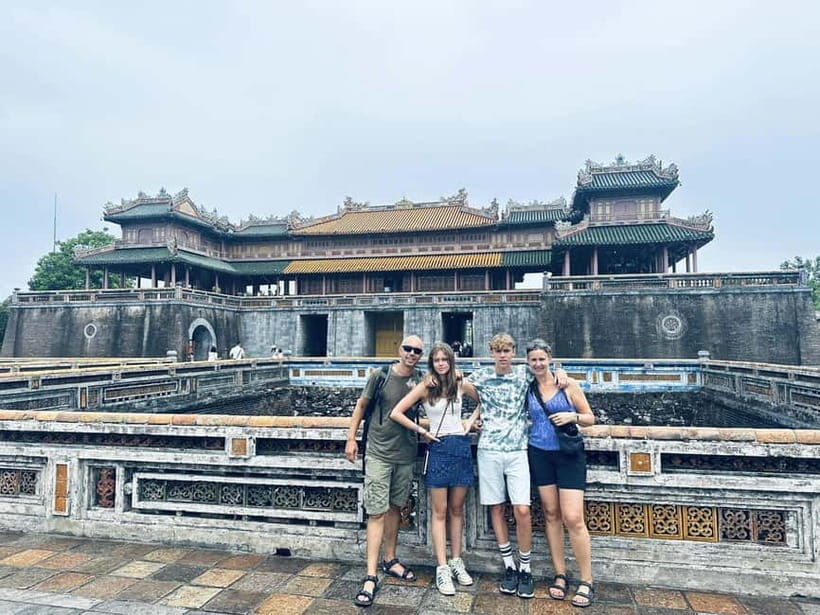
Hue’s Imperial City makes far more sense when someone explains the people, rules, and royal spaces behind its walls. This private walk takes you from the bronze cannons at Ngan Gate through Ngo Mon Gate, Thai Hoa Palace, the Forbidden Purple City, royal gardens, temples, and the newly rebuilt Kien Trung Palace.
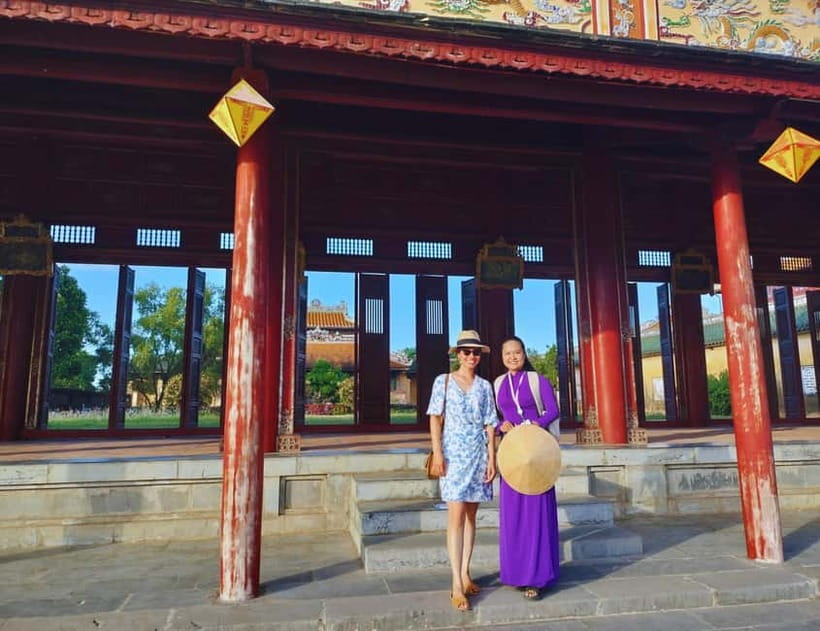
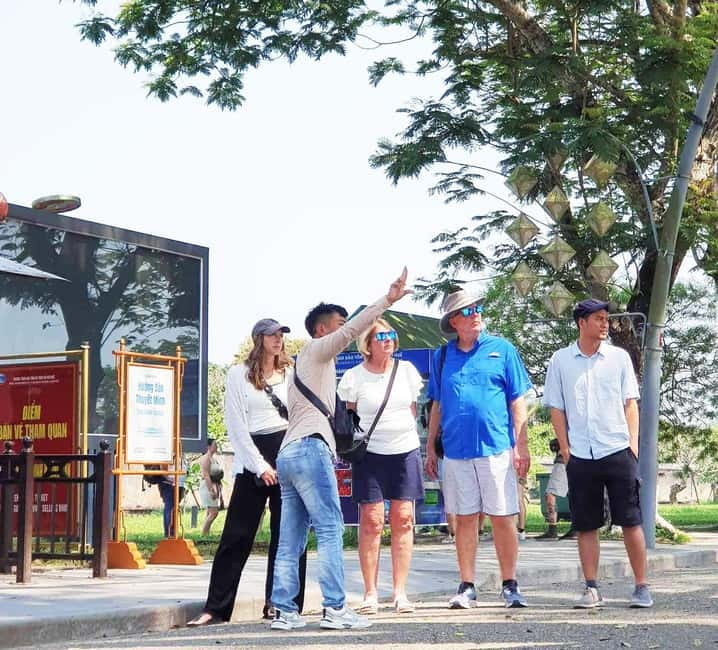
I like the private format, which lets you ask questions and set a comfortable pace. I also like the guide’s focus on small details, such as why some gates were reserved for the king and how the Nine Dynastic Urns record Nguyen Dynasty symbols. The main consideration is time: 150 minutes covers a lot, so you will see the major sites but may not linger everywhere.
The guide team includes Austin, Ha, Nhi, Anna, Duyen, Quan, and others, with repeated praise for clear storytelling, good communication, and helpful local advice. Bring cash in Vietnamese dong for the separate entrance ticket, wear shoes suited to walking, and consider starting early if you want quieter views inside the citadel.
Key points to know before you book
- Private guiding makes the palace complex easier to understand: You get one English-speaking guide for your group rather than a large shared party.
- The route covers major royal landmarks: You visit Ngo Mon Gate, Thai Hoa Palace, the Forbidden Purple City, Duyet Thi Duong theater, Kien Trung Palace, royal gardens, temples, and the dynastic urns.
- The tour lasts 2 to 2.5 hours: It is a focused introduction, not an all-day archaeological stroll.
- The entrance fee is separate: Expect to pay 200,000 VND per adult in cash, with the guide helping at the ticket counter.
- Kien Trung Palace is a major draw: The palace collapsed and was restored in 2024, giving you a chance to see one of Hue’s newest reconstruction projects.
- The meeting point is outside the main route: Look for the guide at the four bronze cannons near Ngan Gate, holding an A4 sheet with your name.
Why a private walk helps inside Hue’s Imperial City
Hue’s Imperial City is not just a collection of ornate buildings. It was a working royal center, with formal entrances, private quarters, ceremonial halls, religious buildings, gardens, and spaces designed around rank. Without context, you can admire the roofs and carved woodwork but miss the strict order behind them.
A private guide helps connect the buildings to the Nguyen Dynasty, which ruled Vietnam for 143 years. You can stop to ask about the emperors, court customs, royal women, architecture, and the damage and rebuilding that shaped what you see today.
I especially like this format for a short stay in Hue. The city has many historic sites, including imperial tombs outside the center, but the Imperial City gives you the clearest first look at royal life. In two and a half hours, you get a solid introduction before deciding how much more time you want to spend exploring on your own.
The tour is offered only to your group, so the experience should feel more flexible than a large walking tour. Guides such as Austin, Ha, Nhi, and Anna have been praised for answering questions, explaining small details, and adjusting the pace. Communication before the meeting has also been a strong point, including last-minute arrangements.
More Forbidden City tours in the world:
- Beijing: Forbidden City Tour(Group/Private)-Tickets Included
★ 4.8 · 7,974 reviews - Beijing: T-Square & Forbidden City Group or Private Tour
★ 4.8 · 4,446 reviews - All-Inclusive Tour: Tiananmen Square, Forbidden City, Great Wall
★ 5.0 · 2,873 reviews
Starting at the bronze cannons near Ngan Gate
Your meeting point is the four bronze cannons near Cua Ngan, also called Ngan Gate. The guide waits with an A4 paper showing your name. If you select the pickup option, hotel pickup and drop-off are included, but the stated meeting point remains important to confirm before you go.
The cannons are part of a larger set known as the Nine Holy Cannons. They were cast in 1803 and are among the first objects that introduce the military and ceremonial power of the Nguyen court. Your guide helps with the Imperial City entrance ticket here or nearby, and the adult fee is 200,000 VND.
Bring cash in Vietnamese dong. A combo ticket can cost less if you also plan to visit the royal tombs: 420,000 VND for the Imperial City and two tombs, or 530,000 VND for the Imperial City and three tombs, valid for two days. Those combinations only make sense if the tomb visits are already part of your Hue plans.
The Flag Tower and Ngo Mon Gate
The Flag Tower, or Ky Dai, rises at the center of the citadel’s southern side. It was the royal court’s flag-bearing site, and it gives the opening part of the walk a clear sense of scale. The tower is mainly a photo and explanation stop, lasting about 10 minutes.
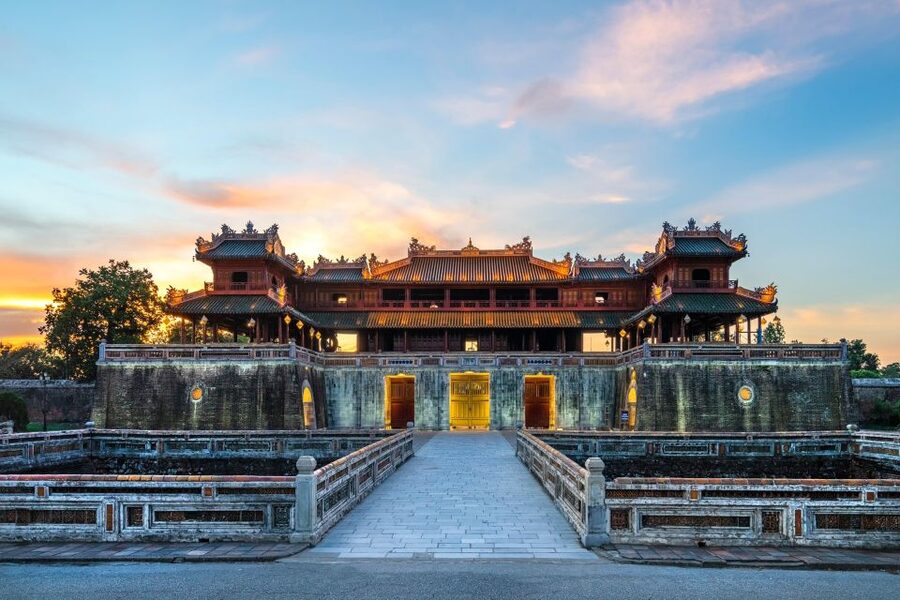
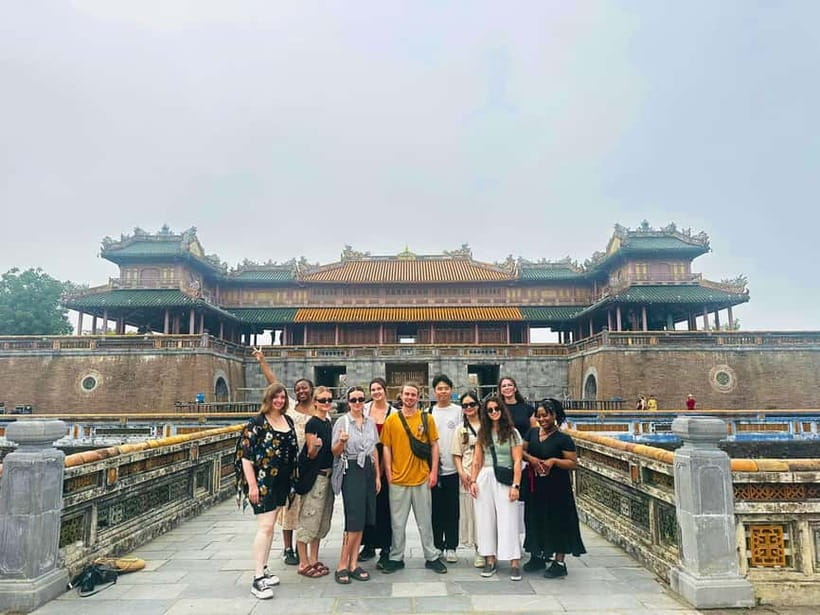
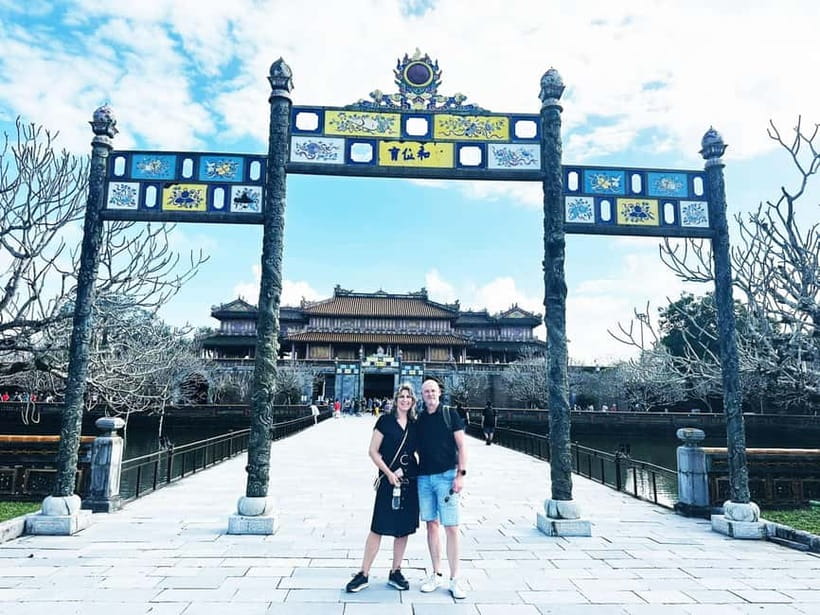
From there, you walk toward Ngo Mon Gate, the formal entrance to the Imperial City. Built in 1833, it was reserved for the king or used to receive envoys. That rule tells you something important about Nguyen court life: movement through the city was carefully controlled, and architecture made status visible.
Above the gate is Lau Ngu Phung, or the Ngu Phung Pavilion. Its frame uses ironwood and includes 100 pillars. You may spend only around 10 minutes here, but this is one of the places where a guide adds real value. The pavilion is not just a decorative roof above a gate. Its construction and position reflect the ceremonial role of the entrance.
Thai Hoa Palace and the ceremonial heart
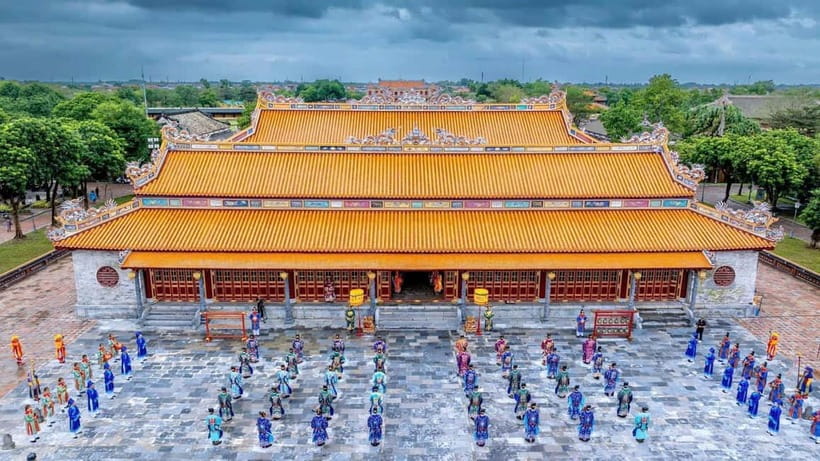
Thai Hoa Palace was the coronation place of 13 Nguyen kings. It is one of the most important stops on the route because it helps you picture the Imperial City as a political center, not simply a former residence.
The tour allows about 15 minutes here for photos, walking, and explanation. Your guide can explain how the palace functioned during formal court events and why its position mattered within the Imperial City. I would pay attention to the relationship between the open spaces, the palace frontage, and the approach from Ngo Mon Gate.
This is also a good point to ask questions. The tour covers a long period and many emperors, so you may not get every detail about every reign. A private guide lets you direct the conversation toward the subjects you care about, such as royal succession, court rituals, or the final Nguyen emperors.
More walking tours past the palaces in the world:
- Venice: Doge’s Palace and St Mark’s Basilica Walking Tour
★ 4.4 · 6,291 reviews - Split: Old Town and Diocletian Palace Walking Tour
★ 4.9 · 4,727 reviews - Walking Tour of Split and Diocletian’s Palace
★ 5.0 · 2,588 reviews - Bangkok: Grand Palace and Wat Phra Kaew Guided Walking Tour
★ 4.4 · 2,417 reviews
Entering the Forbidden Purple City
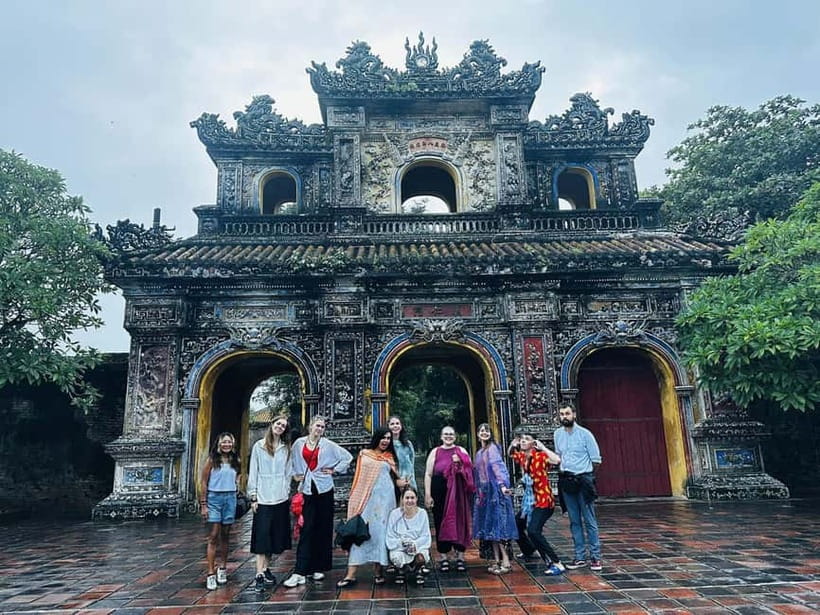
The Forbidden Purple City was reserved for the emperor and royal family. Mandarins and ordinary civilians were not permitted to come close. Even in its damaged state, the name and function make this section one of the most compelling parts of the visit.
The route gives you roughly 15 minutes to explore the Imperial City area and learn how the inner royal zone fitted into the larger complex. The guide’s explanations help separate the public ceremonial areas from spaces intended for private royal life.
You should keep your expectations realistic. The Imperial City suffered heavy damage, and not every original structure survives in its former shape. That can make the visit feel uneven, with restored buildings beside open areas or partial remains. Still, the contrast is part of understanding Hue today. You are seeing both the royal design and the long process of preservation.
Duyet Thi Duong, the oldest preserved royal theater
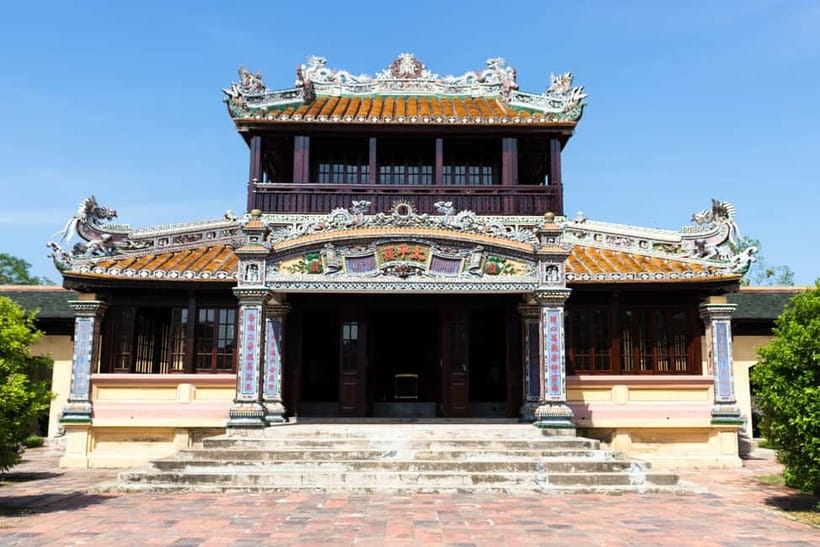
Duyet Thi Duong Royal Theater is one of four theaters built during the Nguyen Dynasty and the oldest preserved theater among them. The stop lasts about 10 minutes, making it a compact but worthwhile part of the walk.
A theater adds another side of court life. The Imperial City was not only about ceremonies and government. Music, performance, and court entertainment also had a place within the royal compound. Your guide can place the building within the daily life of the palace rather than treating it as just another photogenic structure.
I would use this stop to look closely at the building’s proportions and decorative details. You may also want to ask how performances related to royal events and who was allowed to attend. The tour does not promise a performance, so you are visiting the theater itself and learning its role.
Thiệu Phương Garden and Thai Binh Pavilion
Thiệu Phương Garden was built in 1828 and is one of the classic royal gardens of the Nguyen period. After several formal buildings, the garden changes the mood of the walk. It gives you a sense of how the court created quieter spaces within the walled complex.
The tour allows about 10 minutes here. That is enough for a guided look, though not a long garden visit. If gardens are your main interest, you may want to return after the tour and explore at your own pace, if access and opening conditions allow.
Thai Binh Pavilion was built between 1919 and 1921 as a place for the king to rest. The 15-minute stop gives the guide more time to explain its purpose and setting. I like the contrast between the pavilion’s relaxed function and the strict ceremonial spaces you see earlier.
Together, these two stops show that royal life included retreat and leisure as well as public duty. They also help break up the walking route, giving you different architectural settings instead of a long run of formal halls.
Kien Trung Palace after its 2024 restoration
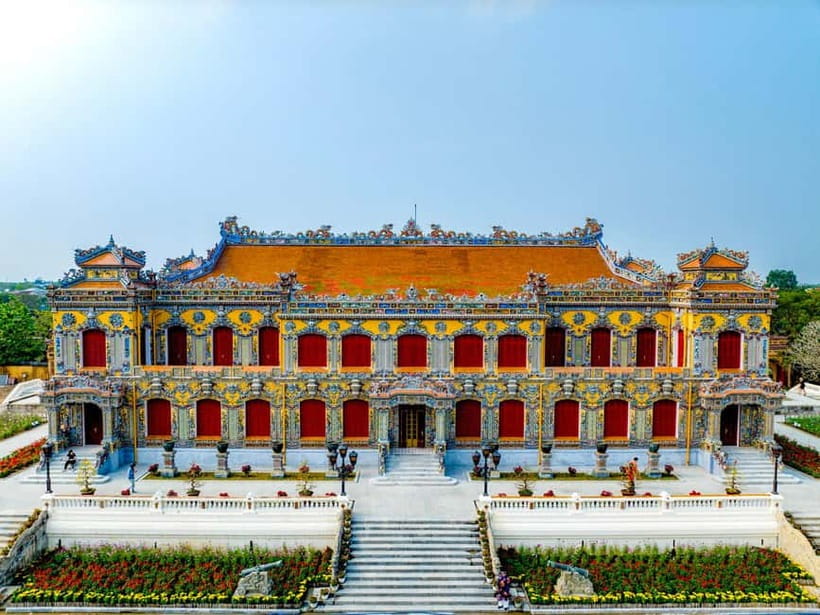
Kien Trung Palace is one of the most timely stops on this experience. Built in 1923, it combined Asian and European architectural influences. The palace completely collapsed and was restored in 2024, so you are seeing a very recent reconstruction within the wider story of Hue’s preservation work.
The planned visit lasts about 15 minutes. Expect a photo stop and an explanation of the palace’s design, history, and rebuilding. Its mixed architectural style makes it particularly useful for understanding the changing character of the late Nguyen period.
Restoration can be a sensitive subject. A rebuilt palace is not the same as an untouched historic structure, and some visitors may prefer original ruins to reconstructed buildings. I see value in having both. Kien Trung Palace helps you picture the scale and appearance of a lost building, while nearby damaged areas remind you that the Imperial City’s past is not fully recoverable.
Dien Tho Palace and the royal family’s private world
Dien Tho Palace was the residence of the Queen Mother. Its large scale, careful carving, and refined style give you a different view of the court from the emperor-centered halls.
The stop is planned for about 10 minutes. Your guide can explain the position of the Queen Mother within the Nguyen household and help you notice details that are easy to miss when you are focused only on the largest buildings.
This is one place where your guide’s storytelling matters more than the clock. Names, titles, and family relationships can become confusing, especially across 143 years of dynasty. If the subject interests you, ask the guide to connect the building to specific royal figures rather than giving only a general description.
The temples and the Nine Dynastic Urns
The route then moves toward the religious and memorial side of the Imperial City. Hung To Mieu receives about 15 minutes, while the Mieu Temple is part of the broader temple area described for the visit. The Mieu is dedicated to the worship of 10 Nguyen kings.
These temples show how the dynasty remembered its rulers. Their purpose was not simply architectural. They were places for royal offerings, ceremony, and the preservation of dynastic identity.
Nearby, the Nine Dynastic Urns were commissioned by Emperor Minh Mang in 1835. The nine bronze urns contain a total of 162 cast and carved images. The guide can help you understand why these objects matter instead of leaving you to see them as oversized bronze vessels.
Allow around 10 minutes for the urns. Look at the individual images and ask what they represent. This is a short stop, but the objects carry a great deal of symbolic weight. Their connection to the Nguyen emperors makes them an important counterpoint to the palaces and gates.
Hien Lam Pavilion and the walk to Hien Nhon Gate
Hien Lam Pavilion was built between 1821 and 1822. It is associated with moments of imperial insight and completes the historical arc of the tour alongside the temples and urns.
The stop lasts about 10 minutes. By this stage, you have moved from military symbols and royal entrances to ceremonies, private spaces, gardens, family residences, memorial temples, and dynastic symbols. Hien Lam Pavilion gives the guide a final place to connect those pieces.
The walking route finishes at Hien Nhon Gate. You are then free to continue exploring the Imperial City area on your own. This is useful if you want more time for photographs, another look at a building, or a slower visit after the guide has provided the basic framework.
Price, pace, and what the $23 covers
At $23 per person, the tour offers good value if you want historical explanation rather than simply admission to the site. The price includes an English-speaking guide, bottled water, and the 2.5-hour guided walk. Hotel pickup and drop-off are included only when that option is selected.
The Imperial City entrance ticket is extra at 200,000 VND per adult. That separation keeps the advertised tour price low, but you need to budget for the ticket and bring cash. Food and drinks beyond the provided bottled water are also not included.
The schedule adds up to a fast-moving route. Many stops receive 10 minutes, while Thai Hoa Palace, Thai Binh Pavilion, Kien Trung Palace, and Hung To Mieu receive about 15 minutes. That is enough for an overview and guided explanation, but not enough for a slow, detailed study of every courtyard and building.
I would choose this tour if your time in Hue is limited, if you want a private guide, or if royal history is new to you. If you already know the Imperial City well and prefer long periods of independent photography, you may find the guided structure less necessary.
Timing, weather, and guide quality
The start time depends on the option you choose and your requirements. An early start can be useful if you want to reach the Imperial City before the busiest part of the day. One guide, Anna, was willing to start early for a visitor who wanted quieter views, but early timing should be confirmed rather than assumed.
Hue can be wet. Anna prepared a poncho and helmet during heavy rain, a thoughtful detail that mattered on a difficult-weather day. Still, bring your own rain protection if the forecast looks poor, since the route is outdoors and involves walking between buildings.
The guide team has earned a 4.9 rating from 42 verified bookings. The strongest pattern is clear explanation and personal attention. Austin has been praised for making history fun and easy to follow, Ha for a relaxed pace and strong answers, Nhi for thoughtful explanations, and Duyen and Quan for detailed historical guidance.
One useful caution is that English clarity can vary by individual guide. Most feedback points to easy communication, but one person found parts of the explanation difficult to understand. If a detail is unclear, ask the guide to repeat it or put it in simpler terms. A private tour makes that much easier than a large group setting.
Who should book this Hue tour?
I would recommend it for first-time visitors to Hue, couples, families, and anyone with only a short window in the city. The route covers the main Imperial City highlights without requiring you to plan the order yourself.
It also suits travelers who want context around restoration. Kien Trung Palace’s 2024 rebuilding, the surviving theater, the damaged Forbidden Purple City, and the older temples each show a different part of Hue’s story.
You may want a different plan if you need wheelchair-friendly details, a full-day tour, or a visit focused only on untouched original structures. The supplied information does not give accessibility details, so ask before booking if that affects your plans.
Should you book the Hue Imperial City private walk?
Book it if you want a focused introduction to the Nguyen Dynasty and prefer asking questions as you go. The combination of private guiding, a broad route, and a low tour price makes it a sensible choice for a first visit.
Go in knowing that the 150-minute schedule is brisk and the 200,000 VND entrance fee is separate. If you start early, carry cash, wear comfortable shoes, and allow extra time after the tour for your own look around, you will get the best value from the experience.
FAQ
How long does the Hue Imperial City private tour last?
The tour lasts from 2 to 2.5 hours, with the advertised duration listed as 150 minutes.
What language is the tour conducted in?
The tour is conducted in English with a live English-speaking guide.
Is this a private group tour?
Yes. The experience is designed as a private tour for you and your group.
How much is the Imperial City entrance ticket?
The entrance ticket costs 200,000 VND per adult and is not included in the tour price.
Can the guide help me buy the entrance ticket?
Yes. The guide assists with purchasing the Imperial City ticket and recommends preparing cash in Vietnamese dong to save time.
Is hotel pickup included?
Hotel pickup and drop-off are included if you select the option that includes them. Otherwise, the meeting point is near the four bronze cannons at Cua Ngan.
Where do I meet the guide?
Meet the guide at the four bronze cannons near Ngan Gate, also called Cua Ngan. The guide will hold an A4 paper displaying your name.
What sites are visited during the walk?
The route includes the Flag Tower, Ngo Mon Gate, Ngu Phung Pavilion, Thai Hoa Palace, the Forbidden Purple City, Duyet Thi Duong Royal Theater, Thieu Phuong Garden, Thai Binh Pavilion, Kien Trung Palace, Dien Tho Palace, Hung To Mieu, the Nine Dynastic Urns, and Hien Lam Pavilion.
Can I cancel for a full refund?
Yes. You can cancel up to 24 hours in advance for a full refund. You can also reserve now and pay later, keeping your plans flexible.
Just added around the world
- Pitti Palace and Palatina Gallery★ 4.0 · 41 reviews
- Pitti Palace Small Group Tour★ 5.0 · 6 reviews
- Private Guided Tour of Palazzo Vecchio in Florence★ 3.5 · 4 reviews
- Florence: Palazzo Vecchio Skip the line Entry ticket★ 4.0 · 49 reviews
- Pitti Palace: The Royal Palace of Florence★ 4.5 · 12 reviews
- PALAZZO VECCHIO Private tour in Florence★ 5.0 · 35 reviews
- Private Tour of Pitti Palace with Boboli Garden★ 5.0 · 28 reviews
- Pitti Palace and Palatine Gallery: A Royal Art and History Tour★ 4.5 · 42 reviews
Forbidden City Tours, compared.
Forbidden City Tour(Group/Private)-Tickets Included
Read our review →
T-Square & Forbidden City Group or Private Tour
Read our review →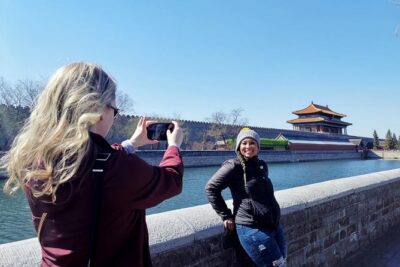
All-Inclusive Tour: Tiananmen Square, Forbidden City, Great Wall
Read our review →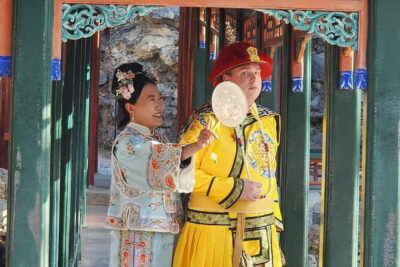
4-Hour Small Group Tour to Forbidden City with Entry Tickets
Read our review →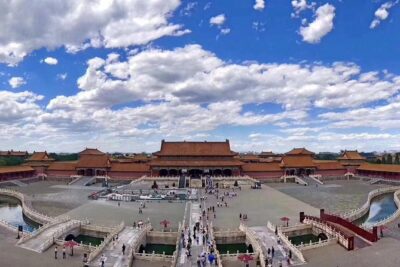
Beijing Full Day Tours: Tiananmen Sq, Forbidden City, Great Wall
Read our review →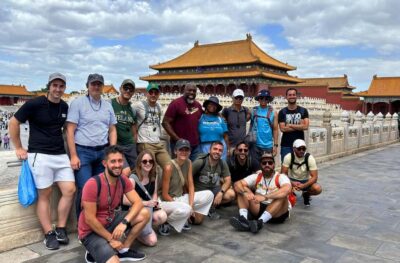
Tianmen Square, Forbidden City & Royal Museum Tours
Read our review →
Beijing Forbidden City Ticket Booking (Optional: guide service)
Read our review →
Forbidden City and Tian’anmen Square Waking Tour
Read our review →Browse the lists this tour appears in