
REVIEW · FORBIDDEN CITY TOURS
Hue Imperial City Walking Tour: Citadel & Forbidden City
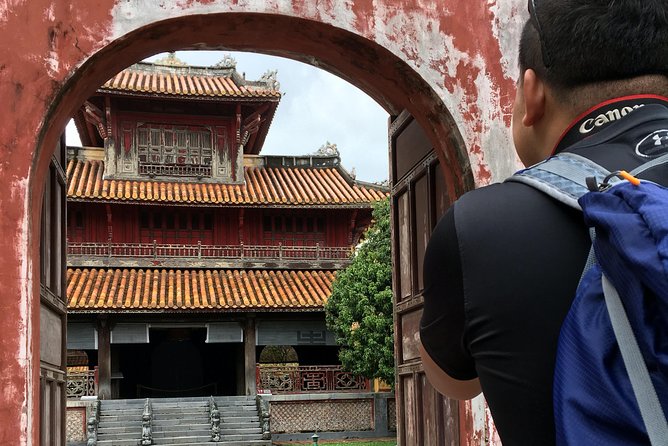
Hue’s Imperial City is much easier to understand when someone explains what each gate, hall, temple, and garden was built to do. This tour takes you from Ngo Mon Gate through the former royal compound, then into the Forbidden City, where palace ruins and restored buildings tell the story of the Nguyen emperors.
I especially like the tour’s slow, question-friendly pace and the chance to learn about court life, not just architecture. Guides including Ngoc, Nhien, Ha, Huong, Hoa, Sue, and Xi have been praised for clear English, strong historical context, and good judgment about when to pause. The main drawback is that the $11 price does not include entry tickets, and the long walk can be hard in heat or rain.
Key points to know before you book
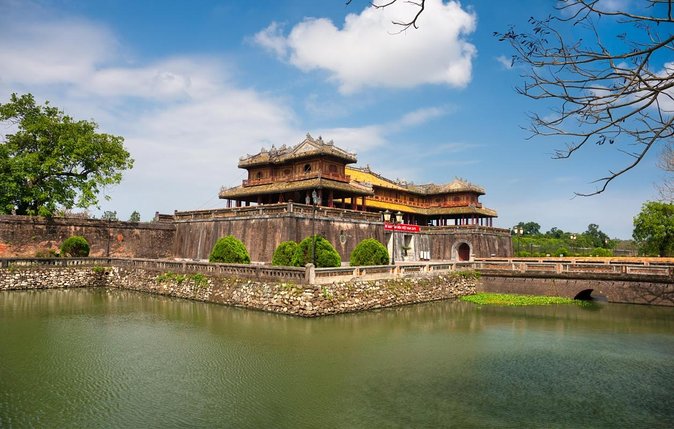
- Enter through Ngo Mon Gate: This grand entrance sets up the scale and design of the Imperial City.
- See the heart of royal government: Thai Hoa Palace introduces the formal side of Nguyen Dynasty rule.
- Visit The Mieu and the Forbidden City: You get both the emperor-worship complex and the more private royal quarters.
- Expect a serious walk: The tour lasts from 150 to 330 minutes, depending on the option and pace.
- Guides add the real value: English and French guides explain customs, succession, architecture, and daily life.
- Check the ticket cost: Admission is separate, and the meeting point is at the four cannons by Cua Ngan, not every cannon shown on Google Maps.
Why a guide helps inside Hue’s enormous citadel
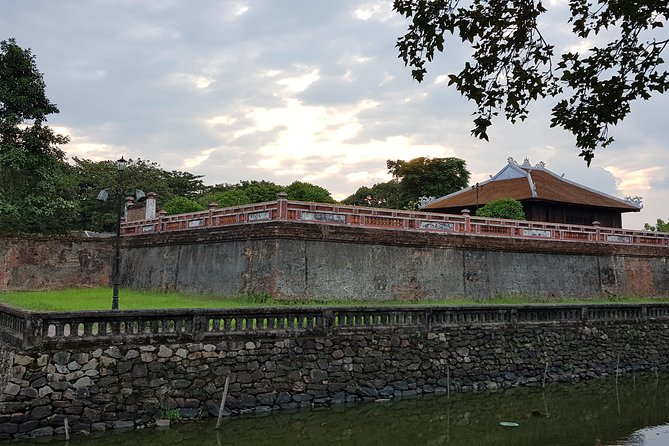
Hue’s Imperial City is not a single palace you can see in half an hour. It is a large walled complex with formal courtyards, temples, pavilions, gardens, gates, residences, and remains of the Forbidden City. On your own, you can admire the painted details and broad courtyards, but you may miss why one building faced a certain direction or why some emperors were not worshiped in The Mieu.
That is where this walking tour earns its modest price. A good guide gives you a basic map of Nguyen Dynasty power before the details begin to blur together. You learn which places served public ceremonies, which belonged to the royal family, and which were tied to ancestor worship.
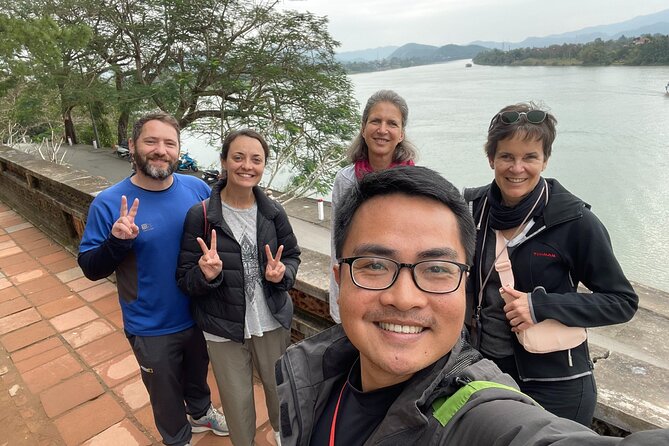
The strongest part of the experience is the conversation. Guides such as Ngoc and Nhien have been praised for answering detailed questions about Vietnam’s rulers and political troubles. Huong is noted for patience and a well-judged pace, while Sue has been especially good at explaining slowly and clearly when guests needed to translate for a family member.
The tour can be private or arranged for a small group. Some scheduled departures end up with only one or two people, which gives you more room to ask questions and stop for photographs. That is not guaranteed, but the format allows for a more personal outing than a large coach tour.
More Forbidden City tours in the world:
- Beijing: Forbidden City Tour(Group/Private)-Tickets Included
★ 4.8 · 7,974 reviews - Beijing: T-Square & Forbidden City Group or Private Tour
★ 4.8 · 4,446 reviews - All-Inclusive Tour: Tiananmen Square, Forbidden City, Great Wall
★ 5.0 · 2,873 reviews
Meeting at the four cannons by Cua Ngan
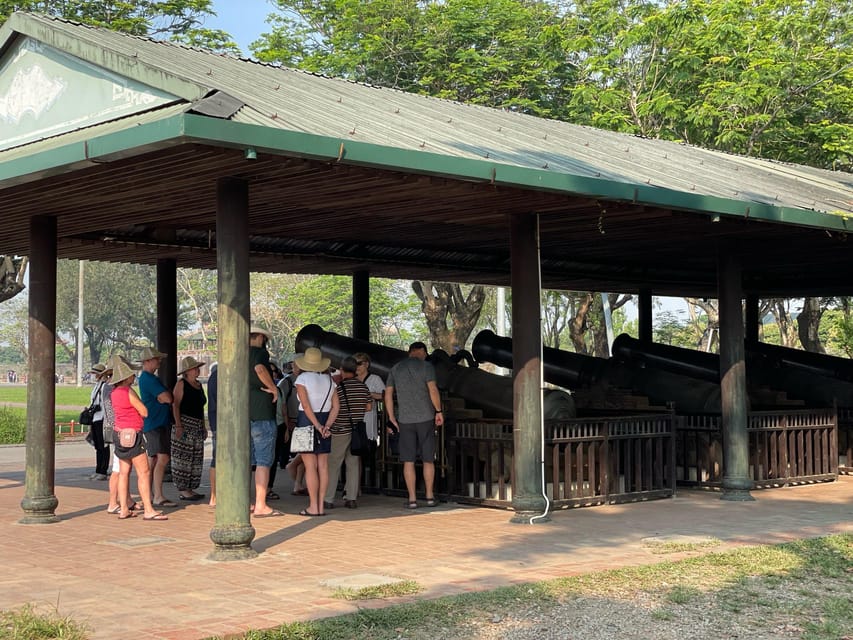
The meeting point needs care. Google Maps may label the general area Nine Holy Cannons, but the cannons are split into two locations. Four cannons are displayed at Cua Ngan, and five are near Quang Duc Gate. The meeting point for this tour is the four-cannon location at Cua Ngan.
Your guide waits there. Leave a working WhatsApp number when booking so the guide can send a map pin or help if you are unsure of the exact spot. Pickup is also available with some options, but you need to provide your hotel name and WhatsApp number in advance.
The tour ends after you walk out of the Imperial City. Drop-off options include Hue and Cua Hien Nhon. Since the route covers a large site, wear shoes suited to uneven walking and bring water, especially during hot weather. Wheelchair users should choose another activity because this tour is not suitable for wheelchairs.
Ngo Mon Gate gives you the right opening lesson
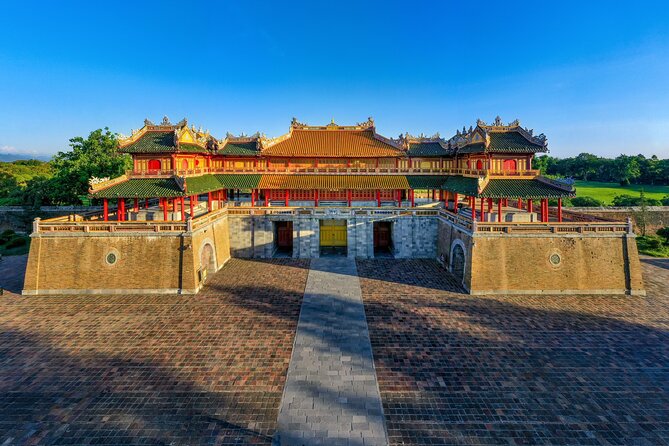
The walk begins at Ngo Mon Gate, the most famous entrance to the Imperial City. It is more than a grand photo stop. The gate introduces the careful separation between the public, official world of the court and the private spaces behind it.
Your guide uses the first part of the visit to explain the layout of the citadel and the Nguyen Dynasty. Expect about 20 minutes here, including photographs and an introduction to the site. This is a useful start because the Imperial City can otherwise feel like a collection of attractive but unrelated buildings.
Take a moment to look at the layered rooflines and the broad approach to the gate. The architecture is designed to make movement feel formal and controlled. You are not simply walking into a palace; you are entering a carefully ordered royal center.
Thai Hoa Palace explains imperial ceremony
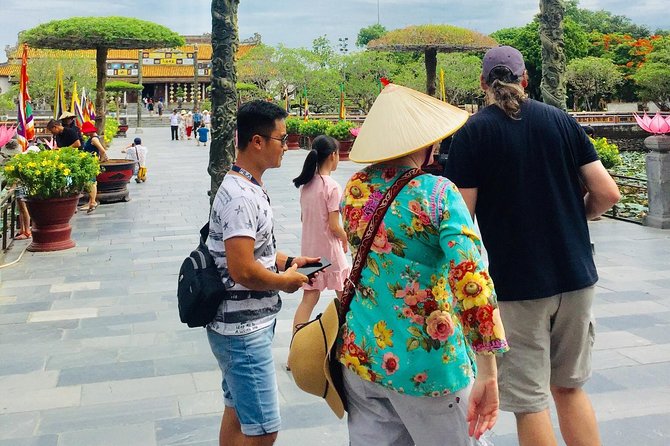
From Ngo Mon Gate, the route continues to Thai Hoa Palace, also called the Palace of Supreme Harmony. You spend about 30 minutes here with your guide.
This is one of the key stops because it represents the public face of the emperor. Formal ceremonies, court gatherings, and important announcements were linked to this area. The building and courtyard make more sense once you understand that the Nguyen court used architecture to show rank and authority.
Thai Hoa Palace is also a good place to ask broad questions. How did the emperor relate to mandarins? What happened during a major ceremony? How did court rules shape everyday life? The guides praised most highly on this tour, including Ngoc, Florence, and Danny, are valued for answering these questions without turning the visit into a list of dates.
The palace may be one of the busier points on the route, and large groups can affect how long you can linger. A guide helps by pointing out what to look for before you move on.
More royal castle tours in the world:
- Prague: Prague Castle and Lobkowicz Palace Entry Tickets
★ 4.4 · 5,066 reviews - Koblenz: Rhine Valley Castles and Palaces Boat Tour
★ 4.4 · 1,824 reviews - Neuschwanstein Castle and Linderhof Palace Day Trip from Munich
★ 4.5 · 1,756 reviews - Prague Castle: Midday Classical Concert at Lobkowicz Palace
★ 4.6 · 1,106 reviews
The Mieu brings royal succession into focus
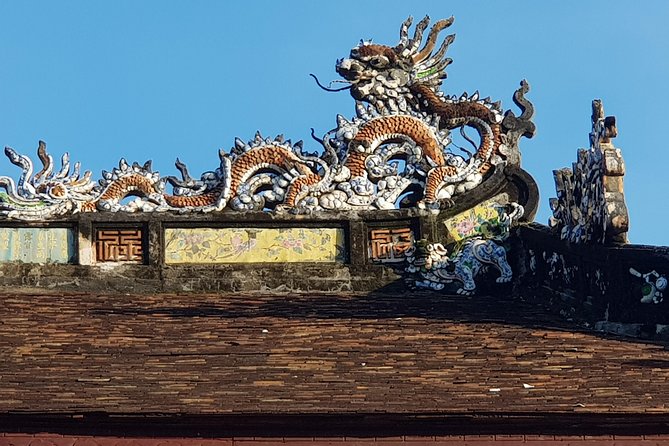
The itinerary then reaches Hien Lam Pavilion and The Mieu, the temple complex used to honor Nguyen emperors. Hien Lam Pavilion receives a shorter stop of around 10 minutes, while the nearby temple area gets more time for photographs and explanation.
The Mieu is one of the most interesting places on the tour because it brings politics, family, and religion together. This was not simply a place for quiet prayer. It was part of the official system for remembering emperors and confirming their place in the dynasty.
Your guide explains why some kings were not allowed to be worshiped inside The Mieu. That detail gives you a better sense of how royal memory was managed. Succession was not only a family matter. It could also reflect political judgment, legitimacy, and the court’s view of a ruler’s conduct.
The nearby Hien Lam Pavilion adds to the lesson. This section of the route shows how the Nguyen court honored its founders and important figures through architecture. You get a clearer picture of the dynasty as an institution, not just a line of kings.
Gates and courtyards reveal how the city worked
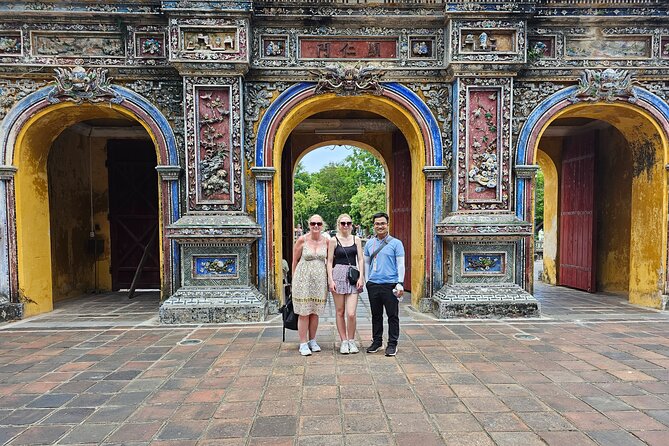
The tour continues through other structures inside the Imperial City, including Cua Chuong Duc. This stop takes about 10 minutes and works best as a chance to understand how people moved through the complex.
Some scheduled points are listed simply as a photo stop and guided visit. Do not read that as a lack of importance. Large royal compounds often make their strongest impression through transitions: a gate, a wall, a covered passage, a courtyard, then another enclosed space.
The guide helps you notice these changes. You may hear how access was controlled, which groups could enter certain areas, and how the compound separated ceremony from domestic life. The exact order or time at each smaller stop can vary, so it is sensible to treat the schedule as a framework rather than a minute-by-minute promise.
There is also a short break of about 10 minutes. That matters. The site is extensive, and the combination of sun, walking, and standing can tire you before the most private palace areas.
Kien Trung Palace leads into the Forbidden City
The route’s most anticipated section is the Forbidden City, reached after the ceremonial buildings of the Imperial City. Here you see Kien Trung Palace, which was used as a residence for the king’s family. The visit and walk take roughly 20 minutes.
Kien Trung Palace helps you shift from public authority to royal domestic life. Thai Hoa Palace shows the emperor in an official role. Kien Trung Palace gives you a glimpse of the spaces tied to the royal household.
The Forbidden City has suffered damage and loss, so the experience is not a perfect sequence of intact halls. Some buildings are restored or in good condition, while others are worn or reduced to partial remains. That contrast is part of what you see. Restoration work sits beside traces of war, age, and neglect.
A guide gives those contrasts meaning. Instead of seeing an empty foundation and moving on, you can learn what once occupied the space and why it mattered. The site’s scale also becomes clearer here. Even after the main ceremonial halls, there is still a long route through residences, gardens, libraries, and performance spaces.
Gardens and pavilions slow the pace
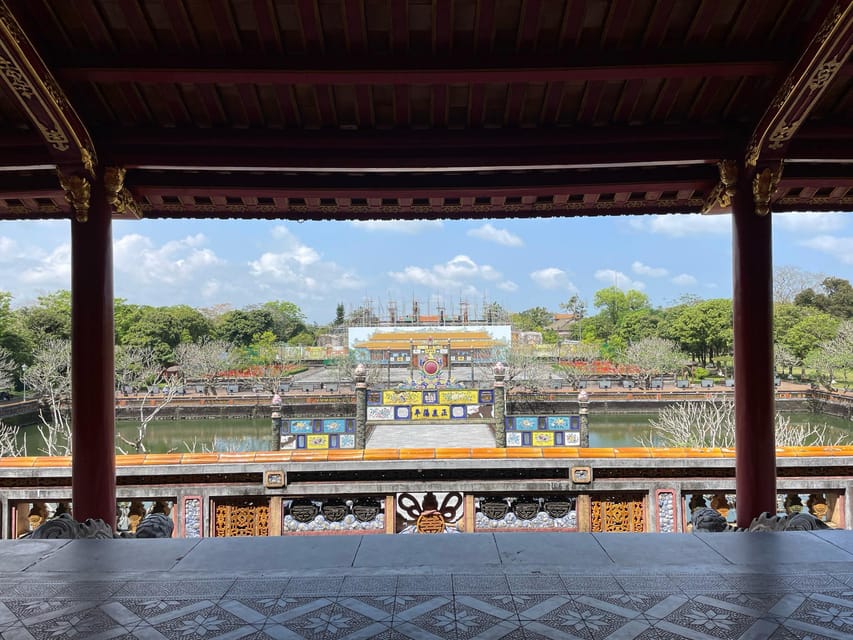
Thai Binh Pavilion and Thieu Phuong Garden offer a change from formal halls. Thai Binh Pavilion gets about 10 minutes, followed by around 20 minutes in Thieu Phuong Garden for sightseeing and walking.
These areas are useful for seeing the court’s quieter side. The gardens were not just decorative backdrops. They created places for reading, rest, reflection, and controlled movement within the royal compound.
This is also where the tour’s pace can feel most pleasant. Guides such as Ha and Hoa have been praised for not rushing, while still covering the main areas. You have time to take photographs, look at architectural details, and ask about the lives of people who lived and worked inside the palace grounds.
Do not expect a nature walk in the usual sense. This remains a managed royal garden within a historic complex. Its value comes from the contrast between open planted spaces and the strict geometry of the palace buildings.
The Royal Library and theater complete the picture
The final section includes the Royal Library and Duyet Thi Duong Royal Theater. The theater visit lasts about 10 minutes, with another brief photo stop nearby.
The Royal Library is a fitting final stop because it points to the intellectual life of the court. The Nguyen rulers were not concerned only with ceremonies and military power. Scholarship, records, literature, and education also shaped court culture.
Duyet Thi Duong shows another side of palace life. Royal theater was entertainment, but it also belonged to the court’s formal culture. A guide can explain who watched performances and how the theater fit into life inside the Forbidden City.
After these stops, you walk out of the Imperial City. The tour does not include a meal, drinks, or transportation as a standard part of the walking option. Some guides have offered local food or coffee suggestions after the tour, but that is personal advice rather than a listed inclusion.
What the $11 price really buys you
At $11 per person, this is a low-cost way to add structure and context to a large historic site. The price covers a local guide and walking tour, not entry tickets. You need to budget separately for admission, and the tour cost should not be confused with a full sightseeing package.
The value is strongest if you are interested in history, architecture, or questions about Vietnamese culture. You are paying for interpretation and time, not transport or a meal. That is a fair trade at a place where the wrong turn or missed explanation can leave you with only photographs.
The wide duration range, 150 to 330 minutes, deserves attention. A shorter option may suit you if you mainly want the major buildings. A longer version makes more sense if you want the Forbidden City, gardens, Royal Library, theater, and plenty of time for questions.
Ask about the starting time and exact option before booking. The tour can be private or small group, and pickup may be available, but these details depend on what you select.
Who will get the most from this tour
I would choose this walk if you are visiting Hue for the first time and want to understand the Imperial City rather than simply pass through it. It is also a good fit for photographers who want time to ask about details and find useful viewpoints. One past guide, Ngoc, was especially patient with a photographer and suggested angles around the site.
Families and mixed-age groups may appreciate the flexible pace, though the walking distance still matters. The guide can slow down, explain carefully, and build in breaks, but this is not a seated museum visit.
You may prefer to explore alone if you already know Nguyen Dynasty history or want complete freedom to stop wherever you like. You will save the guide fee, but you will also lose the context that makes The Mieu, the Forbidden City, and the damaged palace buildings easier to read.
Guides speak English or French. The strongest guide experiences described for this activity involve clear speech, patience, humor, and the ability to answer questions beyond a memorized script. Names that have received especially warm praise include Ngoc, Nhien, Huong, Ha, Hoa, Sue, Xi, Danny, and Florence, though you cannot guarantee a specific person unless the provider confirms it.
Practical verdict: should you book it?
Book this tour if you want a guided introduction to Hue’s royal center for a small fee and you are comfortable walking for several hours. The best reason to go is not simply seeing Ngo Mon Gate or Kien Trung Palace. It is learning how ceremony, family life, worship, architecture, and political power fitted together.
Skip it if you want a quick photo visit, dislike guided pacing, or need step-free access. Also remember to add the entry ticket to your budget and confirm the four-cannon meeting point at Cua Ngan.
For most first-time visitors, I would book it. The Imperial City is too large and layered to take in fully through signs alone, and the guides on this activity have shown a strong record of clear explanations, thoughtful pacing, and useful local suggestions. At $11 before admission, it is a practical way to make the site feel like a former royal city instead of a series of disconnected ruins.
FAQ
How long does the Hue Imperial City walking tour last?
The tour lasts between 150 and 330 minutes, or about two and a half to five and a half hours. The exact length depends on the selected option and available start time.
What places are included in the walking route?
The route includes Ngo Mon Gate, Thai Hoa Palace, Hien Lam Pavilion, Cua Chuong Duc, The Mieu, Kien Trung Palace, Thai Binh Pavilion, Thieu Phuong Garden, Duyet Thi Duong Royal Theater, the Royal Library, and areas of the Forbidden City.
Are entry tickets included in the $11 price?
No. The price includes the local guide and walking tour, but entry tickets, food, and drinks are not included.
Where is the meeting point?
The meeting point is at the four cannons displayed at Cua Ngan. Google Maps may show Nine Holy Cannons, but five cannons are located separately near Quang Duc Gate.
Can the guide pick me up at my hotel?
Pickup is available with some options. Provide your hotel name and WhatsApp number so the driver and guide can arrange the pickup details.
What languages are available?
The tour is offered with a live guide in English or French.
Is this tour suitable for wheelchair users?
No. The activity is listed as unsuitable for wheelchair users.
Can I cancel the tour for a refund?
You can cancel up to 24 hours in advance for a full refund. Reserve now and pay later is also available, depending on the booking option.
More Walking Tours Past the Palaces in the world
- Venice: Doge’s Palace and St Mark’s Basilica Walking Tour
★ 4.4 · 6,291 reviews - Split: Old Town and Diocletian Palace Walking Tour
★ 4.9 · 4,727 reviews - Walking Tour of Split and Diocletian’s Palace
★ 5.0 · 2,588 reviews - Bangkok: Grand Palace and Wat Phra Kaew Guided Walking Tour
★ 4.4 · 2,417 reviews
Just added around the world
- Pitti Palace and Palatina Gallery★ 4.0 · 41 reviews
- Pitti Palace Small Group Tour★ 5.0 · 6 reviews
- Private Guided Tour of Palazzo Vecchio in Florence★ 3.5 · 4 reviews
- Florence: Palazzo Vecchio Skip the line Entry ticket★ 4.0 · 49 reviews
- Pitti Palace: The Royal Palace of Florence★ 4.5 · 12 reviews
- PALAZZO VECCHIO Private tour in Florence★ 5.0 · 35 reviews
- Private Tour of Pitti Palace with Boboli Garden★ 5.0 · 28 reviews
- Pitti Palace and Palatine Gallery: A Royal Art and History Tour★ 4.5 · 42 reviews
Forbidden City Tours, compared.
Forbidden City Tour(Group/Private)-Tickets Included
Read our review →
T-Square & Forbidden City Group or Private Tour
Read our review →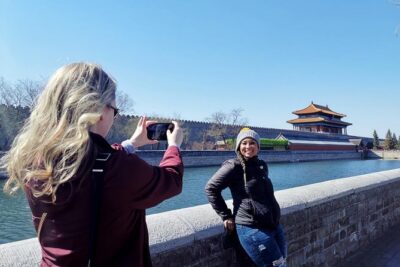
All-Inclusive Tour: Tiananmen Square, Forbidden City, Great Wall
Read our review →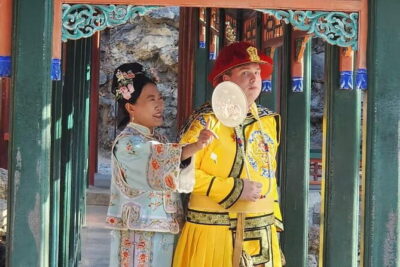
4-Hour Small Group Tour to Forbidden City with Entry Tickets
Read our review →
Beijing Full Day Tours: Tiananmen Sq, Forbidden City, Great Wall
Read our review →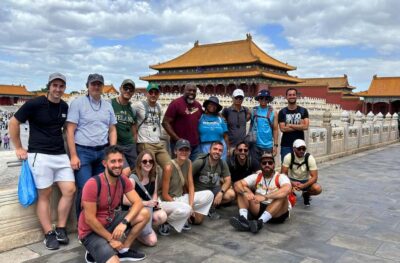
Tianmen Square, Forbidden City & Royal Museum Tours
Read our review →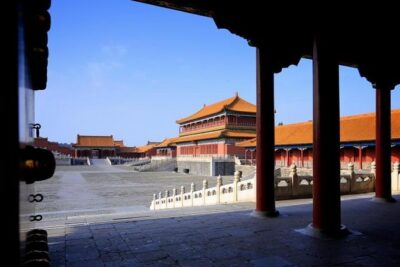
Beijing Forbidden City Ticket Booking (Optional: guide service)
Read our review →
Forbidden City and Tian’anmen Square Waking Tour
Read our review →Browse the lists this tour appears in