
REVIEW · ITALIAN PALAZZO TOURS
Palazzo Barberini: 2-Hour Private Tour
Palazzo Barberini packs several centuries of Italian art into a handsome Roman palace, but the real treat is the way the paintings connect to the religious and political changes of their time. You move from medieval devotional art toward the drama of the Baroque, with Raphael, Titian, Caravaggio, El Greco, and Guido Reni along the way.
I like the private format, since you can ask questions and spend more time on works that catch your eye. I also like the focus on La Fornarina and Caravaggio, two very different artists with stories that are far more entertaining than a list of dates. The main drawback is the short two-hour limit. It is enough for a guided introduction, not enough to study every room in detail.
Key points to know before you book
- Raphael’s La Fornarina: See one of the museum’s best-known paintings and hear the stories linked to Raphael and his model.
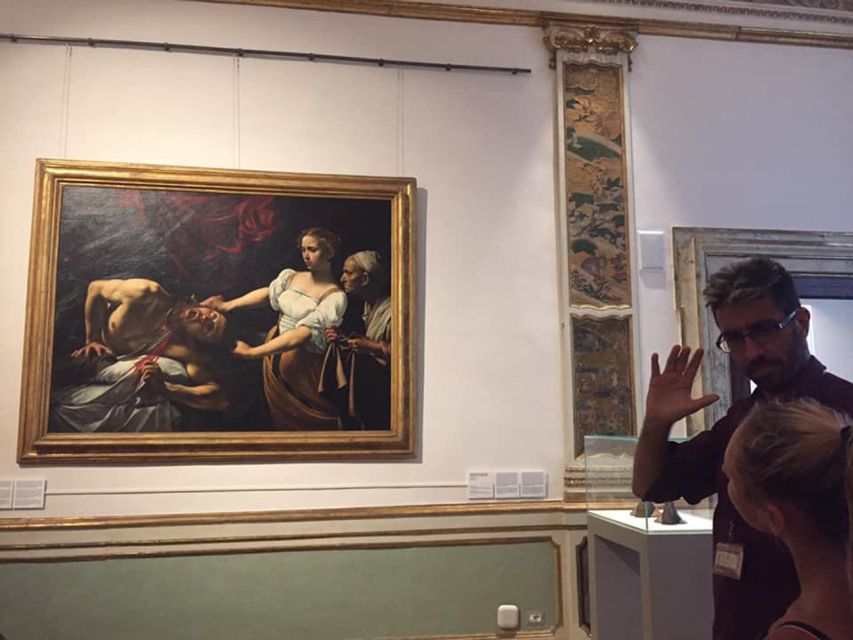
- Caravaggio’s troubled career: Learn about the artist known as the Cursed Painter and the forceful Baroque style he helped shape.
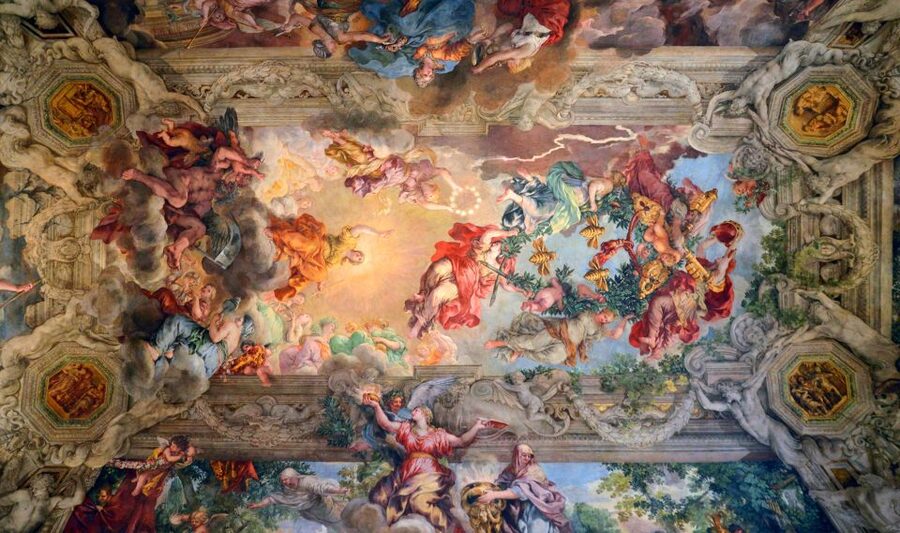
- Pietro da Cortona’s ceiling: Look up for one of Rome’s most striking Baroque interiors.
- A private two-hour visit: Your guide can shape the pace around your interests, within a fairly tight schedule.
- Piazza Navona finale: The art lesson continues outdoors with a stop at one of Rome’s defining Baroque squares.
- Practical limits: Large bags are not allowed, and the tour is not suitable for wheelchair users or people with mobility impairments.
Why Palazzo Barberini makes a strong art stop
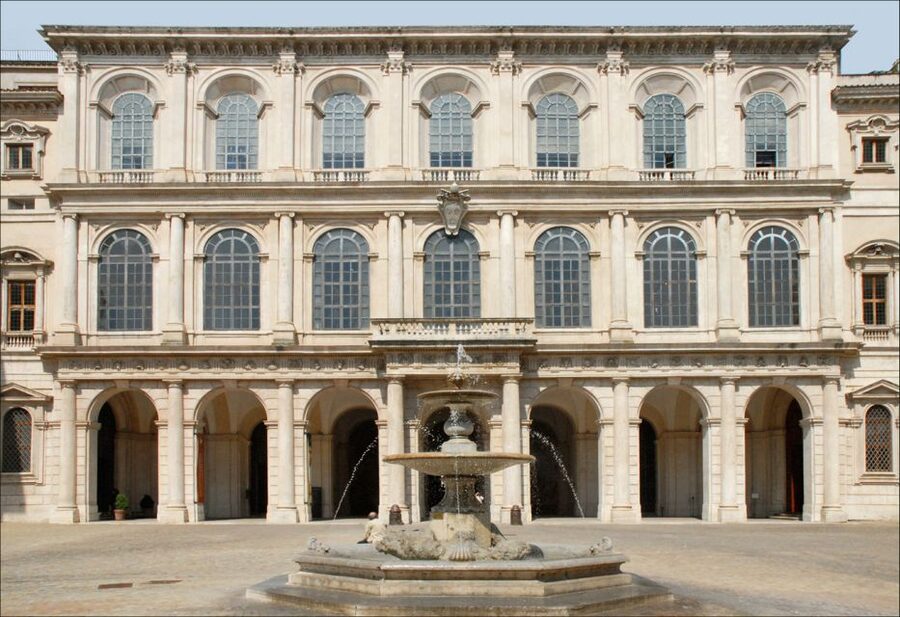
Rome has no shortage of famous churches, ruins, and museums. Palazzo Barberini earns its place because it lets you watch Italian painting change over time in one setting. The tour begins with art from the Middle Ages and moves toward the Baroque, so you are not simply looking at isolated masterpieces. You are seeing how artists responded to new religious ideas, powerful patrons, and changing tastes.
That broad sweep helps if you are not an art specialist. You do not need to arrive knowing the difference between Renaissance balance and Baroque movement. A good guide can point out how figures, light, gestures, and space change from one period to the next.
The private setup matters here. In a large group, a guide has to keep moving even if you want to ask why a particular face looks so severe or how a painting was used in its original setting. With a private group, you have a better chance to stop, ask, and connect the picture to the larger story.
The tour costs $135.94 per person. That is a serious price for two hours, especially if you are traveling alone or as a couple. It makes more sense when you value a personal guide and want an organized introduction to major works without trying to sort out the museum on your own.
More Palazzo Tours in Rome
- Rome: Opera Concert at Palazzo Poli – Fontana di Trevi
★ 4.7 · 1,026 reviews - The Great Opera Arias Concert at Palazzo Poli – Trevi Fountain
★ 5.0 · 533 reviews - Rome: Palazzo Barberini Galleria Corsini Ticket & Audioguide
★ 3.9 · 322 reviews
From medieval devotion to Renaissance poise
The opening section gives you a useful starting point: medieval Italian art. These works often place religious purpose ahead of natural movement or personal expression. Figures can look formal, frontal, and symbolic. The goal was not always to show a believable room or a private moment. The painting helped communicate faith.
As the tour moves forward, Italian art becomes more interested in the human figure, believable space, and the character of the people shown. This shift is part of what makes the museum visit worthwhile. You get to compare styles with your own eyes rather than hearing a lecture detached from the objects.
The guide also explains the religious and political forces behind the changes. That context is important in Rome, where art was tied closely to churches, noble families, and public power. Paintings were not only made for quiet private enjoyment. They could teach, impress, persuade, and display wealth.
You might find the early works less immediately gripping than Caravaggio’s intense scenes. Give them time. They show where later artists came from, and the contrast makes the Renaissance and Baroque rooms more exciting.
Raphael’s La Fornarina
Raphael’s La Fornarina is the major Renaissance stop. The painting is known for its portrait of a woman, presented with a directness and intimacy that invite questions about identity, affection, and artistic ownership.
Your guide brings the painting into Raphael’s wider story and explains the traditions and speculation surrounding the subject. The value of seeing it with a guide is not just learning the title. You can look at the pose, expression, clothing, and handling of the skin while someone explains how the painting fits Raphael’s art.
Raphael is often associated with grace and balance. La Fornarina gives you a more personal side of that reputation. It feels less like a formal public portrait and more like a picture with a private story behind it, even though many details remain open to interpretation.
Do not expect the tour to turn every mystery into a confirmed fact. The best approach is to enjoy the questions while keeping a clear line between documented history and later storytelling. That balance makes the stop more useful.
Titian and the mature Renaissance
Titian adds another important voice to the museum’s account of Italian art. His work helps show how Renaissance painters could combine rich color, strong personalities, and a more relaxed sense of the human figure.
The tour places Titian beside the wider development of Italian painting rather than treating him as an isolated name. You can listen for the differences between his approach and Raphael’s. Raphael often suggests control and harmony, while Titian can feel more interested in color, texture, and the presence of the sitter or subject.
This comparison is one of the private tour’s better uses of time. Looking at major artists one after another can blur together if you only collect names. A guide gives you terms and visual clues that help you remember what you saw after leaving the palace.
Same city, a very different set of state rooms:
- Tivoli Full Day Trip from Rome: Hadrian’s Villa and Villa D’Este
★ 4.5 · 1,730 reviews - Hadrian’s Villa and Villa d’Este Half-Day Trip from Rome
★ 3.5 · 808 reviews - Rome: Colonna Palace Entry Ticket
★ 4.8 · 609 reviews - Colosseum Underground, Roman Forum & Cesar Palace Special Access
★ 4.5 · 421 reviews
Caravaggio, light, and the Cursed Painter
Caravaggio brings a sharp change in mood. His paintings are tied to the Baroque taste for emotional force, strong light, and scenes that seem to push toward the viewer. Instead of presenting distant holy figures, he often made religious stories feel physical and immediate.
The guide also tells the story of Caravaggio as the Cursed Painter. His reputation rests not only on his paintings but also on the drama of his life. That personal story can make the art memorable, but do not let it replace the paintings themselves. The important thing to watch is how he uses light, shadow, gesture, and ordinary human presence.
Caravaggio’s style helped make religious scenes feel urgent. A face emerging from darkness or a hand caught in a decisive gesture can do more than explain a story. It can make you feel that the event is happening now.
This is likely to be one of the most engaging parts of the two hours, especially if you enjoy art with strong emotion and a little danger around the edges. If you prefer calm, polished compositions, Caravaggio may feel harsh. That is part of his effect.
El Greco, Guido Reni, and the wider collection
The museum visit is not limited to the three headline names. El Greco and Guido Reni add more variety to the picture of Italian and European art.
El Greco’s work can feel elongated, spiritual, and unlike the measured balance of earlier Renaissance painting. Guido Reni represents another form of Baroque elegance, with a style that can be more controlled and idealized than Caravaggio’s.
These artists matter because they prevent the tour from becoming a simple Raphael-to-Caravaggio highlight reel. You get a better sense of how many different solutions artists found for religious subjects, portraiture, movement, and emotion.
Still, remember that two hours goes quickly. The guide will need to select what to discuss. If you have a particular interest in El Greco, Reni, or Titian, mention it at the start so the private format can work in your favor.
Looking up at Pietro da Cortona’s ceiling
One of the tour’s memorable changes of scale comes when you look away from the paintings and up at Pietro da Cortona’s ceiling. Baroque art is not only about framed canvases. It can take over an entire room, using architecture, painted illusion, movement, and decoration to overwhelm the senses.
The ceiling gives you a clear example of how powerful families used art to project status. It is not a quiet picture meant for close inspection. It works across the room, asking you to look upward and accept a grand visual display.
Take a moment before the guide moves on. Ceiling paintings are easy to miss because visitors naturally focus on eye-level works. Here, the upper part of the building is one of the main attractions.
The ceiling also helps explain the Baroque style in plain terms. Instead of a calm, contained image, you get energy, theatrical space, and a sense that the room itself is part of the artwork.
Ending with Baroque Rome at Piazza Navona
The experience is described as ending with a stroll to Piazza Navona, a major symbol of Baroque Rome. This gives the tour a useful outdoor finish. Inside Palazzo Barberini, you study the ideas and techniques. In the square, you see how Baroque taste shaped the city itself.
Piazza Navona lets you connect painting, architecture, fountains, and public space. The setting is not just a backdrop for photographs. It shows how Rome used large-scale art to impress people in the open air.
The practical information also says the activity ends back at the museum meeting point, so clarify the precise final arrangement when you book. The supplied route description presents Piazza Navona as the closing point, while the meeting details list the museum as the end location.
Either way, the connection is valuable. You finish with a better sense that Baroque Rome is not confined to galleries. It appears in the city’s squares, churches, and public displays.
Timing, meeting point, and what to carry
Plan to arrive 15 minutes before the start. The guide waits in the museum courtyard, in front of the entrance, holding a sign with the tour name. Entry tickets are distributed at the beginning, so arriving late could create unnecessary stress.
Hotel pickup and drop-off are not included. You need to make your own way to the museum, and the starting time depends on availability. Check the schedule carefully before building the rest of your day around it.
Bring identification for children if required. Large bags and luggage are not allowed, so do not arrive with a suitcase or an oversized daypack. This is especially important if you are coming directly from a train station or checking out of a hotel.
The tour runs in rain or shine. Much of the experience takes place inside, but the Piazza Navona portion means you should dress for the weather and wear comfortable shoes.
The activity is offered in English or Italian. No individual guide name is provided in the available details, so you cannot choose a specific guide in advance. The group is private, which gives you a more personal visit than a standard shared group tour.
Who will get the most from this tour?
I would choose this experience if you want an art guide to give structure to your first visit to Palazzo Barberini. It suits couples, families with an interest in art, and small private groups that want to ask questions without competing with a large crowd.
It is also a good match if you like stories behind paintings. Raphael’s personal associations, Caravaggio’s troubled reputation, and the social forces behind Baroque art give the tour more life than a basic room-by-room explanation.
You may want a different plan if you prefer to wander slowly and read every label. Two hours is a guided overview. It does not promise time for every artwork, and the pace may feel brisk if you want close study.
The mobility warning is important. The experience is not suitable for wheelchair users or people with mobility impairments. If you have concerns about stairs, walking distance, or the route to Piazza Navona, ask the provider before paying.
Is the $135.94 price worth it?
At $135.94 per person, this is not the cheapest way to see Italian art. You are paying for the private guide, entry tickets, and a focused route through important works. The price makes the most sense when the guide’s explanations are central to your visit.
For a person who already knows the collection and wants to browse independently, the cost may be hard to justify. For a first-time visitor who wants context, comparisons, and a clear story in two hours, the private format can save time and make the museum less intimidating.
The 4.9 rating from nine reviews is encouraging, though the sample is small. I would treat it as a sign of strong satisfaction, not as proof that every guide or visit will match the same experience.
Free cancellation up to 24 hours before the tour and the option to reserve now and pay later reduce some planning risk. You still need to check the starting time, arrive early, and confirm the final stop.
Should you book Palazzo Barberini: 2-Hour Private Tour?
Book it if you want a compact, guided introduction to Italian painting that links Raphael, Titian, Caravaggio, and Baroque Rome. The private group, clear two-hour structure, and Piazza Navona connection give the visit a useful shape.
Skip it if you want an unhurried museum study session, need wheelchair access, or are trying to keep your Rome costs low. If you do book, arrive 15 minutes early, carry only a small bag, and ask the guide at the start to give special attention to the artists or paintings you care about most.
FAQ
How long does the Palazzo Barberini private tour last?
The tour lasts two hours. Starting times depend on availability.
What languages are available?
The live tour guide is available in English or Italian.
Is this a private group experience?
Yes. The tour is arranged for a private group.
Are museum entry tickets included?
Yes. Entry tickets are included, and they are distributed at the start of the activity.
Where does the tour begin?
Meet your guide in the courtyard in front of the museum entrance. Arrive 15 minutes before the scheduled start, and look for a sign with the tour name.
Is hotel pickup included?
No. Hotel pickup and drop-off are not included.
Can I cancel for a full refund?
Yes. You can cancel up to 24 hours in advance for a full refund. You can also reserve now and pay later.
More 2-Hour Experiences in Rome
- National Museum of Palazzo Massimo: 2-Hour Private Tour
★ 5.0 · 3 reviews - Prague Castle & Castle District: 2-Hour Guided Tour
★ 4.6 · 622 reviews - Cesky Krumlov: Private 2-Hour City Walking Tour
★ 4.8 · 96 reviews - Córdoba: Alcázar and Jewish Quarter 2-Hour Guided Tour
★ 4.2 · 50 reviews
Just added around Rome
- From Rome: Villa d’Este & Hadrian’s Villa Tickets & Transfer★ 4.5 · 32 reviews
- Tivoli: Hadrian’s Villa and Villa d’Este Guided Tour★ 4.5 · 73 reviews
- Day trip Rome by car : Tivoli Unesco Villa D’este & Hadrian★ 5.0 · 56 reviews
- Rome: Villa D’Este & Tivoli Tour with Skip-the-Line Entry★ 5.0 · 4 reviews
- Rome: Palazzo Altemps Reserved Entrance Ticket★ 4.5 · 49 reviews
- Rome: Palazzo Venezia Reserved Entrance with Museum★ 4.2 · 52 reviews
- Rome: Colonna Palace Guided Tour★ 4.9 · 70 reviews
- Rome: Monuments and Belvederes Guided E-Bike Tour★ 4.2 · 6 reviews
Italian Palazzo Tours, compared.
Uffizi, Pitti Palace & Boboli Combined 5-Day Pass
Read our review →
Palazzo Vecchio: Skip-the-Line Entry and Secret Passage Tour
Read our review →
Opera Concert at Palazzo Poli – Fontana di Trevi
Read our review →
Browse the lists this tour appears in