
REVIEW · MUSEUMS
Parma: Parmigiano Reggiano Museum Ticket
Parmigiano-Reggiano is not simply a food in Parma. It is part of the region’s identity, and this small museum shows how milk, copper vats, salt, time, and patient work become one of Italy’s best-known cheeses. The most interesting part is the chance to see the original 17th-century stables and hay barn, not just a row of display cases.
I like the museum’s setting in the Castellazzi complex, where the old vaulted rooms and circular cheese plant give the visit a real sense of place. I also like the clear choice between a low-cost museum ticket and an optional Parmigiano-Reggiano tasting, so you can keep the visit simple or make it more food-focused.
The main drawback is its modest size. If you expect a full factory tour or a long guided program, this may feel brief. The tasting and drinks cost extra, and starting times depend on availability, so check the schedule before setting your day around it.
Key points before you go
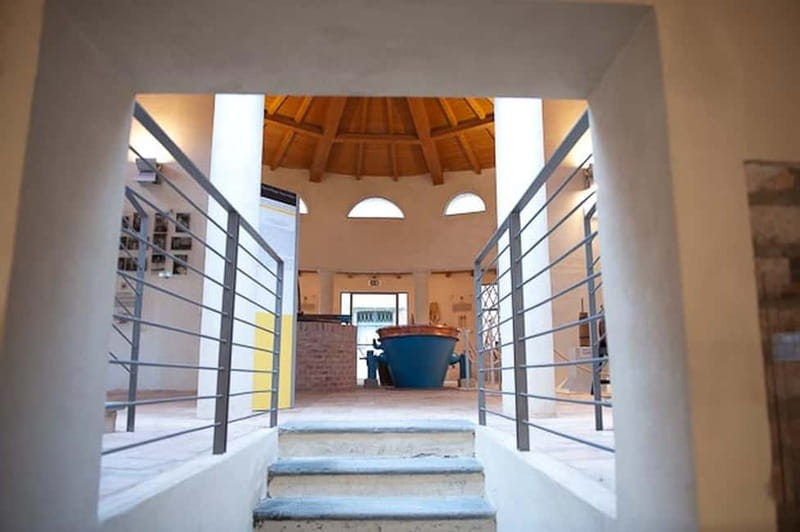
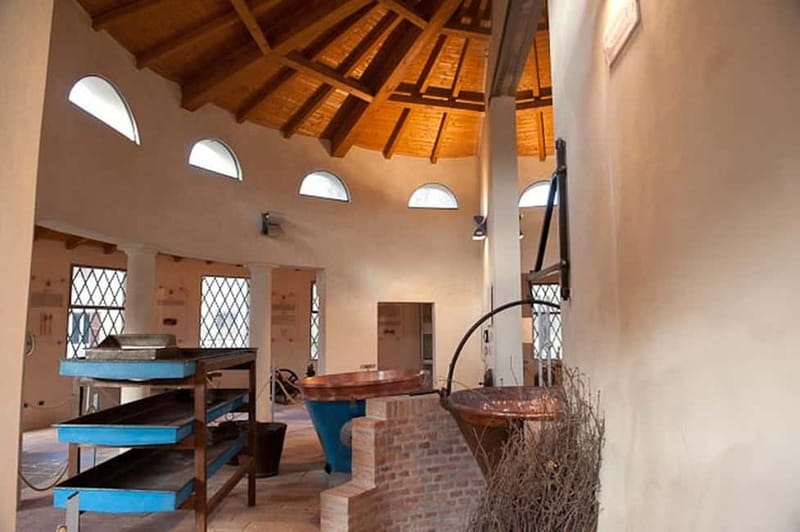
- See original cheese-making rooms: The complex retains vaulted stables, an ancient hay barn, and a circular cheese plant.
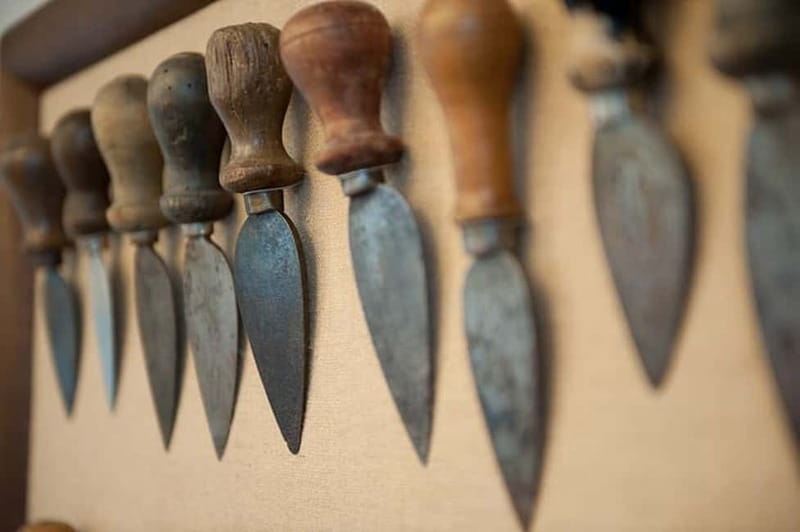
- Follow old and newer methods: Displays cover historic tools as well as equipment used in more recent cheese production.
- Add the tasting: The basic entry ticket does not include cheese or drinks, but you can choose an optional tasting.
- Pay only $8 for entry: The museum ticket is a low-cost way to add local food culture to a Parma visit.
- Good for families: The setting, old equipment, and tasting make the visit accessible to different ages.
- Plan around availability: The ticket is valid for one day, but you need to check available starting times.
Why this cheese matters in Parma
A visit here gives you a useful lesson in why Parmigiano-Reggiano has such a strong place in Emilia-Romagna. You are not looking at a modern food attraction built only for sightseeing. You are entering a complex connected to the work of producing cheese, with rooms and equipment that show how much labor sits behind a familiar wedge at the market.
The museum presents Parmigiano-Reggiano as both a product and a cultural tradition. That distinction matters. You learn about the cheese itself, but you also see the buildings and tools that shaped its production over time.
I find this kind of museum more satisfying than a simple tasting counter. A sample tells you what the cheese tastes like. The rooms explain why it has the texture, flavor, and reputation it does. Even if you already know Parmigiano-Reggiano, the old working spaces add useful context.
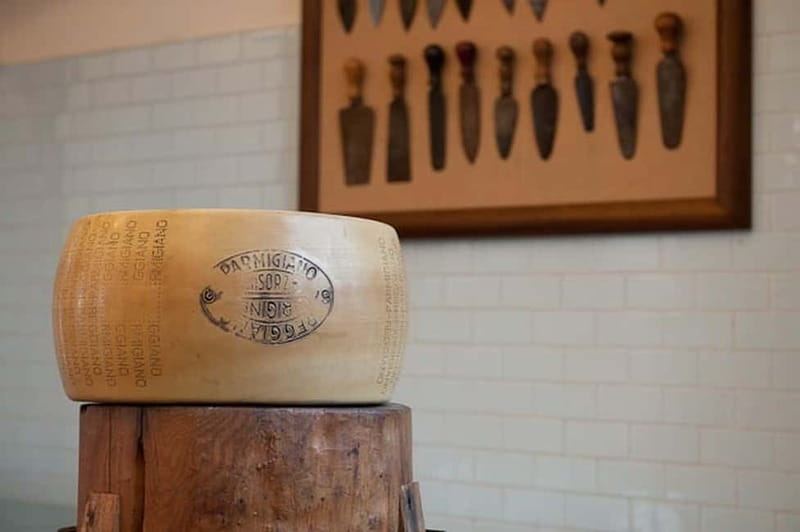
The collection also helps connect past and present. You can look at historic implements used in cheese making, then compare them with later equipment. The displays do not treat the old tools as decoration alone. They show the physical process behind the finished product.
More palace museums and galleries in Italy:
- Venice’s Best: Basilica, Doge’s Palace, Gondola & History Gallery
★ 4.5 · 2,478 reviews - Venice: City Pass with Museums including Doge’s Palace
★ 4.1 · 1,020 reviews - Venice Museum Pass & Doge’s Palace Entrance Ticket
★ 3.9 · 769 reviews
The Castellazzi complex and its old rooms
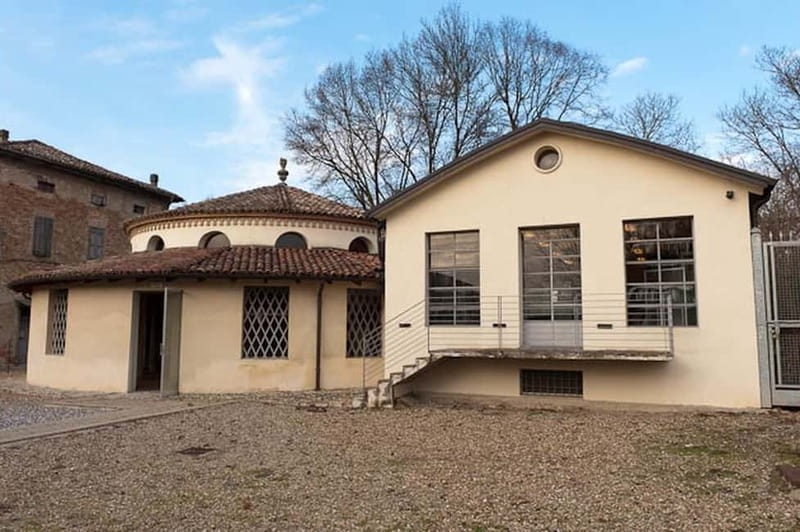
The setting is one of the strongest reasons to visit. The museum occupies the Castellazzi complex, whose architecture gives the experience more character than a standard indoor exhibition.
The original stables have vaulted roofs, and the ancient hay barn dates back to the 17th century. These rooms help you picture the agricultural world that supported cheese production. You can also pause for photographs of the complex’s distinctive archway, an especially useful detail if you enjoy historic farm architecture.
The building is not polished into something anonymous. Its older features remain visible, and that gives the visit a pleasantly grounded feeling. You see the kind of spaces where animals, hay, milk, and human work once shared the same working environment.
The age of the buildings is also useful for families. Children may not spend long reading every display, but the old stables, barn, and equipment give them something concrete to look at. The experience is less abstract than a lesson about cheese in a modern gallery.
You should allow time to look carefully at the structure itself. The museum’s appeal is not only inside the cases. The vaulted ceilings, old masonry, and archway are part of what you came to see.
Following the cheese-making process
Inside the museum, you explore the main house and its preserved production spaces. The tour includes the original stables, the hay barn, and the circular cheese plant.
The circular cheese plant is an important feature because it shifts the visit from general local history to the actual production of Parmigiano-Reggiano. You can see how the museum relates the building to the work once carried out there.
The visit also includes later additions, such as the basement milk room and salting room. These spaces help show that cheese production did not remain frozen in one period. The complex changed as working methods developed.
That mix of old and newer rooms is one of the museum’s best teaching tools. You are not asked to choose between a romantic view of the past and a purely modern account. Instead, you see how a long-running food tradition depends on both inherited methods and updated equipment.
The route is best enjoyed at an unhurried pace. This is not a timed attraction with a long list of separate stops. I would give yourself enough time to read the displays, inspect the tools, and notice how the rooms fit together.
Tools, equipment, and the work behind each wheel
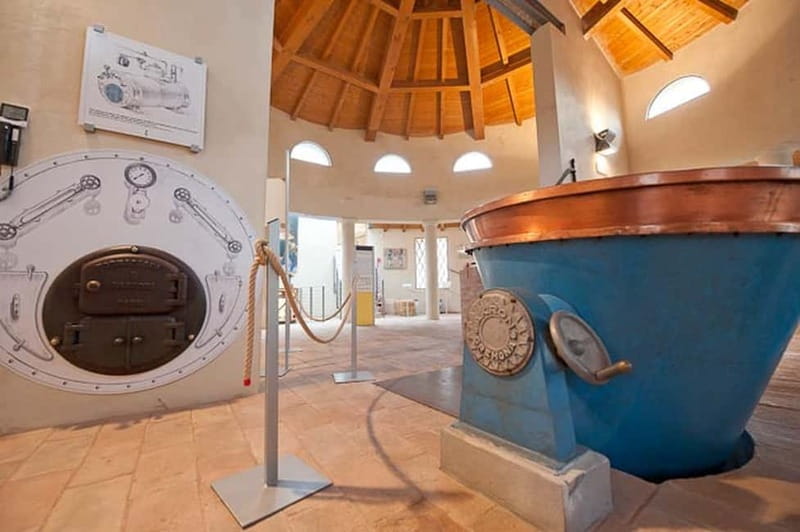
The collection includes different tools and equipment used in cheese making, both historically and in more recent times. For me, this is where the museum gains its practical value.
Parmigiano-Reggiano can look simple once it reaches a shop: a hard cheese, often sold in a wedge or block. The equipment reminds you that its production requires a chain of tasks and specialized objects. The museum lets you consider the work through the tools rather than through a general description alone.
The older implements are especially useful for understanding how much depended on manual skill. Later equipment shows how production changed while the identity of the cheese remained tied to established methods.
You should not expect a working demonstration based on the information available. The experience is centered on viewing the museum, its rooms, and its collection. That makes it a good fit if you want a self-paced cultural stop, but less suitable if your main goal is to watch cheese being made live.
The displays also make sense for visitors who are already planning to buy Parmigiano-Reggiano in Parma. After seeing the equipment and production spaces, a block of cheese feels less like an ordinary souvenir and more like a direct link to the place you visited.
More palace entry tickets in Italy:
- Venice: Doge’s Palace Reserved Entry Ticket
★ 4.6 · 42,716 reviews - Florence: Palazzo Vecchio Entrance Ticket & Audioguide
★ 4.4 · 4,822 reviews - Florence: Entrance Ticket to Pitti Palace
★ 4.5 · 4,528 reviews - Venice: St. Mark’s Basilica & Doge’s Palace Tour with Ticket
★ 4.7 · 3,375 reviews
The optional tasting and the best way to use it
The tasting is optional and is not included in the $8 museum ticket. You need to select the version that includes the Parmigiano-Reggiano tasting if you want to sample the cheese during the visit. Drinks are also not included.
I would strongly consider adding it if you enjoy food museums. The tasting gives the visit a clear finish and lets you connect the displays with the flavor of the product itself. A museum about cheese without a sample can feel slightly incomplete, especially when the main subject is something you can taste.
The tasting has also proved popular with families. Younger visitors may remember the sample more clearly than the equipment, while adults can use it to compare the museum’s information with what is on the plate.
Keep your expectations in check. The supplied details do not describe the number of samples, the specific ages of the cheese, or the drinks available. You should choose the tasting for the chance to try Parmigiano-Reggiano, not for a promised extended food class.
If you prefer a quick museum visit, the basic ticket still works. You can see the complex and collection without paying for the food option. If you are planning your visit around local specialties, the add-on makes more sense.
Is $8 good value?
At $8 per person, the museum ticket is reasonably priced for a focused cultural stop in Parma. You are paying for access to the historic complex and its collection, not for a full meal or a long guided excursion.
The value is strongest if you care about local food, old buildings, or the working history of Emilia-Romagna. The ticket lets you see original rooms that would be difficult to understand from a restaurant table alone. It also gives you a manageable activity that can fit into a wider day in Parma.
The low entry price makes it easy to choose the museum even if you are unsure about committing to a larger food tour. You can keep the cost down with the entry ticket, or add the tasting if you want a more complete food experience.
The price is less attractive if you want a large museum with many galleries or a long, highly structured visit. The attraction is specialized. Its subject is one cheese, and its strength comes from the historic buildings and production tools rather than sheer size.
I would judge the value this way: the ticket is a good buy for anyone already interested in Parmigiano-Reggiano, while the tasting determines how satisfying the visit feels for food-focused visitors.
Who will enjoy this museum most?
This experience suits families, couples, food lovers, and anyone curious about the local traditions of Parma. The historic rooms offer visual interest even if you are not an expert on cheese.
It is also a practical choice for a mixed group. One person can focus on the architecture, another on the tools, and another on the tasting. You do not all need the same reason to enjoy the visit.
The museum may appeal to you if you prefer smaller cultural attractions over crowded headline sights. Its appeal is quiet and specific. You come to understand one regional product through a real historic setting.
It is less suitable if you want an active workshop, a live production demonstration, or a long excursion with many stops. The available information points to a museum visit with an optional tasting, not a hands-on class.
Wheelchair access is available, which makes the attraction easier to consider for visitors who need an accessible venue. Still, because the complex includes old buildings, you may want to confirm any personal access needs when booking.
Timing, tickets, and cancellation
The ticket is valid for one day, with starting times based on availability. Check the available time before you book, particularly if you are coordinating this stop with meals or other sights in Parma.
You can reserve now and pay later, which helps if your schedule is still changing. You can also cancel up to 24 hours in advance for a full refund.
The basic ticket includes entry only. The tasting and drinks are not part of that price, so check your selected option carefully before paying.
No individual guide name is provided for this experience. You should therefore think of it primarily as a museum visit rather than a tour built around a named guide. Personal service is still part of the experience, and the staff have been praised for being friendly and helpful.
My practical verdict
I like this museum because it gives Parmigiano-Reggiano a physical setting. You see the old stables, the hay barn, the cheese plant, and the tools before deciding how much you want to taste.
Book it if you want an affordable Parma activity with local food meaning, historic architecture, and a flexible optional tasting. Choose the tasting if food is a central part of your trip. Skip the add-on if you only want a short cultural stop.
I would not book it as your only cheese experience if you are hoping for a long demonstration or hands-on lesson. But for $8, the museum offers a sensible and authentic look at one of Emilia-Romagna’s defining products, with enough visual detail to make the visit worthwhile.
FAQ
Where is the Parmigiano-Reggiano Museum?
The museum is in Parma, in Italy’s Emilia-Romagna region. It is located within the Castellazzi complex.
How much does museum entry cost?
The entry ticket costs $8 per person.
What does the basic ticket include?
The basic ticket includes entry to the Parmigiano-Reggiano Museum. Tasting and drinks are not included.
Can I choose a ticket with a cheese tasting?
Yes. You can choose between a museum ticket without tasting and an option that includes a Parmigiano-Reggiano tasting.
Is the tasting included in the $8 price?
No. The tasting is an optional add-on, and drinks are also not included.
What can I see inside the museum?
You can see original 17th-century stables with vaulted roofs, an ancient hay barn, a circular cheese plant, a basement milk room, a salting room, and cheese-making tools and equipment from different periods.
How long is the ticket valid?
The ticket is valid for one day. Available starting times depend on the schedule shown when you book.
Is the museum wheelchair accessible?
Yes. The activity is listed as wheelchair accessible.
Can I cancel the booking?
Yes. You can cancel up to 24 hours in advance for a full refund. You can also reserve now and pay later.
Just added around Italy
- Pitti Palace and Palatina Gallery★ 4.0 · 41 reviews
- Pitti Palace Small Group Tour★ 5.0 · 6 reviews
- Florence: Palazzo Vecchio Skip the line Entry ticket★ 4.0 · 49 reviews
- Pitti Palace: The Royal Palace of Florence★ 4.5 · 12 reviews
- Private Guided Tour of Palazzo Vecchio in Florence★ 3.5 · 4 reviews
- PALAZZO VECCHIO Private tour in Florence★ 5.0 · 35 reviews
- Private Tour of Pitti Palace with Boboli Garden★ 5.0 · 28 reviews
- Pitti Palace and Palatine Gallery: A Royal Art and History Tour★ 4.5 · 42 reviews
Museums, compared.

Skip-the-Line Sisi Museum, Hofburg and Gardens Tour
Read our review →
Venice’s Best: Basilica, Doge’s Palace, Gondola & History Gallery
Read our review →

Royal Palace & Prado Museum Skip the Line Guided Tour
Read our review →
Tianmen Square, Forbidden City & Royal Museum Tours
Read our review →
City Pass with Museums including Doge’s Palace
Read our review →
Crete: Knossos Palace and Museum E-Tickets with Audio Guides
Read our review →Browse the lists this tour appears in