
REVIEW · ROME PALACE TOURS
Rome: Barberini Palace Guided Tour
The best reason to visit Barberini Palace is the way art and architecture meet under one roof. You move from Raphael and Caravaggio to Bernini, Borromini, and Pietro da Cortona, while the palace itself explains the power of the Barberini family.
I like the tour’s clear two-hour shape and the chance to see La Fornarina, Raphael’s famous portrait, alongside the dramatic work of Caravaggio. I also like the human touch of guides such as Zenda and Federica, who connect the paintings to the political and religious forces of their time.
The main caution is that several headline works and rooms have changing access. Caravaggio’s Judith Slaying Holofernes is scheduled to be away from September 4, 2025, through January 31, 2026, and the 18th-century rooms close temporarily from August 26 to October 21.
Key points to know before you book
- Raphael’s La Fornarina anchors the collection: You get to see one of the Renaissance’s most famous portraits in its palace setting.
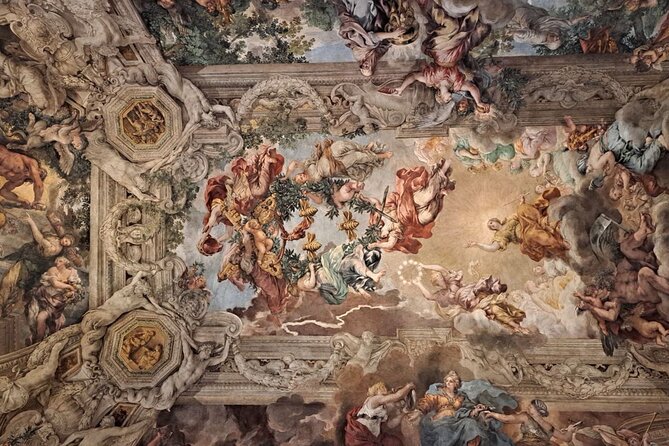
- Cortona’s ceiling is a major event: The Divina Provvidenza fresco turns your gaze upward to a grand Baroque statement.
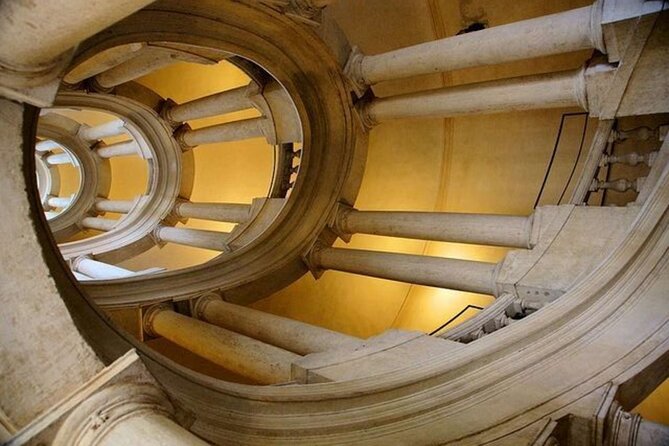
- Bernini and Borromini share the story: Their different approaches to architecture become easier to understand here.
- Caravaggio access changes by date: Judith Slaying Holofernes is scheduled to leave for an exhibition in Fort Worth, Texas.
- The group can reach 20 people: That is manageable, but it is not a private or intimate tour.
- The meeting point is easy to miss: Look inside the garden by the fountain for a blue Doooing Experience flag.
Why Barberini Palace deserves two hours
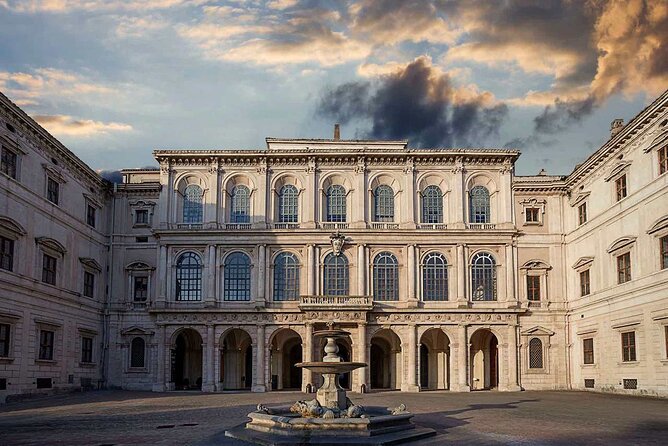
Rome has plenty of famous museums, yet Barberini Palace offers a useful change of pace. It is not simply a room-by-room parade of paintings. The building, its patrons, and its artworks belong to the same story.
The Barberini family rose to great influence in Rome, especially through Maffeo Barberini, who became Pope Urban VIII. Their money and power helped shape the city’s art during the 17th century. A guided visit helps you see why the palace was more than a grand home. It was also a statement about religion, status, and political authority.
I find two hours about right for this kind of visit. You have enough time to look closely at the main works without turning the tour into an exhausting art lecture. You should still expect a focused visit rather than a full study of every room and painting.
The guide’s role matters here. Zenda was praised for linking art and architecture with the period in which each work was made. Federica was described as attentive, lively, and clear while explaining both the residence and its art. Those qualities are useful at Barberini Palace, where the building and the collection make more sense together.
More guided palace visits in Rome:
- Tivoli: Hadrian’s Villa and Villa d’Este Guided Tour
★ 4.5 · 73 reviews - Rome: Colonna Palace Guided Tour
★ 4.9 · 70 reviews - Rome: Palazzo Barberini Guided Tour
★ 4.6 · 31 reviews
Meeting the guide inside the palace garden
The meeting point is inside the garden of Palazzo Barberini, near the fountain at Via delle Quattro Fontane, 13. Look for staff carrying a blue flag marked Doooing Experience.
Give yourself enough time to locate the garden and fountain. The address is specific, but arriving at the palace entrance and assuming the group will find you can create needless stress. The meeting coordinates provided for the meeting point are 41.903358459472656, 12.489826202392578.
The tour includes skip-the-ticket-line access, which matters most when the entrance is busy. It does not mean the visit is free of every wait, but it removes the normal ticket queue and lets the group begin with its guide.
The maximum group size is 20. That is smaller than a large coach group, and it should allow you to hear the guide in the galleries. Still, if you want long stretches of quiet looking or one-to-one discussion, a private visit would offer more space.
Raphael’s La Fornarina and the Renaissance rooms
One of the clearest highlights is Raphael’s La Fornarina. The painting shows a woman with a direct, memorable gaze, and it has long attracted attention for both its beauty and its mystery.
A guide can help you look past the fame of the title. Notice how the portrait works as both a person’s image and a carefully shaped work of art. Raphael’s name draws you in, but the details reward a slower look.
This is one of the places where a guide adds real value. Rather than simply pointing out the painting, the tour places Raphael’s work within the changes taking place in Italian art. You get a better sense of why the Renaissance prized balance, ideal beauty, and technical control.
The palace collection also includes works by Holbein and Tintoretto. Their presence broadens the visit beyond a single school or century. You see how different artists handled portraiture, religious subjects, color, and movement.
Do not expect every painting to receive equal time. A two-hour tour has to choose its priorities. If Raphael is your main reason for coming, you will get the essential work and its context, but you may want extra time afterward if the museum permits independent viewing.
Caravaggio’s Judith and a practical date warning
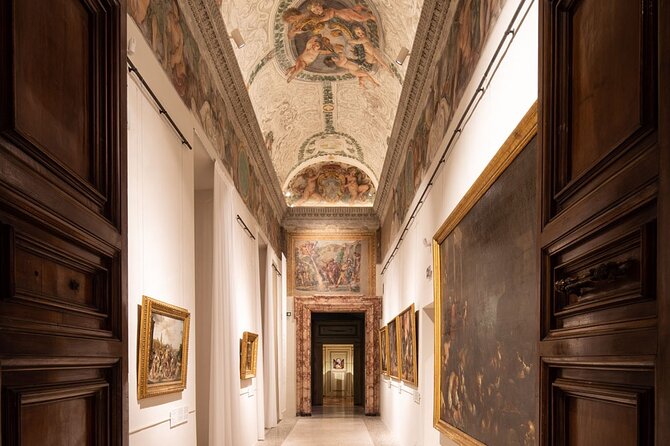
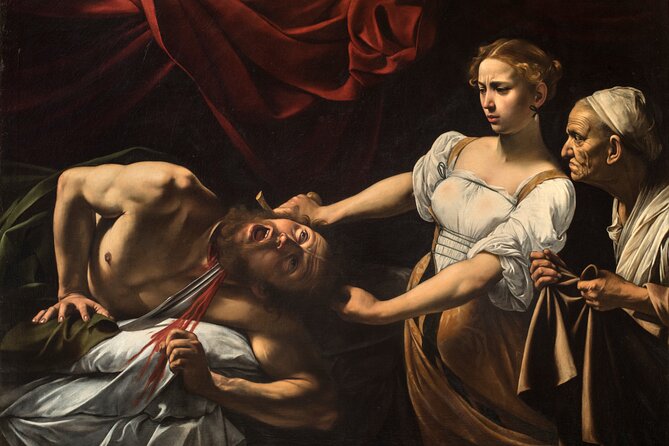
Caravaggio’s Judith Slaying Holofernes is one of the collection’s most powerful attractions. The scene captures the instant when Judith kills Holofernes, using sharp light, strong emotion, and startling physical force.
Caravaggio does not make the scene feel distant or decorative. The action comes forward, and the tension is hard to ignore. This is exactly the kind of painting that benefits from a guide who can explain how religious subjects became more immediate and dramatic in the Baroque period.
Access to this work depends on your visit date. The information provided gives two slightly different references, with the work unavailable from late August or early September 2025 until January 2026. The more specific schedule says it is away from September 4, 2025, through January 31, 2026, on loan to the KAM Art Museum in Fort Worth, Texas.
If you are booking for that period, assume Judith Slaying Holofernes may not be on display and confirm the current status before paying. The tour remains worthwhile without it because the palace contains other major works, but Caravaggio fans should treat the date as a key part of the decision.
Another temporary exhibition may affect your timing. Conversion on the Way to Damascus, also known in Italian as Conversione di Saulo, is scheduled for exceptional display in the palace through September 30, 2025. It belongs to a private collection, so its appearance is a special, limited opportunity rather than a permanent part of the normal collection.
A few more palace visits around Rome worth a look
- Rome: Opera Concert at Palazzo Poli – Fontana di Trevi
★ 4.7 · 1,026 reviews - Rome: Colonna Palace Entry Ticket
★ 4.8 · 609 reviews - The Great Opera Arias Concert at Palazzo Poli – Trevi Fountain
★ 5.0 · 533 reviews - Colosseum Underground, Roman Forum & Cesar Palace Special Access
★ 4.5 · 421 reviews
Looking up at Pietro da Cortona’s great ceiling
The most theatrical moment comes when you look up at Pietro da Cortona’s Divina Provvidenza. The ceiling fresco fills the space with motion, figures, symbols, and the visual confidence of the Baroque.
This is not a painting you can take in comfortably at eye level. Your neck may complain before the fresco gives up all its details. That is part of the experience. The work was designed to overwhelm you, and the guide can help sort its religious and political messages into something you can follow.
The ceiling also shows why the palace itself matters. The Barberini family did not just collect art for quiet enjoyment. They used architecture and decoration to project authority. The scale and ambition of Cortona’s fresco make that purpose plain.
I would set aside a few minutes simply to look before listening to the explanation. First notice the movement and color. Then let the guide identify the symbols and explain how the fresco supported the family’s public image. That order makes the room feel less like a lesson and more like a discovery.
Bernini, Borromini, and two ways to shape Rome
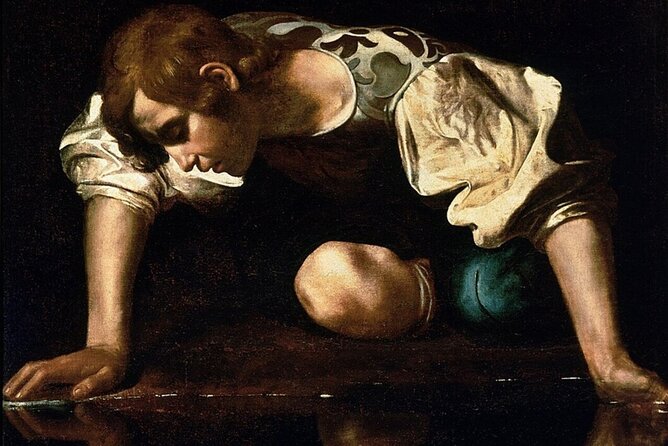
Barberini Palace also gives you a look at the work of Gian Lorenzo Bernini and Francesco Borromini. Both were central to Rome’s Baroque architecture, but their styles were not identical.
Bernini often worked with a sense of theatrical control. Borromini is known for restless forms, inventive curves, and complex spatial ideas. Seeing their contributions in the same setting helps you understand that Baroque architecture was not one fixed style.
The palace’s architectural details are easy to overlook if you focus only on framed paintings. This is where the guide can keep your attention moving between canvas, ceiling, doorway, and structure. You begin to see the building as part of the collection rather than a container for it.
The tour is especially useful if you have already seen some of Rome’s churches and fountains. You can connect the names and ideas from those places with the Barberini family’s world. The experience is still suitable for a first-time art museum visit, but some prior exposure to Rome’s Baroque style may make the connections come faster.
The temporary closure of the 18th-century rooms
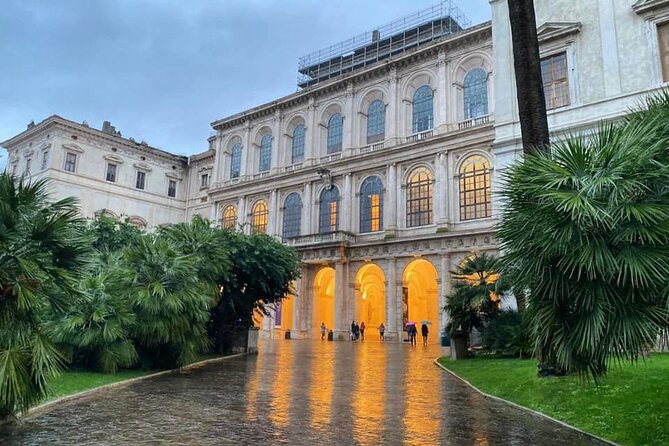
A practical issue affects the palace in 2025. The 18th-century rooms are scheduled to close from August 26 until October 21, when they are expected to reopen.
That closure does not remove the central appeal of the visit, since the major works and architectural features remain the focus. Still, you should not book expecting access to every part of the palace during that period.
This is also a reason to check the current museum plan before your visit. The collection can change because of loans, restoration work, or room closures. If your interest is broad and you want the fullest possible palace experience, dates outside the closure period may be preferable.
Is the guided format worth the cost?
No price is provided here, so I cannot judge the exact amount you will pay. I can judge what you are buying: a two-hour visit, skip-the-line entry, and a live guide in English, Italian, or Spanish.
That package has its best value if you want art explained rather than simply displayed. Raphael, Caravaggio, Cortona, Bernini, and Borromini are not hard to admire, but their connections to religion, power, and changing artistic taste are easier to grasp with help.
A self-guided ticket may suit you better if you already know the collection well or prefer to set your own pace. An app-based option may also appeal if you want to pause for as long as you like. The guided tour earns its place when you want someone to choose the key works, keep the visit moving, and explain what you are seeing in plain terms.
The maximum group size of 20 is worth considering when comparing prices. You are not paying for a private art historian, but you are also not being placed in a huge crowd. The value is strongest for a first visit, a short stay in Rome, or anyone who finds Italian art museums difficult to approach alone.
Who should book this palace tour?
I would recommend it to you if you enjoy famous art but want more than a list of names. It suits first-time visitors who want a compact introduction to Renaissance and Baroque Rome, especially those interested in how wealthy families shaped culture.
It also works well for couples or small groups who want a planned museum visit without spending half a day inside. Two hours leaves room for another Rome sight afterward.
Art students and serious museum fans may find the pace too selective. You will see important works, but the tour cannot cover every painting or allow long private study at each stop.
Mobility is another consideration. The activity is not suitable for people with mobility impairments or wheelchair users. Large bags and luggage are not allowed, so arrive without bulky belongings.
Book it or choose another Roman gallery?
Book this tour if your priorities are Raphael, Caravaggio, Baroque architecture, and a guide who can tie them together. I especially like it for visitors who want the story behind the palace, not just quick photographs of famous paintings.
Choose another option if your dates fall during the Caravaggio loan and that one painting is your main reason for going. You might also prefer a ticket with an audio guide if you want a slower, more independent visit.
Before booking, check three things: the current status of Judith Slaying Holofernes, the closure dates for the 18th-century rooms, and the language you need. If those details work for you, Barberini Palace gives you a focused and worthwhile look at Rome’s art and power in one elegant setting.
FAQ
How long does the Barberini Palace guided tour last?
The tour lasts two hours.
Which languages are available?
The live tour is available in English, Italian, and Spanish.
What is the meeting point?
Meet inside the garden of Palazzo Barberini near the fountain at Via delle Quattro Fontane, 13, Rome. Staff will carry a blue Doooing Experience flag.
Is skip-the-line entry included?
Yes, the activity includes skip-the-ticket-line access.
What is the maximum group size?
The maximum group size is 20 people.
Will I see Caravaggio’s Judith Slaying Holofernes?
The painting is scheduled to be on loan to the KAM Art Museum in Fort Worth, Texas, from September 4, 2025, through January 31, 2026. Check its current status if you are visiting around those dates.
Are the 18th-century rooms open?
The 18th-century rooms are scheduled to close from August 26 until October 21, 2025.
Can I bring luggage or a large bag?
No. Luggage and large bags are not allowed.
Is the tour suitable for wheelchair users?
No. The activity is not suitable for wheelchair users or people with mobility impairments.
Just added around Rome
- Day trip Rome by car : Tivoli Unesco Villa D’este & Hadrian★ 5.0 · 56 reviews
- From Rome: Villa d’Este & Hadrian’s Villa Tickets & Transfer★ 4.5 · 32 reviews
- Tivoli: Hadrian’s Villa and Villa d’Este Guided Tour★ 4.5 · 73 reviews
- Rome: Villa D’Este & Tivoli Tour with Skip-the-Line Entry★ 5.0 · 4 reviews
- Rome: Palazzo Altemps Reserved Entrance Ticket★ 4.5 · 49 reviews
- Rome: Palazzo Venezia Reserved Entrance with Museum★ 4.2 · 52 reviews
- Rome: Colonna Palace Guided Tour★ 4.9 · 70 reviews
- Rome: Monuments and Belvederes Guided E-Bike Tour★ 4.2 · 6 reviews
Rome Palace Tours, compared.
Tivoli Full Day Trip from Rome: Hadrian’s Villa and Villa D’Este
Read our review →
Opera Concert at Palazzo Poli – Fontana di Trevi
Read our review →
Hadrian’s Villa and Villa d’Este Half-Day Trip from Rome
Read our review →

The Great Opera Arias Concert at Palazzo Poli – Trevi Fountain
Read our review →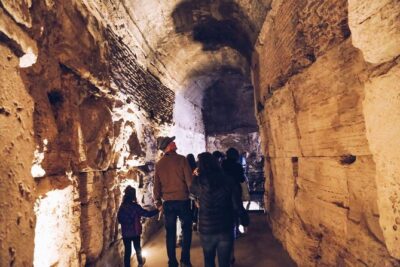
Colosseum Underground, Roman Forum & Cesar Palace Special Access
Read our review →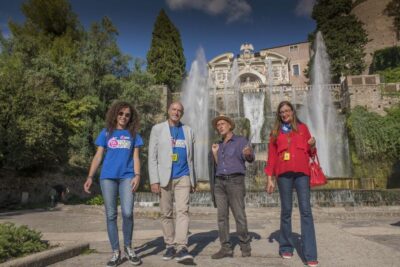
Villa d’Este and Hadrian’s Villa Tour with Lunch
Read our review →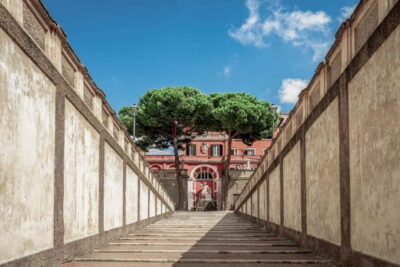
Palazzo Barberini Galleria Corsini Ticket & Audioguide
Read our review →Browse the lists this tour appears in