
REVIEW · ITALIAN PALAZZO TOURS
Siena: Palazzo Pubblico Entry Ticket
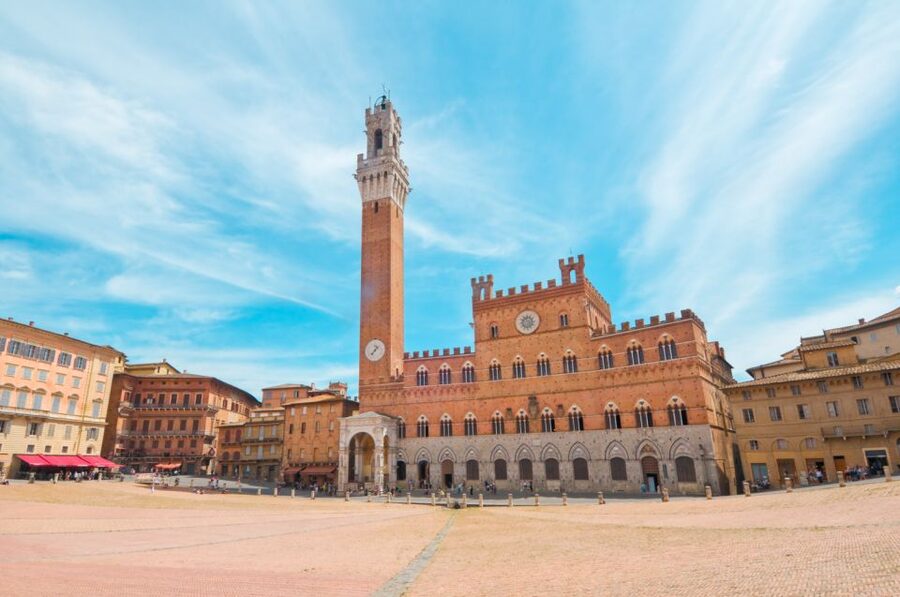
Siena’s Civic Museum packs a remarkable amount of art into the old Palazzo Pubblico. The star is Simone Martini’s Maestà, but the painted rooms are the real reason to come. You move from one richly decorated hall to another, then finish with a view across the Sienese countryside from the Loggia dei Nove.
I like the $7 price, which makes this one of Siena’s better-value art stops. I also like the freedom of a self-guided visit: you can linger over a fresco instead of keeping pace with a group. The main drawback is that the visit is fairly short, and the famous Allegory and Effects of Good and Bad Government by Ambrogio Lorenzetti may be closed for restoration.
Key points to know before you go
- Simone Martini’s Maestà is the museum’s major masterpiece, displayed in the Sala del Mappamondo.
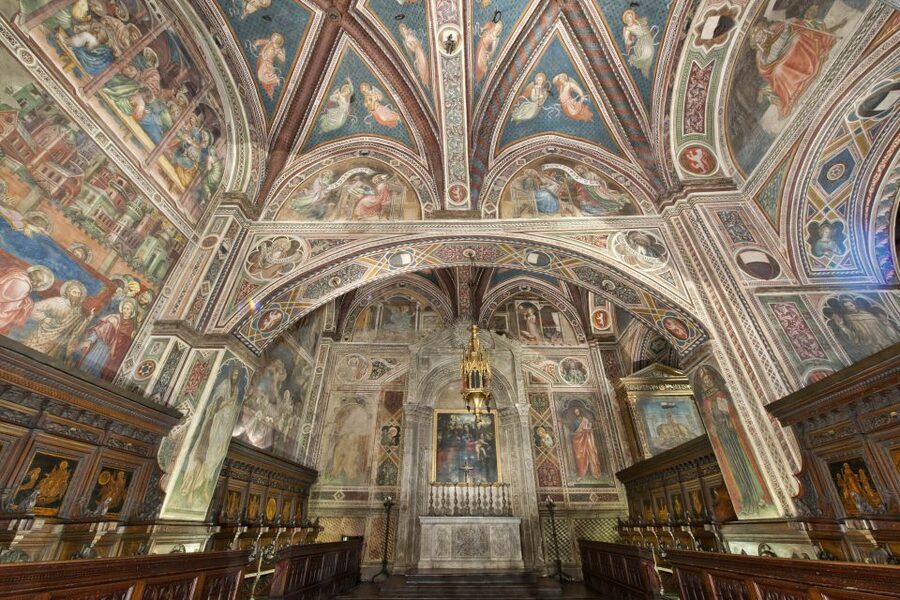
- The frescoed rooms are the main attraction, with work by Spinello Aretino, Martino di Bartolomeo, Taddeo di Bartolo, and Beccafumi.
- The Loggia dei Nove gives you a countryside view and is included with the museum ticket.
- This is not a guided tour, and no audio guide is included, so bring a little background knowledge or use the room labels carefully.
- The voucher must be exchanged at the ticket office inside the Cortile del Podestà, not at the outer wall where map apps may send you.
- Torre del Mangia is separate, but you can ask about buying its ticket at the same desk.
Why Palazzo Pubblico matters in Siena
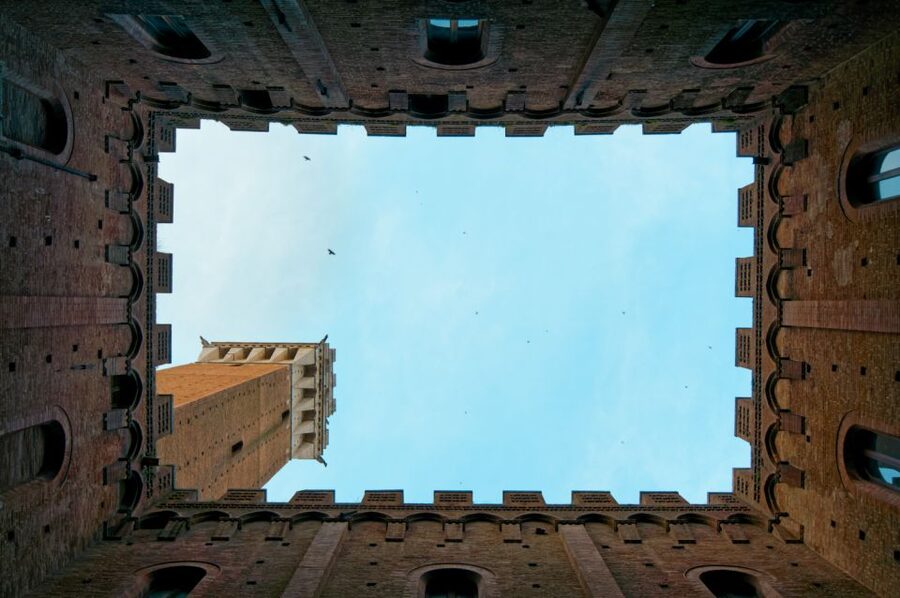
The Palazzo Pubblico is not just an art museum placed inside an attractive building. It was Siena’s civic center, built in the late 13th century as the city’s government grew in power and confidence.
That setting shapes the visit. These frescoes were not painted for a quiet gallery. They filled meeting rooms, chapels, council chambers, and official halls. The art had a public job: to honor Siena, guide its rulers, present religious ideas, and show how government should behave.
You can feel that purpose as you walk through the rooms. Religious pictures sit beside scenes tied to civic life. Painted walls replace the plain, functional interiors you might expect in an administrative building. Siena’s rulers wanted every official who entered these rooms to understand the city’s values.
I find that context helpful because it keeps the visit from becoming a simple checklist of famous paintings. You are seeing the visual program of a medieval government, not just a collection of beautiful objects.
More palazzo tours in Italy:
- Florence: Palazzo Vecchio Entrance Ticket & Audioguide
★ 4.4 · 4,822 reviews - Florence: Entrance Ticket to Pitti Palace
★ 4.5 · 4,528 reviews - Venice: Palazzo Contarini del Bovolo Entrance Ticket
★ 4.3 · 1,991 reviews
Starting in the Sala del Risorgimento
After exchanging your voucher, the route begins in the Sala del Risorgimento. This room is different in tone from the medieval halls that follow it.
Its frescoes show the life of Vittorio Emanuele II, the first king of Italy. The paintings belong to the period of Italian unification and look back at the creation of the modern nation. That makes this room useful for placing Siena within Italy’s later political story.
You may find the change in style striking. Instead of the medieval religious and civic imagery elsewhere in the building, you see a more modern national subject. It is a short introduction, but it gives the museum a wider time span than the architecture alone would suggest.
If your main goal is early Italian art, do not spend too long here. The older rooms contain the most distinctive work. Still, the Sala del Risorgimento helps explain that Palazzo Pubblico remained important long after its medieval construction.
The Sala di Balìa and its 15th-century paintings
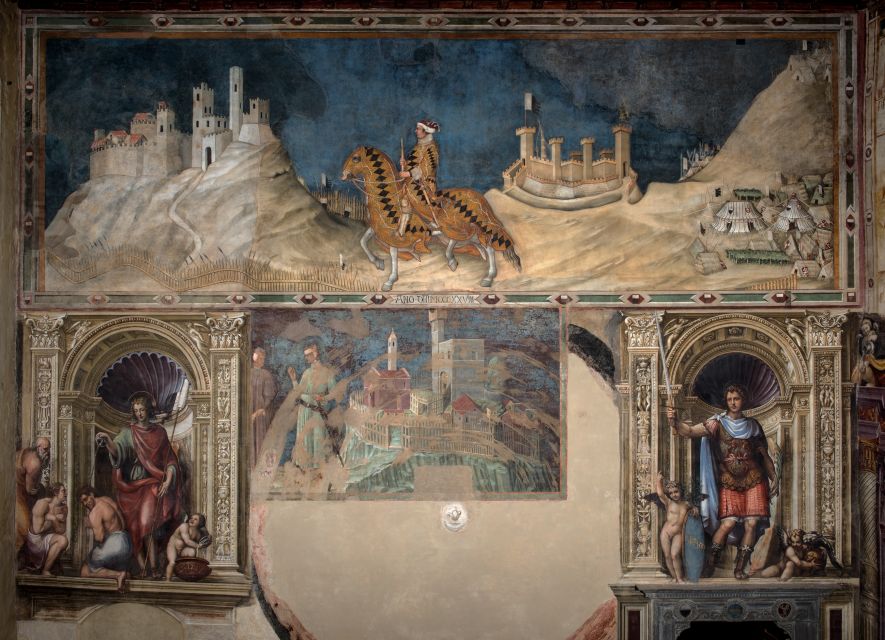
Next comes the Sala di Balìa, decorated with wall paintings by Spinello Aretino and Martino di Bartolomeo. These works date from the 15th century and continue the museum’s close connection between painting and public authority.
This is a room where I recommend looking up and around rather than focusing on one framed work. The decoration covers the architecture, and the effect depends on seeing the room as a whole. Details can be easy to miss when you are moving through quickly.
The room also shows why a one-hour visit needs a little discipline. You can pause at the best-known works, but you will not have time to study every painted figure. I would rather give the Sala di Balìa a few quiet minutes than rush through it while trying to record every name.
Carved coffers and relics in the Sala dei Cardinali
The Sala dei Cardinali brings a different kind of decoration into view. Precious carved coffers hold reliquaries, adding three-dimensional objects to the painted rooms.
This is a good reminder that the Palazzo Pubblico is not only about frescoes. The woodwork, storage chests, religious objects, and architectural details all contribute to the sense of an active civic and religious institution.
Look closely at the craftsmanship before moving on. You may find the objects less immediately famous than the Maestà, but they help explain how important items were preserved and displayed. They also break up the sequence of wall paintings, giving your eyes a welcome rest.
More palace entry tickets in Italy:
- Venice: Doge’s Palace Reserved Entry Ticket
★ 4.6 · 42,716 reviews - Venice: St. Mark’s Basilica & Doge’s Palace Tour with Ticket
★ 4.7 · 3,375 reviews - Doge’s Palace & St. Mark’s Basilica Tickets + Tour Options
★ 4.5 · 1,841 reviews - Venice: Doge’s Palace Skip-the-Line Ticket with Guidebook
★ 4.0 · 1,196 reviews
Beccafumi’s vault and Taddeo di Bartolo’s chapel
The Sala del Concistoro is known for its Beccafumi vault. This is one of the museum’s strongest visual moments because the decoration draws your attention overhead.
The room rewards a slow look. Painted ceilings can be easy to ignore when the walls contain famous scenes, so I make a point of stopping in the center and scanning the entire vault. The details are part of the room’s design, not an afterthought above it.
Nearby, Taddeo di Bartolo’s 15th-century chapel adds a more intimate space to the route. Its scale changes the mood after the larger official rooms. You can see how different parts of the building served different purposes, from government business to religious devotion.
The museum’s appeal grows from these changes in scale. One room gives you broad civic imagery; the next asks you to look at a ceiling, a chapel, or a carved object. The route is short, but it does not feel visually repetitive.
The Sala del Mappamondo and Simone Martini’s Maestà
The Sala del Mappamondo is the widest room in the Palazzo Pubblico. It once served as the meeting place of the General Council, so the room’s size reflects the importance of public decision-making in Siena.
This is where you find Simone Martini’s Maestà, the museum’s best-known painting. It is a Gothic masterpiece, and it deserves more than a quick photograph.
The image of the Virgin and Child is not simply a devotional picture tucked away in a church. In this civic setting, it carried public meaning. The Virgin was closely linked with Siena, and placing her in a government building tied the city’s political life to its religious identity.
Take time to study the figures, patterns, and fine details. Martini’s work has an elegance that can be missed if you only look for a dramatic scene. The painting’s scale, color, and controlled arrangement work together, and the surrounding room gives it added force.
This is also the point where a basic visit becomes worthwhile even for someone with limited museum time. If you have only an hour, prioritize the Sala del Mappamondo, then work backward through the other rooms.
The missing Lorenzetti frescoes
One important caution: the Allegory and Effects of Good and Bad Government by Ambrogio Lorenzetti has been under renovation. This is a major loss if you planned the visit around those frescoes.
The series is among Siena’s most important civic artworks, so I understand why a reader might feel disappointed if the closure is not made clear before arrival. The rest of the museum remains open and offers plenty to see, but the experience is not the same without Lorenzetti’s famous cycle.
Ask at the ticket office about current access. An extra ticket may sometimes be available for the restored rooms or related areas, but it is not part of the standard museum entry described here. One visitor received help from a staff member named Alfredo with additional tickets, but you should not assume that extra access will always be available.
If Lorenzetti is your main reason for visiting, confirm the current display situation before you pay. If your interest is broader, the Maestà and the decorated rooms still make the museum a strong stop.
The Loggia dei Nove and the view beyond Siena
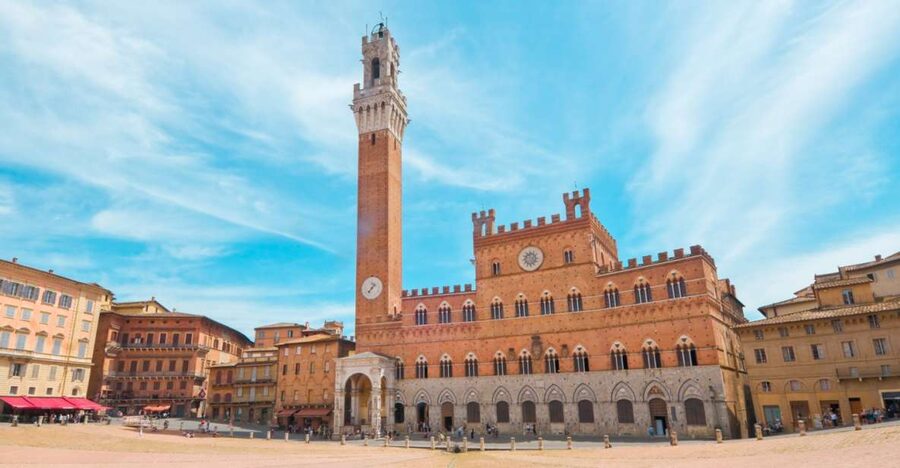
The ticket also includes the 14th-century Loggia dei Nove. This gallery gives you a beautiful view behind the Palazzo Pubblico and across the Sienese countryside.
After the dark, detailed rooms, the open view is a welcome change. You get a sense of the setting that helped shape Siena’s identity: hills, fields, and the wider territory once governed from this building.
Do not treat the Loggia as a minor add-on. The museum explains Siena from inside, through art and government rooms. The loggia lets you connect that story to the surrounding countryside. I would save a few minutes for it rather than leaving as soon as you see the final painting.
The description of the activity gives the visit about one hour. That is enough for the main rooms and the loggia if you keep moving, but it is not enough for a slow study of every fresco. Art lovers may want to allow extra time if the schedule permits, while casual sightseers can see the highlights comfortably.
What the $7 ticket delivers
At $7 per person, this is a strong value for central Siena. You are paying for entry to a historic civic building, a sequence of frescoed halls, major Gothic painting, historic objects, and a countryside view.
The low price also makes it easier to accept the limits. You do not receive a guide, an audio guide, or access to Torre del Mangia. The visit depends on your own attention and on whatever information the room labels provide.
For many people, that is a fair trade. I like being able to set my own pace, especially in rooms where the details reward patience. If you want a full explanation of Siena’s politics and art, you will need a separate guidebook, tour, or audio resource.
The ticket becomes less satisfying only if you expected a complete Palazzo Pubblico experience. Torre del Mangia is not included, and the Lorenzetti rooms may be closed. Think of this as a focused Civic Museum ticket, not a pass for every part of the building.
Timing, entry, and practical details
The activity lasts about one hour, with starting times shown when you check availability. Arrive at the ticket office 10 minutes before your booked time.
The most important arrival tip is simple: enter the Cortile del Podestà and find the ticket office inside. Map apps may send you to the outside of the Palazzo Pubblico along Via di Salicotto. That is not the final destination. Go into the inner courtyard to exchange your voucher.
You must exchange the voucher for an entry ticket before entering the museum. Bring a passport or ID card. Large bags and luggage are not allowed, and flash photography is prohibited.
The museum is wheelchair accessible. The elevator door is 69 centimeters wide, and the elevator is 83 centimeters deep, so check those measurements against your mobility equipment before booking. Access can be suspended for extraordinary events, and opening hours may change.
The booking allows cancellation up to 24 hours before the visit for a full refund. You can also reserve now and pay later, which is useful if your Siena plans are still shifting.
Who should book this visit
I would book this for anyone who wants Siena’s art and political story in one compact stop. It suits first-time visitors, museum lovers, and people who want a break from walking the city streets without committing to a long tour.
It is especially good for you if you enjoy frescoes and historic interiors more than formal guiding. The route gives you several distinct rooms and a strong central masterpiece for a modest price.
Families and busy sightseers may also like the one-hour format. There is enough variety to hold attention, and the loggia gives the visit a clear ending. Still, children may need help following the political and religious themes because no guide is included.
I would hesitate only if your schedule is extremely tight, the Lorenzetti cycle is your one essential sight, or you specifically want Torre del Mangia. In those cases, confirm what is open and add the tower separately if available.
Should you book the Palazzo Pubblico ticket?
Yes, for most people visiting Siena. The price is modest, the building is remarkable, and Simone Martini’s Maestà alone gives the visit real weight. The painted rooms, carved coffers, chapel, Beccafumi vault, and Loggia dei Nove add enough variety to make the hour worthwhile.
Just book with clear expectations. This is a self-guided museum visit, not a full tour of every part of the Palazzo Pubblico. Exchange your voucher inside the courtyard, bring identification, leave large bags behind, and check whether the Lorenzetti frescoes are open before you arrive.
FAQ
How long does the Palazzo Pubblico visit take?
The listed duration is about one hour. That gives you time to see the main rooms, Simone Martini’s Maestà, and the Loggia dei Nove at a steady pace.
What is included with the ticket?
The ticket includes entrance to Siena’s Civic Museum inside the Palazzo Pubblico. It also includes access to the Loggia dei Nove.
Is Torre del Mangia included?
No. A Torre del Mangia entry ticket is not included, but you can ask about buying one directly at the ticket office.
Is this a guided tour?
No. A guide and an audio guide are not included. You visit the museum independently.
Where do I exchange the voucher?
Enter the Cortile del Podestà and find the ticket office inside. Exchange your voucher there before entering the museum.
What should I bring?
Bring your passport or ID card. Large bags and luggage are not allowed inside, and flash photography is prohibited.
Is the museum wheelchair accessible?
Yes. The museum is wheelchair accessible. The elevator door is 69 centimeters wide, and the elevator is 83 centimeters deep.
Can I cancel the booking?
Yes. You can cancel up to 24 hours in advance for a full refund. Reserve now and pay later is also available.
Just added around Italy
- Pitti Palace and Palatina Gallery★ 4.0 · 41 reviews
- Pitti Palace Small Group Tour★ 5.0 · 6 reviews
- Private Guided Tour of Palazzo Vecchio in Florence★ 3.5 · 4 reviews
- Florence: Palazzo Vecchio Skip the line Entry ticket★ 4.0 · 49 reviews
- Pitti Palace: The Royal Palace of Florence★ 4.5 · 12 reviews
- PALAZZO VECCHIO Private tour in Florence★ 5.0 · 35 reviews
- Private Tour of Pitti Palace with Boboli Garden★ 5.0 · 28 reviews
- Pitti Palace and Palatine Gallery: A Royal Art and History Tour★ 4.5 · 42 reviews
Italian Palazzo Tours, compared.
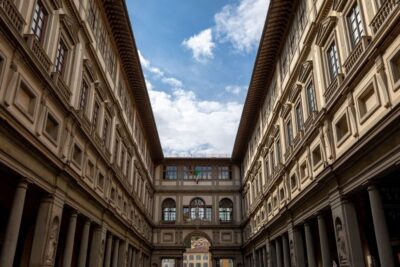
Uffizi, Pitti Palace & Boboli Combined 5-Day Pass
Read our review →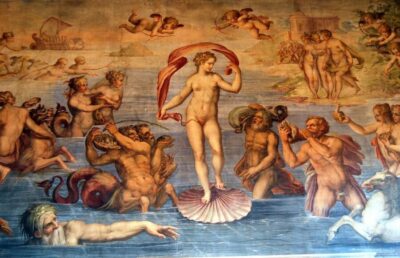
Palazzo Vecchio: Skip-the-Line Entry and Secret Passage Tour
Read our review →
Opera Concert at Palazzo Poli – Fontana di Trevi
Read our review →
Browse the lists this tour appears in