
REVIEW · ITALIAN PALAZZO TOURS
Tour Cappella Palatina e palazzo Reale: patrimonio Unesco
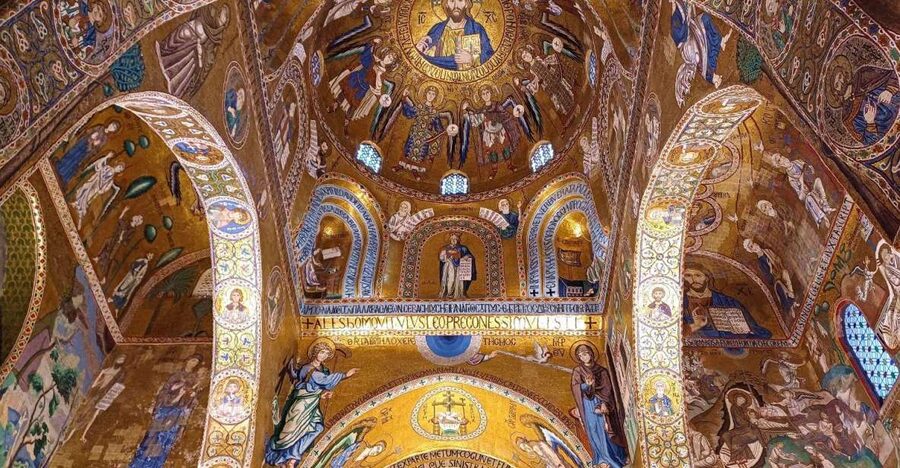
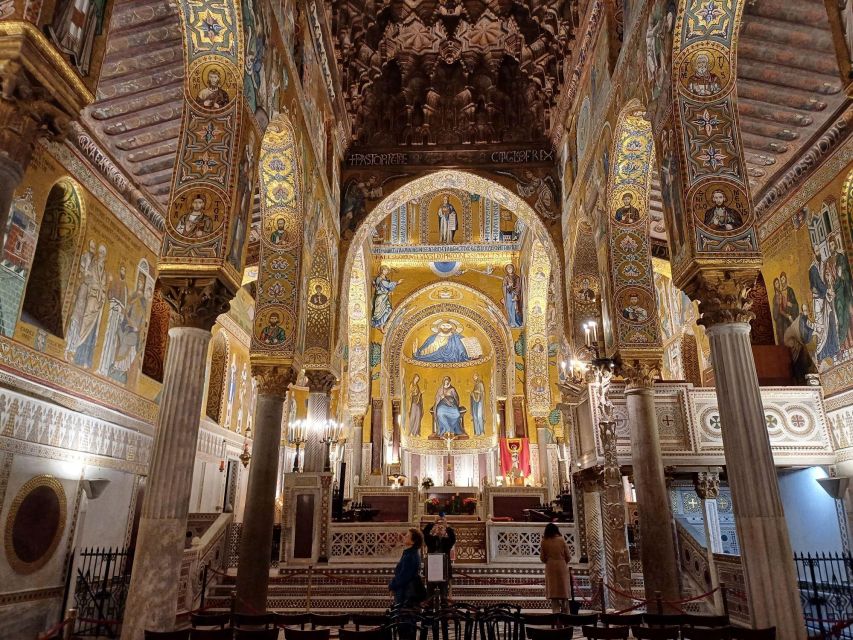
The real prize here is the Palatine Chapel, where gold Byzantine mosaics cover the walls beneath an Islamic-style muqarnas ceiling. It is an astonishing mix of cultures in one compact church, and the Italian guide helps explain what you are looking at instead of leaving you to stare upward and guess.
I like two things especially: the chance to connect the chapel with the Royal Palace’s 2,700-year story, and the focused help from guides such as Fabrizio and Claudio. The main drawback is clear: the tour is only in Italian, and your $14 payment does not include the palace admission ticket.
Key points to know
- The Palatine Chapel is the main event: Gold mosaics, a carved muqarnas ceiling, and an inlaid marble floor meet in one remarkable interior.
- The palace has many chapters: Greek-era Palermo, Norman kings, Frederick II, the Inquisition, the viceroys, and the Sicilian Parliament all belong to its story.
- Fabrizio and Claudio lead in Italian: Fabrizio is especially strong on the mosaic scenes and royal rooms, while Claudio is described as engaging and energetic.
- Admission costs extra: Buy the entrance ticket at the Royal Palace ticket office or through the official website.
- Dress rules matter: Shorts, short skirts, and sleeveless shirts are not allowed.
- Check mobility needs carefully: The activity information calls the site wheelchair accessible but also says it is not suitable for wheelchair users.
Why the Palatine Chapel deserves your time
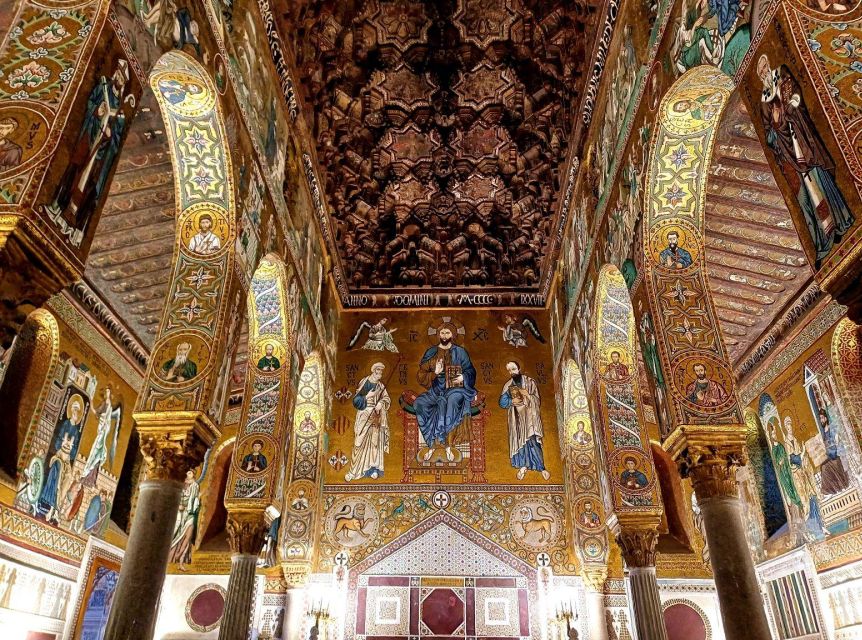
Palermo has plenty of grand churches, but the Palatine Chapel offers something more unusual than sheer size. It is a royal statement built by Roger of Hauteville, the first king of Sicily, in 1140. The building was meant to show power, faith, and cultural reach all at once.
That message still comes through. Byzantine craftsmen supplied the glittering wall mosaics. Islamic artistic ideas appear in the ceiling. Romanesque traditions shape the marble floor. You are not looking at one artistic style that happens to be near another. The appeal comes from how these parts occupy the same room.
I would give the chapel the largest share of your attention. Look at the wall scenes as a sequence rather than a collection of shiny surfaces. The guide explains the narrative cycle, which makes the figures and scenes easier to follow. Without that help, the gold can become a blur of decoration.
The setting also explains why this is more than a church visit. The chapel sits inside the royal palace, so the building worked as both a place of worship and a display of royal authority. Roger was not merely decorating a private chapel. He was presenting Sicily as a kingdom able to draw on Norman, Byzantine, Islamic, and Roman traditions.
More palazzo tours in Italy:
- Florence: Palazzo Vecchio Entrance Ticket & Audioguide
★ 4.4 · 4,822 reviews - Florence: Entrance Ticket to Pitti Palace
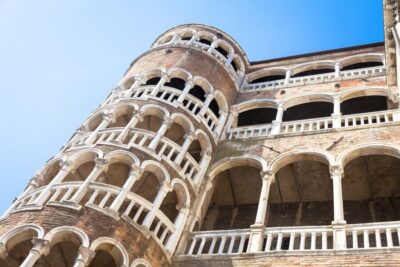
★ 4.5 · 4,528 reviews - Venice: Palazzo Contarini del Bovolo Entrance Ticket
★ 4.3 · 1,991 reviews
Meeting near Palermo’s Royal Palace ticket kiosk
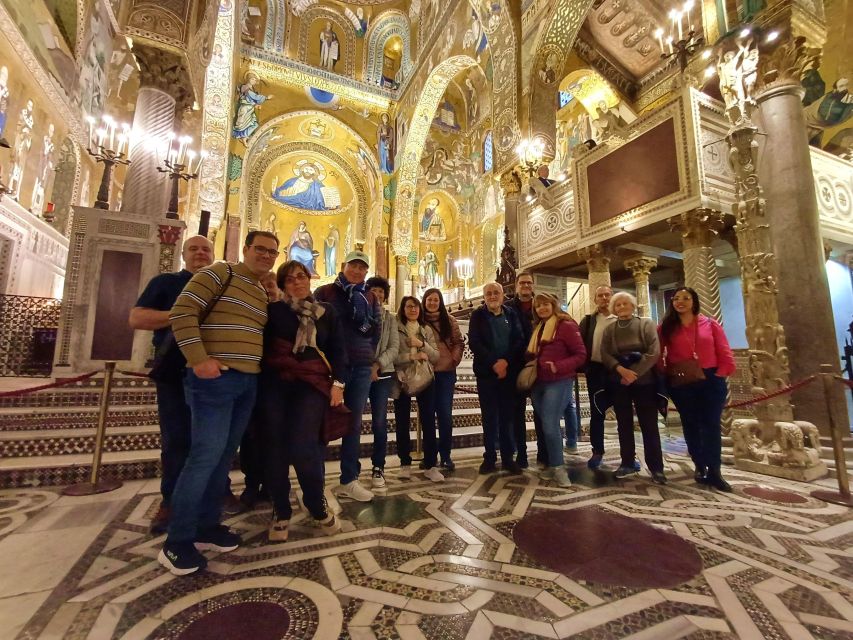
The meeting point is in front of the ticket office, described as a kiosk about 100 meters from the palace entrance. That detail matters. Do not walk straight to the main palace door and assume the guide will be waiting there. Allow a little time to find the kiosk and confirm the group before entering.
Your guide service is the tour itself, while admission is a separate purchase. You can buy the entrance ticket at the Royal Palace ticket office or online through the official website. I would settle that part before the meeting time if possible, since the guide cannot replace the required entry ticket.
The activity is listed as valid for one day, with start times shown according to availability. The supplied information does not give a fixed total walking time within that day, so check the selected departure carefully when booking. The advertised price is $14 per person, which is a reasonable fee for a specialist explanation of the palace and chapel, but the final cost is higher once admission is added.
The reserve-now, pay-later option is useful if your Palermo plans are still shifting. You can hold a place without paying at once, and cancellation is allowed up to 24 hours before the activity for a full refund.
Entering the Palazzo dei Normanni
The Royal Palace, also called the Palazzo dei Normanni, has had many lives. It began with Palermo’s earliest settlement and defensive structures, then underwent major changes under the Norman kings. They turned it into their main residence and a center for court life, administration, money, and royal production.
That long timeline gives the visit its shape. You are not touring a palace built for one ruler and abandoned after a single dynasty. The building changed as Sicily changed. It served as a royal home, court, treasury, and political center.
Frederick II is one of the most interesting figures connected with the palace. He was king of Sicily and emperor, and under his rule the palace hosted the Sicilian Poetic School. This is a useful reminder that medieval Palermo was not just a military outpost. It was also a place where literature, politics, and different cultures met.
The palace later became the Court of the Inquisition, then the seat of the viceroy and the Sicilian Parliament. Those later uses add weight to the rooms you see. A royal chamber was not just a decorative room. The building continued to hold political power long after the Norman period.
A guide is valuable here because the palace’s story is too broad to read from a few labels. Fabrizio is praised for explaining the history of the Royal Palace clearly and for bringing the rooms to life. If you understand Italian, this is the point where the $14 guide fee begins to earn its keep.
Seeing the gold mosaics in the Palatine Chapel
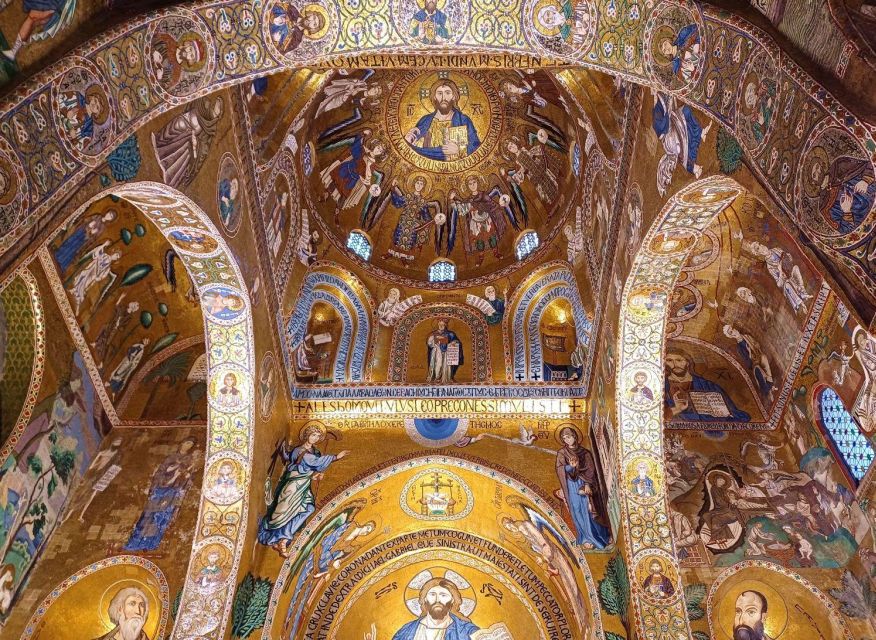
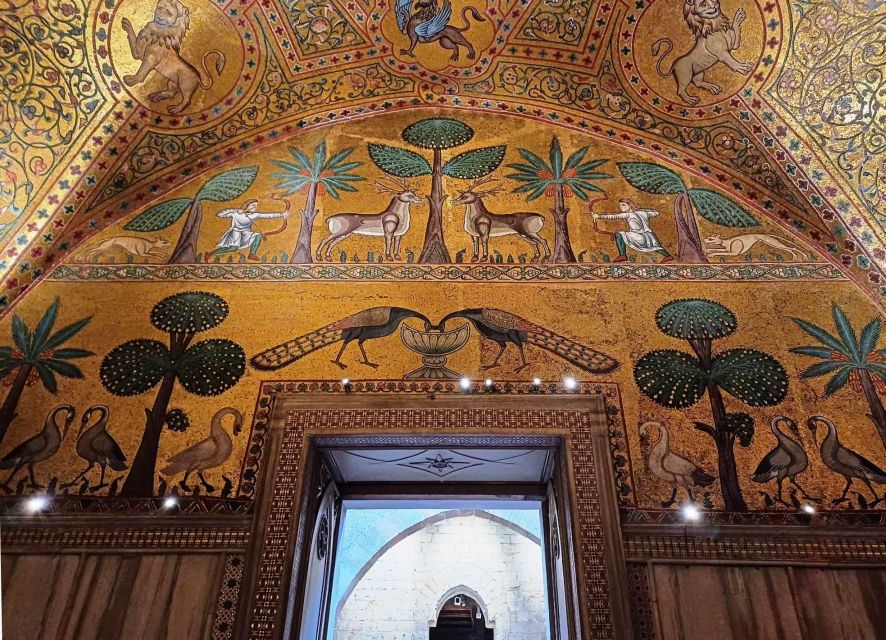
The chapel’s mosaics are the visual high point. Gold tesserae catch the light and create a surface that seems to glow rather than sit flat on the wall. The effect is powerful, but the scene-by-scene explanation gives the display more meaning.
The guide describes the narrative cycle, helping you follow the biblical stories represented across the chapel. This matters because the images were designed to communicate to people who could not rely on books or formal education. Their arrangement, figures, gestures, and placement carry the message.
Look beyond the gold. The marble floor uses inlays tied to the Romanesque tradition, adding pattern and color at ground level. Above it, the muqarnas ceiling brings an Islamic design language into a Norman royal chapel. The result is one of Sicily’s clearest examples of cultural exchange made visible in stone, glass, and plaster.
I also like that the tour does not treat the chapel as an isolated masterpiece. Its position inside the palace explains why it was made with such care. A royal chapel needed to serve worship, but it also had to impress visiting officials, courtiers, and foreign powers.
Dress respectfully and plan for a period on your feet. Shorts, short skirts, and sleeveless shirts are not allowed. The clothing rule is not a minor footnote here, since arriving in unsuitable clothes could prevent entry even if you have already arranged the tour and ticket.
A few more palace visits around Italy worth a look
- Venice: Doge’s Palace Reserved Entry Ticket
★ 4.6 · 42,716 reviews - Doge’s Palace & St. Mark’s Basilica with Terrace Access Tour
★ 4.7 · 10,697 reviews - Venice: Doge’s Palace and St Mark’s Basilica Walking Tour
★ 4.4 · 6,291 reviews - Legendary Venice: Doge’s Palace, St Mark’s & VIP Terrace Access
★ 4.5 · 5,033 reviews
The royal rooms and the Chinese-style queen’s chamber
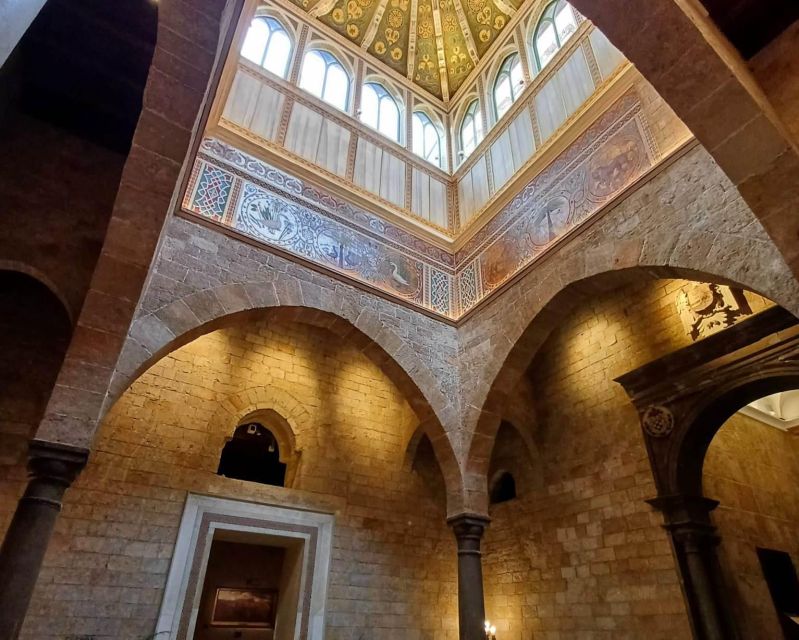
The palace visit includes the royal rooms, including a chamber in Chinese style. This is a useful counterpoint to the medieval chapel. The building is not frozen in its Norman chapter. Later rulers and occupants adapted rooms to changing tastes and political periods.
The Chinese-style queen’s chamber is one of the details that makes the palace tour more varied. You move from Byzantine religious art and Islamic ceiling forms to a later royal interior with a different decorative language. It also reminds you that palaces are working buildings, altered by the people who occupy them.
The palace rooms may not have the instant visual impact of the chapel, but they help explain how royal life operated. The guide can connect the rooms with the people who used them and with the wider history of the court. Fabrizio is specifically praised for describing the royal rooms in detail.
Do not expect every area of the palace to function like a furnished historic house. The experience is about the building’s long political and artistic story, with selected rooms and major highlights. If you want a room-by-room study of royal interiors, you may find the visit more selective than exhaustive.
What an Italian-language guide adds
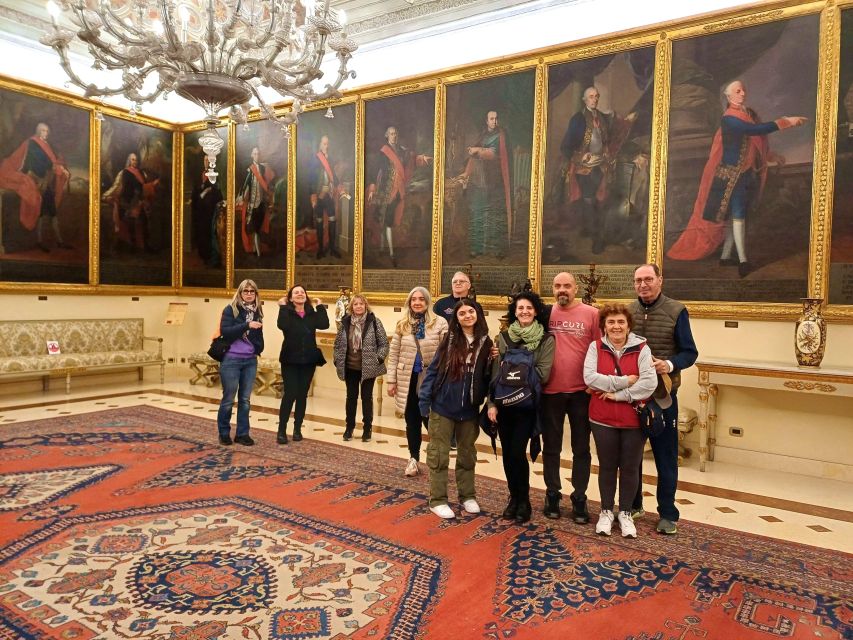
This is an Italian-only tour, and that is the most important booking decision. The guide service is not multilingual, and there is no indication that written translation or another language is supplied. You should be comfortable following spoken Italian before choosing it.
For Italian speakers, the format has real advantages. Fabrizio is described as prepared, engaging, and precise when explaining the palace, the chapel’s mosaic cycle, and the royal rooms. Claudio is also praised for his engaging approach and stamina. Those details suggest a guide-led visit with a strong spoken explanation rather than a simple escort through the site.
The difference between looking and understanding is large at the Palatine Chapel. A guide can point out how the images are organized, explain why the ceiling looks different from the walls, and connect the chapel to the Norman kingdom. That context turns a beautiful room into a readable historical document.
If you speak little or no Italian, the tour’s value drops sharply. You can still see the palace and chapel by buying admission separately, but you would be paying for commentary you cannot follow. In that case, check if a different language option is available before booking, although none is provided with this activity.
Standing, clothing, and accessibility
This is not a sit-down presentation. You may spend much of the visit standing, and there are very few places to sit. If standing for long periods is difficult, take that seriously when deciding. The site’s visual rewards are strong, but comfort can affect how much you absorb.
The accessibility information needs special care. One section describes the activity as wheelchair accessible, while another says it is not suitable for wheelchair users. That is a direct conflict, so I would contact the provider before booking if you use a wheelchair or need step-free access. Do not rely on the general accessibility label alone.
The same practical approach applies to clothing. Pack or wear a top with sleeves and avoid shorts or a short skirt. Modest dress is required for entry to the palace and chapel.
Because the guide meets near the ticket kiosk rather than at the main entrance, arrive with enough time to buy or present your admission ticket and locate the group. The meeting point is close, about 100 meters from the palace entrance, but a busy city visit is easier when you are not rushing.
Is $14 good value?
At $14 per person, the guided portion is fairly priced for one of Palermo’s most important historic sites. The value depends mainly on your Italian and on how much you want historical explanation rather than independent sightseeing.
The fee does not include admission. That makes the price comparison slightly less simple, since you need to add the official entrance ticket to your budget. Still, the separate pricing is clear, and you can choose to buy the ticket at the box office or online.
I would pay for this tour if you speak Italian and want the palace’s many layers explained in a logical way. The guide’s focus on the mosaic cycle, royal rooms, and political history covers the parts that are hardest to understand from a quick self-guided walk.
I would skip the guided service if you do not understand Italian, if you need frequent seating, or if the accessibility uncertainty affects you. You can still visit the site independently, but you should not book this particular guide service expecting translation.
Who should book this Palermo palace tour?
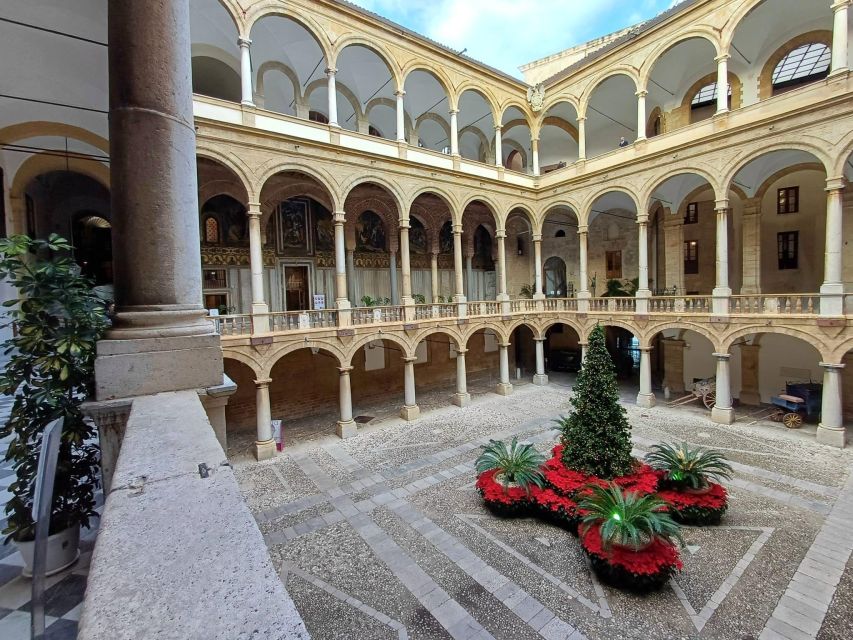
This experience suits you best if you want the Palatine Chapel explained rather than simply photographed. It is also a good match for anyone interested in Frederick II, Norman Sicily, medieval court life, and the mixture of Byzantine, Islamic, and Romanesque art.
Italian-speaking visitors will get the full benefit. The guide names to look for are Fabrizio and Claudio, both associated with clear, engaging presentations. You should also be ready for a history-heavy visit, with attention to royal power and artistic detail rather than a fast highlight reel.
Families and groups with limited standing tolerance should plan carefully. The site is not presented as a relaxed, seated tour, and there are few places to rest. Wheelchair users should ask the provider to clarify access before paying.
Should you book the Royal Palace and Palatine Chapel tour?
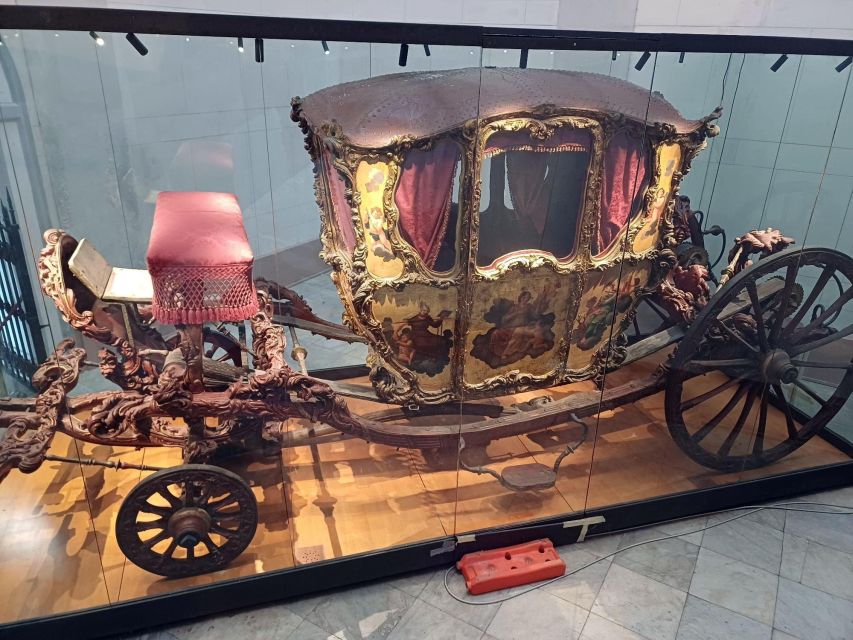
Book it if you speak Italian, can manage time on your feet, and want the gold mosaics placed in their royal and cultural setting. At $14 before admission, it is a sensible way to add structure and context to a visit that can otherwise become a quick look at a spectacular ceiling.
Skip it if you need English or another language, want a fully seated experience, or cannot confirm wheelchair access. If you do book, arrange the palace ticket separately, meet at the kiosk about 100 meters from the entrance, and dress for a religious site. The chapel is worth seeing either way, but the guide makes the palace’s long story much easier to follow.
FAQ
Is the entrance ticket included?
No. You must buy the ticket separately at the Royal Palace ticket office or through the official website.
What language is the tour in?
The live guide service is only in Italian.
Where is the meeting point?
Meet in front of the ticket office, which is described as a kiosk about 100 meters from the Royal Palace entrance.
How much does the guided service cost?
The listed price is $14 per person. The required entrance ticket costs extra.
Can I cancel for a full refund?
Yes. You can cancel up to 24 hours in advance for a full refund.
Can I reserve now and pay later?
Yes. The activity offers a reserve-now, pay-later option.
What clothing is not allowed?
Shorts, short skirts, and sleeveless shirts are not allowed.
Is the tour suitable for wheelchair users?
The information is inconsistent. It describes the activity as wheelchair accessible but also says it is not suitable for wheelchair users. Contact the provider to confirm access before booking.
Just added around Italy
- Pitti Palace and Palatina Gallery★ 4.0 · 41 reviews
- Pitti Palace Small Group Tour★ 5.0 · 6 reviews
- Private Guided Tour of Palazzo Vecchio in Florence★ 3.5 · 4 reviews
- Florence: Palazzo Vecchio Skip the line Entry ticket★ 4.0 · 49 reviews
- Pitti Palace: The Royal Palace of Florence★ 4.5 · 12 reviews
- PALAZZO VECCHIO Private tour in Florence★ 5.0 · 35 reviews
- Private Tour of Pitti Palace with Boboli Garden★ 5.0 · 28 reviews
- Pitti Palace and Palatine Gallery: A Royal Art and History Tour★ 4.5 · 42 reviews
Italian Palazzo Tours, compared.
Uffizi, Pitti Palace & Boboli Combined 5-Day Pass
Read our review →
Palazzo Vecchio: Skip-the-Line Entry and Secret Passage Tour
Read our review →
Opera Concert at Palazzo Poli – Fontana di Trevi
Read our review →
Browse the lists this tour appears in