
REVIEW · ITALIAN PALAZZO TOURS
National Museum of Palazzo Massimo: 2-Hour Private Tour
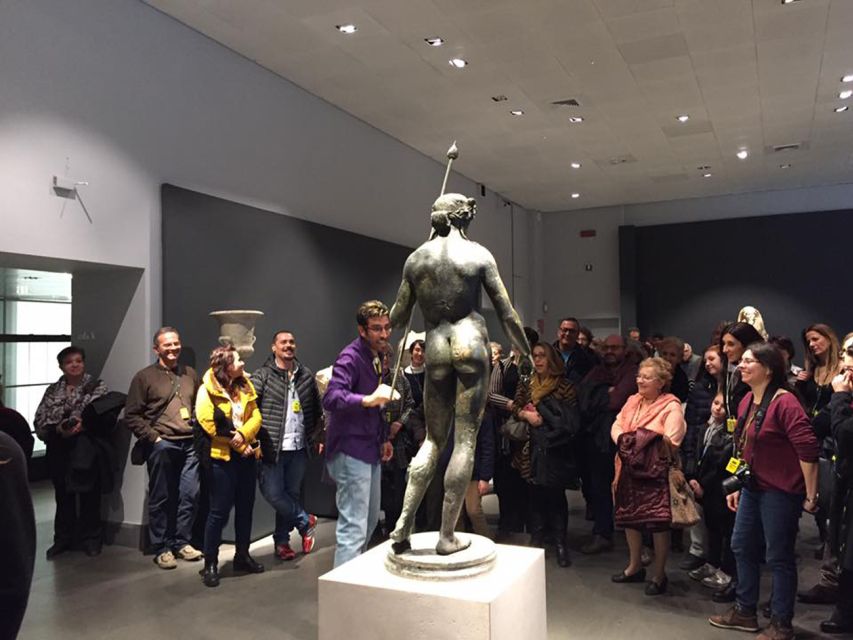
The ancient Roman calendar is a fine place to begin. It turns a museum visit into a look at how ordinary Romans organized time, worship, public life, and work. I especially like the chance to see the Boxer at Rest and the delicate frescoes from the Villa of Livia, two very different works that show both the physical power and domestic grace of Roman art.
I also like the private format, which gives you room to ask questions instead of keeping pace with a large crowd. The main drawback is time: two hours passes quickly in a museum with this much to see, and the $130.28 per-person price is a serious spend if you are visiting alone or as a couple on a tight budget.
Key points to know before booking
- Ancient calendars make Roman society feel practical and real: You see how timekeeping connected to religious festivals and civic life.
- The Boxer at Rest is the artistic centerpiece: This powerful bronze offers a more human image of the ancient world than an idealized god or emperor.
- Villa of Livia frescoes bring a Roman home to life: The painted garden scenes show how wealthy Romans decorated private rooms.
- The Sarcophagus of Portonaccio gives you battle and burial in one work: Its carved scene links military glory with Roman ideas about death.
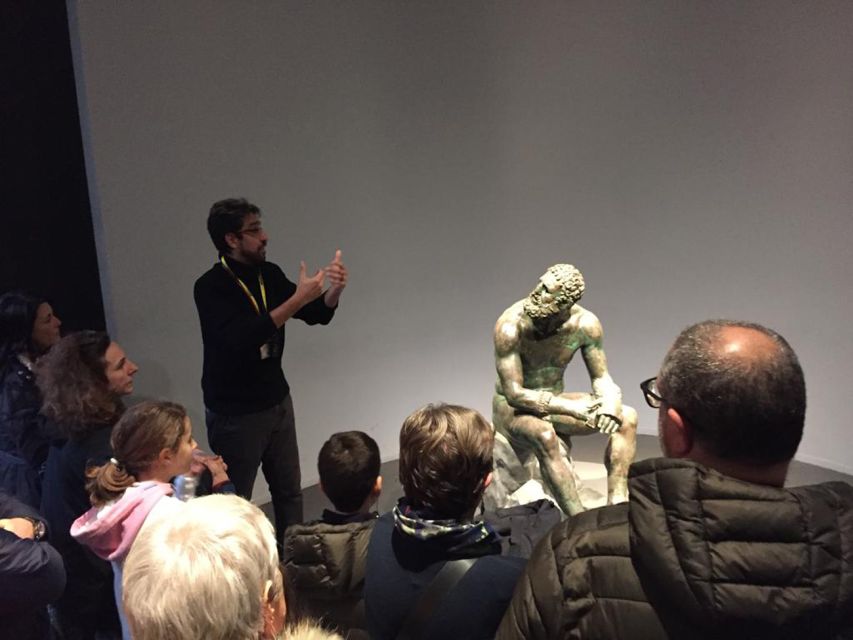
- A private guide keeps the visit focused: English and Italian tours are available, with Vincenzo specifically praised for lively explanations.
- Plan for a museum visit, not a broad Rome tour: There is no hotel pickup, and the activity begins and ends at the museum entrance.
Why Palazzo Massimo deserves two focused hours
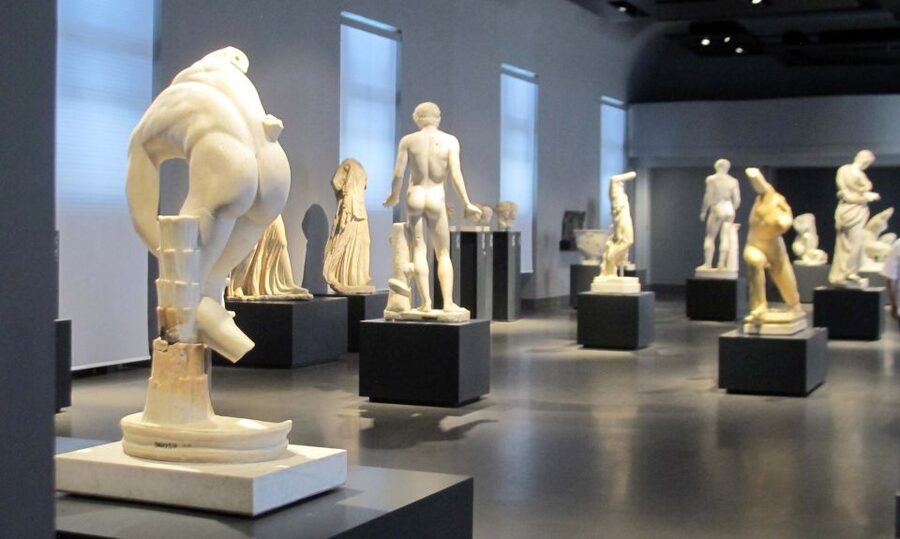
Palazzo Massimo is a strong choice when you want ancient Rome explained through objects rather than only through ruins. The museum brings together calendars, sculpture, domestic painting, mosaics, religious images, and funerary art. That mix lets you move from daily habits to public ideals, then to private homes and beliefs about death.
I like this approach because it gives your Rome sightseeing more context. At an archaeological site, you may see foundations, columns, and broken walls. Inside Palazzo Massimo, you can study the details that once filled those spaces: a painted garden, a carved battle, a bronze athlete, or a statue made for worship.
The guide’s job is to connect these pieces. Instead of simply naming dates and materials, the tour is designed to explain how Romans used calendars, represented heroes, decorated houses, honored the dead, and practiced religion. That is especially useful if you want more than a quick photo stop.
The museum visit lasts two hours and is private. You are not signing up for transport between several attractions, so nearly all of your time can go toward the collection. The meeting point is in front of the museum entrance, where the guide waits with a sign showing the tour name.
Arrive 15 minutes early. Tickets are distributed at the start, and the activity returns to the same meeting point at the end.
More Palazzo Tours in Rome
- Rome: Opera Concert at Palazzo Poli – Fontana di Trevi
★ 4.7 · 1,026 reviews - The Great Opera Arias Concert at Palazzo Poli – Trevi Fountain
★ 5.0 · 533 reviews - Rome: Palazzo Barberini Galleria Corsini Ticket & Audioguide
★ 3.9 · 322 reviews
Ancient calendars and the Roman habit of organizing time
The tour includes calendars found in Praeneste and Anzio. These are not just odd archaeological objects. They offer a direct way to think about Roman government, religion, and daily routines.
A calendar tells you more than the names of months. It can show which dates mattered, how public festivals were marked, and how religious duties fit into civic life. In Roman society, time was tied to ceremonies, political activity, and the rhythm of the year.
This is a good opening subject for a guide because it moves you away from the usual parade of emperors and battles. You start with a practical question: how did people know when to work, worship, celebrate, or attend public business?
The objects from Praeneste and Anzio also give the visit a wider setting. You are not looking only at Rome itself. You are considering objects found in other Italian cities that shared the Roman world while keeping their own local identity.
Ask your guide to explain what the calendar markings meant and how much is known about their original use. A private tour is particularly useful here because you can pause over details that might otherwise be easy to miss.
The Boxer at Rest and the human side of ancient sculpture
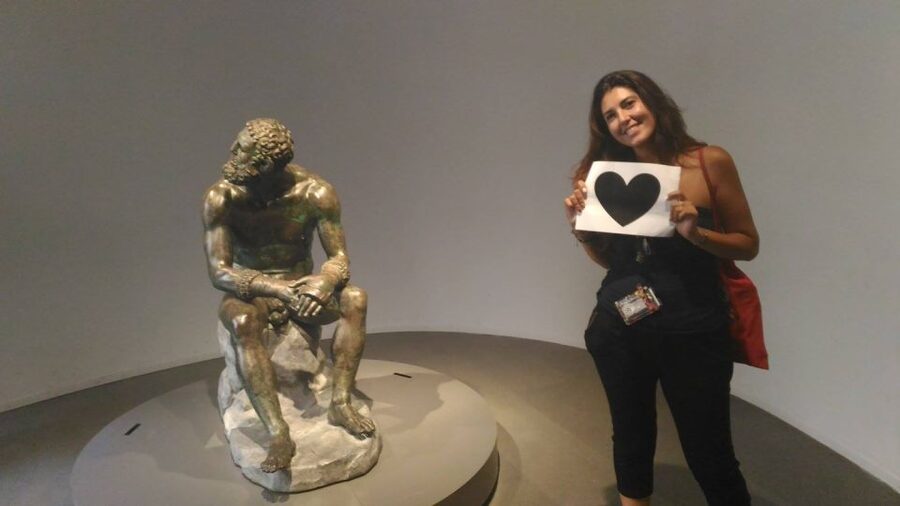
The Boxer at Rest is one of the major reasons to visit Palazzo Massimo. This bronze statue shows a seated boxer after a fight, rather than a young hero frozen in perfect triumph. The pose and subject give the work a strong sense of fatigue and physical strain.
That difference matters. Ancient sculpture is often presented through polished gods, ideal bodies, and official portraits. The Boxer at Rest gives you something less tidy: a person marked by effort, pain, and exhaustion.
Your guide can help you consider how the statue portrays a hero. Is the boxer admired because he is beautiful, victorious, disciplined, or simply able to endure? Those questions make the work more than a famous object. They show how Roman viewers could value strength, courage, and public achievement.
I would allow a little extra attention here rather than treating it as a quick stop. The statue rewards close looking. You may find yourself studying the posture and expression, then comparing this tired figure with the idealized gods and heroes elsewhere in the museum.
The experience is not a self-guided audio route with a fixed script. Its value depends partly on the guide’s ability to bring out those contrasts. Vincenzo is specifically praised for lively, animated explanations, and that style should suit a sculpture that depends so much on expression and physical detail.
Villa of Livia frescoes and the Roman home
The frescoes from the Villa of Livia offer a change of mood. After calendars and athletic struggle, you move into the private world of a wealthy Roman residence.
The paintings are known for their garden setting. Look for the way plants, trees, and birds create the feeling of an outdoor space inside a room. The effect tells you something about Roman taste and status. A garden was not only a patch of ground. It could also become a painted view, an indoor setting designed to shape the mood of the household.
These frescoes are valuable because they show Roman decoration at close range. You can think about what it meant to live among painted nature, how rooms were designed for comfort or display, and how wealthy owners used art to signal refinement.
I like placing this stop beside the sculpture. The Boxer at Rest shows the body under pressure. The Villa of Livia paintings show controlled beauty and calm. Together, they make Roman art feel less one-note.
Do not expect the guide to reconstruct every detail of Roman domestic life from the paintings alone. The tour can explain what the frescoes show and why they matter, but a two-hour visit cannot cover every room, household custom, or archaeological question in depth.
Same city, a very different set of state rooms:
- Tivoli Full Day Trip from Rome: Hadrian’s Villa and Villa D’Este
★ 4.5 · 1,730 reviews - Hadrian’s Villa and Villa d’Este Half-Day Trip from Rome
★ 3.5 · 808 reviews - Rome: Colonna Palace Entry Ticket
★ 4.8 · 609 reviews - Colosseum Underground, Roman Forum & Cesar Palace Special Access
★ 4.5 · 421 reviews
Marble gods and the Roman habit of borrowing ideas
The museum also holds marble statues of Roman and Greek gods. This part of the visit helps you understand how Roman religion worked through images, names, stories, and artistic models.
Roman artists often drew on Greek traditions, but the Roman use of those traditions was not simply copying. Statues could express religious devotion, civic identity, family status, or admiration for Greek culture. Your guide can help you sort through those different roles.
This is where a guided visit earns its keep. Without explanation, a hall of marble figures can blur into a long row of similar bodies and faces. With a clear route, you can look for differences in posture, clothing, attributes, and intended meaning.
The religious side of ancient Rome can also be hard to grasp from ruins alone. The tour brings attention to the importance of venerating gods and the ways religious practice shaped Roman society. You are not only seeing art. You are seeing images that belonged to a system of worship and public life.
The guide speaks English or Italian, so choose the language in which you can comfortably ask questions about unfamiliar names and stories. The private group format should help if your interests lean toward mythology, religion, or sculpture rather than military history.
The Sarcophagus of Portonaccio and Roman ideas about death
The Sarcophagus of Portonaccio is another major stop. Its carved surface shows a battle scene, bringing military action into a funerary setting.
That pairing is important. The sarcophagus was connected with death, but its decoration presents conflict, courage, and achievement. Roman funerary art could honor the deceased by linking that person to values admired in public life, especially military success and leadership.
A guide can help you read the crowded scene instead of seeing only a mass of carved bodies and weapons. Look at how the battle is arranged, how the figures are presented, and how the scene turns a burial object into a statement about identity.
This stop also balances the Villa of Livia frescoes. One shows how a household might create an attractive living space. The other shows how a family could present a person after death. Together, they point to the importance of status, memory, and family reputation.
If funerary art makes you uncomfortable, tell the guide. The tour includes religious and burial subjects, but the guide can place them in the social setting of ancient Rome rather than treating them as sensational displays.
What the private format changes
A private tour is not automatically better for everyone. It costs more than joining a large group, and the value depends on how much you want explanation and conversation.
For a couple, family, or small private party, the main benefit is control. You can ask why one statue matters, spend more time on the Boxer at Rest, or request a clearer explanation of Roman gods. You are less likely to feel that you are holding up strangers.
The guide also has room to adjust the level of detail. If you already know Roman history, you can ask about art and archaeology. If ancient Rome is new to you, you can focus on basic ideas such as calendars, household decoration, worship, and burial customs.
The experience is offered as a private group, but the supplied information does not give a maximum group size. I would confirm the exact group arrangement when booking if that affects your decision.
The strongest praise connected with the guiding focuses on clear, lively teaching. Vincenzo is described as engaging and animated, with an ability to explain important figures and activities through the collection. That matters here because the objects cover several subjects, and a flat delivery could make the museum feel like a list of names.
Is $130.28 per person a fair price?
At $130.28 per person, this is not a bargain museum entry. The price includes admission, a guide, and a private tour, but not hotel pickup or drop-off.
I see the value in the guide and the private format, not in the ticket alone. If you would otherwise wander through the museum without understanding the calendars, frescoes, religious statues, and sarcophagus, the explanation can change the visit from a collection of beautiful objects into a connected story about Roman life.
The price is easier to justify for a small group that can share the cost of a private guide. It is harder to justify if you are traveling alone, have only a casual interest in ancient art, or prefer to read labels at your own pace.
The two-hour length is sensible for a focused museum visit. You get enough time to cover the main works without committing half a day. Still, you will not see every part of the collection in detail. Think of this as a guided introduction to the museum’s most important themes, not a complete survey of every room.
Practical details that can save you trouble
The tour starts at the museum entrance. Arrive 15 minutes before the scheduled time, and look for the guide holding a sign with the tour name. There is no hotel pickup or drop-off, so you must make your own way to the meeting point.
Large bags and luggage are not allowed. This matters if you are visiting between hotels or arriving with a suitcase. Plan to leave large luggage elsewhere before you come to the museum.
Bring a passport or identity card for children. The tour takes place rain or shine, though most of the activity is inside the museum.
English and Italian are available. The tour lasts two hours, and starting times depend on availability. You can cancel up to 24 hours in advance for a full refund, and the reserve-now, pay-later option gives you some flexibility while your Rome plans are still changing.
Who should book this Palazzo Massimo tour?
I would recommend it to you if you want ancient Rome explained through art and daily life, not only through emperors and famous ruins. It suits first-time visitors who want a clear introduction, as well as repeat visitors who prefer a closer look at sculpture, frescoes, religion, and funerary art.
Families with older children may also find the Boxer at Rest and battle sarcophagus easier to discuss than a long sequence of dates. The private format lets you adjust the pace and ask questions without worrying about a larger group.
It is less suitable if you want transportation, a broad city tour, or a long visit focused only on one masterpiece. It is also not the best fit for anyone carrying large luggage or trying to keep museum costs very low.
Should you book it?
Book this tour if you want two concentrated hours with an English or Italian-speaking guide who can connect Roman calendars, homes, gods, heroes, and burial customs. The private setting and the chance to discuss works such as the Boxer at Rest and the Sarcophagus of Portonaccio are the main reasons to pay the premium.
Skip it if you prefer independent viewing, have only a few minutes for the museum, or need hotel transport. For the right visitor, Palazzo Massimo offers a thoughtful look at how Romans lived, worshiped, decorated their homes, and remembered the dead.
FAQ
How long does the Palazzo Massimo private tour last?
The tour lasts two hours.
What is included in the price?
Entry tickets, a guide, and a private tour are included.
Is hotel pickup or drop-off included?
No. Hotel pickup and drop-off are not included.
Where does the tour begin?
The guide waits in front of the museum entrance, holding a sign with the name of the tour.
How early should I arrive?
You should arrive 15 minutes before the activity starts.
Which languages are available?
The live tour guide is available in English or Italian.
Is this a private group activity?
Yes. The tour is offered as a private group experience.
Can I bring luggage or a large bag?
No. Luggage and large bags are not allowed.
Can I cancel for a refund?
Yes. You can cancel up to 24 hours in advance for a full refund.
More 2-Hour Experiences in Rome
- Palazzo Barberini: 2-Hour Private Tour
★ 4.9 · 9 reviews - Prague Castle & Castle District: 2-Hour Guided Tour
★ 4.6 · 622 reviews - Cesky Krumlov: Private 2-Hour City Walking Tour
★ 4.8 · 96 reviews - Córdoba: Alcázar and Jewish Quarter 2-Hour Guided Tour
★ 4.2 · 50 reviews
More Palace Museums and Galleries in Rome
- Rome: Palazzo Venezia Reserved Entrance with Museum
★ 4.2 · 52 reviews - Palazzo Barberini (Bernini Exhibition Is Not Included)
★ 4.0 · 34 reviews - Vienna: Skip-the-Line Sisi Museum, Hofburg and Gardens Tour
★ 4.8 · 5,918 reviews - Venice’s Best: Basilica, Doge’s Palace, Gondola & History Gallery
★ 4.5 · 2,478 reviews
Just added around Rome
- Day trip Rome by car : Tivoli Unesco Villa D’este & Hadrian★ 5.0 · 56 reviews
- From Rome: Villa d’Este & Hadrian’s Villa Tickets & Transfer★ 4.5 · 32 reviews
- Tivoli: Hadrian’s Villa and Villa d’Este Guided Tour★ 4.5 · 73 reviews
- Rome: Villa D’Este & Tivoli Tour with Skip-the-Line Entry★ 5.0 · 4 reviews
- Rome: Palazzo Altemps Reserved Entrance Ticket★ 4.5 · 49 reviews
- Rome: Palazzo Venezia Reserved Entrance with Museum★ 4.2 · 52 reviews
- Rome: Colonna Palace Guided Tour★ 4.9 · 70 reviews
- Rome: Monuments and Belvederes Guided E-Bike Tour★ 4.2 · 6 reviews
Italian Palazzo Tours, compared.
Uffizi, Pitti Palace & Boboli Combined 5-Day Pass
Read our review →
Palazzo Vecchio: Skip-the-Line Entry and Secret Passage Tour
Read our review →
Opera Concert at Palazzo Poli – Fontana di Trevi
Read our review →
Browse the lists this tour appears in