
REVIEW · HISTORICAL TOURS
Historic Hollywood Boulevard and Movie Palaces Walking Tour
Hollywood’s best stories are often found at street level, where movie palaces, hotel lobbies, restaurant doors, and sidewalk stars meet. This 150-minute walking tour connects those places with the people and odd facts behind them, from the Hollywood Sign’s near-demolition to R2-D2’s cement footprints.
I like the focus on historic theaters and the small-group format, which gives you room to ask questions. I also like the local detail: guides such as Éloi and Mark bring different angles, including film-industry stories and practical details about how the theaters worked. The main drawback is simple: you cover a lot of ground, so comfortable shoes are essential, and this is not a slow, sit-down tour.
Key points to know before booking
- Hollywood Sign views, not a hike: You learn how the sign began as Hollywoodland in 1923 and how it was saved and restored.
- Movie-palace focus: The Egyptian Theatre, Dolby Theatre, and TCL Chinese Theatre form the heart of the walk.
- Walk of Fame with context: You hear why the stars began in 1960 and why the sidewalk honors musicians, radio figures, and fictional characters.
- Small-group feel: Private groups are available, and the format leaves room for questions and personal attention.
- Old Hollywood stops: Musso & Frank Grill and the Roosevelt Hotel add restaurant and hotel stories to the cinema history.
- Easy price comparison: At $35 per person, the value rests mainly in the guide’s storytelling, since the listed inclusion is a local guide.
Why this Hollywood walk is worth your time
Hollywood Boulevard can feel like a noisy strip of souvenir shops and costumed characters if you simply wander without context. That is exactly why a guided walk helps. The famous names are easy to spot, but the connections between them are not.
This tour gives you a clear story: Hollywood began as a place marketed for development, grew into a theater district, became the center of the American film business, and later worked to restore its old glamour. You are not just checking off a star on the sidewalk. You are learning why these places mattered and how they fit together.
The price is $35 per person, which is fair for a two-and-a-half-hour guided walk in one of Los Angeles’s most recognizable districts. The tour does not list meals, theater admissions, or other paid extras, so you should see it as a history and orientation walk rather than a ticketed attraction package.
That distinction matters. If you want to enter every theater or spend time inside museum exhibits, you will need separate plans. If you want a guide to help you understand what you are seeing, the price is easier to justify.
More history tours in the world:
- Madrid Essential: Historic Center, Plaza Mayor & Royal Palace
★ 5.0 · 6,416 reviews - Venice’s Best: Basilica, Doge’s Palace, Gondola & History Gallery
★ 4.5 · 2,478 reviews - Tokyo: Imperial Palace and Shogun Historical Walking Tour
★ 5.0 · 2,251 reviews
Starting at Hollywood and Highland
The meeting point is in front of the elevator at the entrance to the Hollywood/Highland Metro Station on Hollywood Boulevard, at 6815 Hollywood Boulevard. Arrive 15 minutes early. This is good advice in a busy district where finding the right entrance can take longer than expected.
The route begins with a walk of about 20 minutes toward Ovation, Hollywood. That opening stretch gives your guide time to set the scene before the major theater stops begin. You will get panoramic views of the Hollywood Sign, but this is not a hike to the sign or a close-up visit.
The sign began in 1923 as Hollywoodland, a name tied to a real-estate project. Over time, the final letters disappeared, leaving the shorter Hollywood sign known around the world. The sign later faced neglect and possible removal before restoration efforts, with help from figures including Alice Cooper and Hugh Hefner.
I like this opening because it corrects a common assumption. The sign is not only a movie logo. It also reflects the rise, decline, and repair of Hollywood as a place.
Walking the Hollywood Walk of Fame
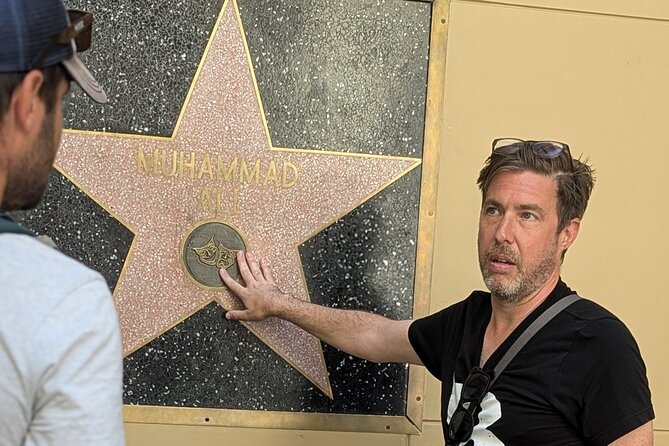
The Walk of Fame is one of those sights that can seem more meaningful once someone explains its rules and history. The tour gives you time to walk along the sidewalk and points out stars connected with film, television, music, radio, and live performance.
The first stars were installed in 1960. Today, the sidewalk includes around 2,700 stars, and the names are not limited to movie actors. Mickey Mouse and Godzilla are among the fictional characters honored, which gives the Walk of Fame a playful side that is easy to miss when you are focused only on famous human names.
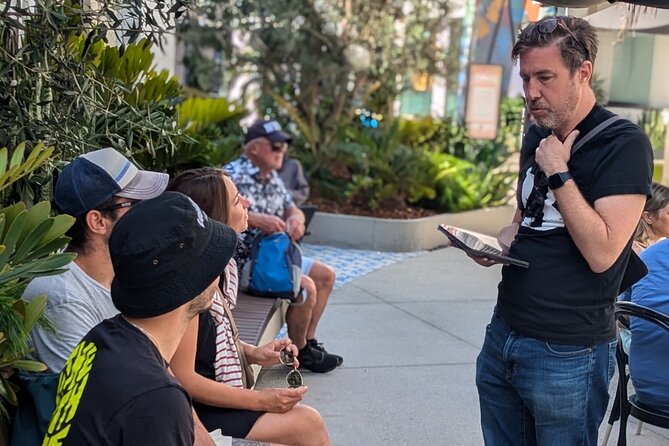
The guide’s role is especially useful here. Without context, you may spend your time searching for one favorite celebrity and overlook the larger idea behind the attraction. With a guide, you get a better sense of how Hollywood turned public recognition into a permanent part of the street.
This is also one of the busiest portions of the walk. You may find it harder to pause for photographs or listen if the sidewalk is crowded, so stay close enough to hear the guide and be ready to keep moving.
Egyptian Theatre and the birth of the red carpet
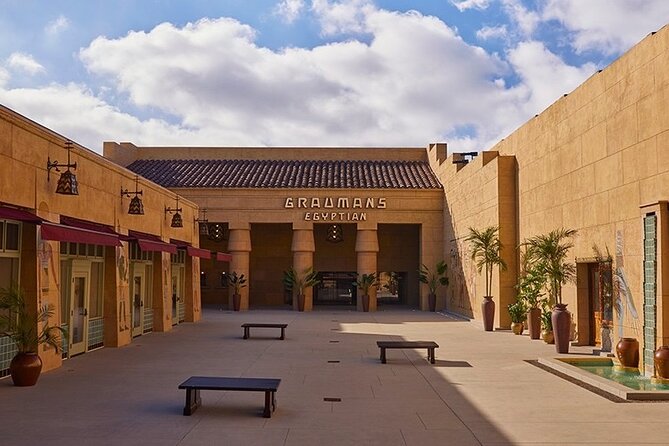
The Egyptian Theatre is one of the tour’s strongest stops for anyone interested in movie history. Its design points back to the era when a theater visit was an event, not just a quick stop before a film.
The theater hosted what is described as Hollywood’s first red carpet. That fact helps explain why the building matters beyond its exterior. Movie theaters once served as grand public stages for premieres, stars, and carefully managed spectacle.
The tour allows about 20 minutes for sightseeing here. That is enough time to take in the architecture and hear the story, though not enough for a long independent visit. If you are hoping to watch a film inside, this walk does not replace a screening or a dedicated theater tour.
I like the Egyptian Theatre because it helps you picture early Hollywood as a place of ceremony. The buildings were designed to make moviegoing feel grand, and the red carpet tradition grew from that idea.
More walking tours past the palaces in the world:
- Venice: Doge’s Palace and St Mark’s Basilica Walking Tour
★ 4.4 · 6,291 reviews - Split: Old Town and Diocletian Palace Walking Tour
★ 4.9 · 4,727 reviews - Walking Tour of Split and Diocletian’s Palace
★ 5.0 · 2,588 reviews - Bangkok: Grand Palace and Wat Phra Kaew Guided Walking Tour
★ 4.4 · 2,417 reviews
Dolby Theatre and Hollywood’s award-show image
The walk continues to the Dolby Theatre, one of the modern landmarks on Hollywood Boulevard. The stop lasts about 15 minutes and places the theater within the larger story of awards, celebrity, and public showmanship.
The Dolby is closely tied to the Academy Awards, while the Roosevelt Hotel, visited later, connects to the first ceremony. Seeing both places on the same walk helps you separate Hollywood’s newer award-show identity from its earlier roots.
This stop is more about orientation and context than a long interior visit. You should expect to see the theater and hear about its role, not spend the afternoon exploring the building at your own pace.
The sequence works well. The Egyptian Theatre represents early premiere culture, the Dolby Theatre represents modern award spectacle, and the Chinese Theatre links both eras through celebrity rituals and movie premieres.
TCL Chinese Theatre and the cement courtyard
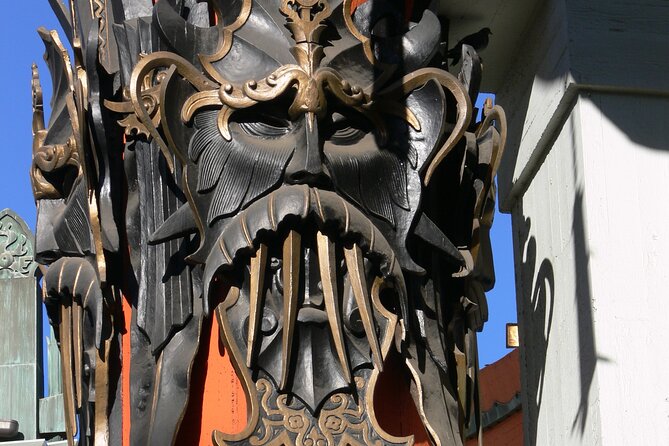
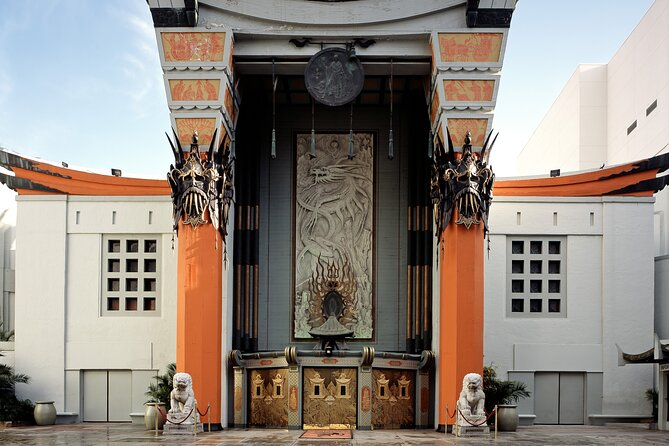
TCL Chinese Theatre is likely the centerpiece for many people booking this tour. It opened in 1927 and became famous for the handprints and footprints that celebrities left in cement.
The courtyard offers a direct connection to Hollywood personalities. You can see marks linked with names such as Marilyn Monroe and Harrison Ford, along with the unmistakable imprint of R2-D2. That last example captures the playful side of the theater. Hollywood honors not just performers, but also characters and objects that became part of popular culture.
The guided portion lasts about 15 minutes. Your guide can help you make sense of the cement panels instead of treating them as a random collection of names. You also hear how the tradition began and why the theater became such a strong symbol of movie-star culture.
There is a practical point here: this is a public, popular sight, so it can be difficult to get a quiet photograph or linger over every panel. Keep your expectations realistic. The value comes from the stories and the chance to see the courtyard in person, not from having the space to yourself.
Musso & Frank Grill, where restaurant history joins film history
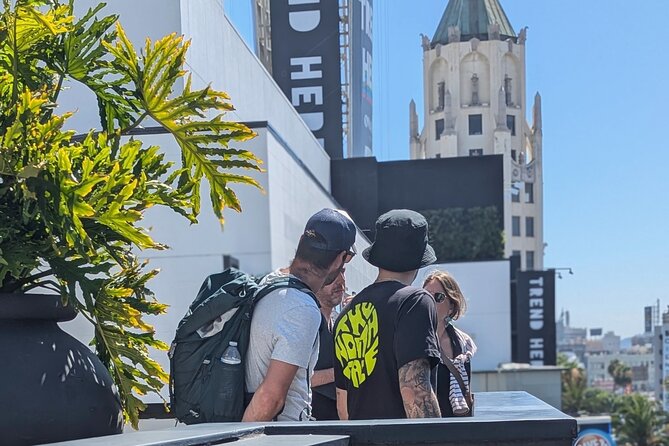
Musso & Frank Grill adds welcome variety to the route. It is known as Hollywood’s oldest restaurant and has long been linked with figures such as Charlie Chaplin, Humphrey Bogart, and Marilyn Monroe.
You do not book a meal as part of the tour, but the guide shares stories about the restaurant and its place in Hollywood life. That is useful because the film business was not built only inside studios and theaters. Restaurants, hotels, and nearby meeting places also helped shape the social world around the movies.
One especially unusual detail concerns fettuccine Alfredo. Mary Pickford and Douglas Fairbanks helped bring the dish to the United States after encountering it abroad. Stories like this give the tour a lighter touch and keep the experience from becoming a string of dates and building names.
If you want to eat at Musso & Frank Grill, make a separate reservation and plan additional time. The walking tour gives you the setting and background, not a full restaurant experience.
The Roosevelt Hotel and the final old-Hollywood note
The tour ends at the Hollywood Roosevelt, a Spanish Colonial Revival hotel with a major place in film-award history. The first Academy Awards ceremony was held there, making the hotel an important link to the Dolby Theatre earlier in the walk.
The Roosevelt was also associated with stars such as Marilyn Monroe. Its interiors help convey the polished, old-Hollywood mood that the tour has been building since the Egyptian Theatre.
This is a fitting final stop because a hotel can reveal a different side of the entertainment business. Theaters show the public face of Hollywood. Hotels and restaurants show where the people behind that image gathered, worked, and socialized.
The visit is listed at about 10 minutes, so you should not expect a long hotel tour. Think of it as a guided look at an important setting and a final chance to connect Hollywood’s movie palaces with its award ceremonies and celebrity culture.
What the guide adds to the experience
The guide is the main reason to choose this walk over a self-guided stroll. The places themselves are famous, but the stories turn them into a connected route.
Éloi is one guide associated with the experience, and the tour is offered in English and French. Mark has also led the walk, bringing film-industry experience and extra detail about the theaters and their day-to-day operation.
That difference can matter to movie fans. A guide with industry experience may explain how the buildings functioned, how premieres were handled, or how the theater business supported Hollywood’s public image. Éloi’s approach is described as mixing humor with historical detail, which can help keep the material lively for adults and teenagers.
A small group is a real advantage here. Hollywood Boulevard is not a quiet museum, and you need to be able to hear the person leading you. A smaller setting also makes it easier to ask about a favorite actor, a theater detail, or a story that catches your attention.
Private groups are available if you want more control over the pace and conversation. The standard experience is still a good fit if you prefer a social walk and do not need a fully custom route.
Pace, clothing, and practical planning
Two and a half hours on foot is manageable for most people who are comfortable walking, but this is not a short photo stop. Wear supportive shoes, check the forecast, and dress for the conditions. The tour moves between outdoor sidewalks and landmark entrances, so you should be ready for changing noise, sun, and crowd levels.
Bring a camera. The Hollywood Sign views, Walk of Fame stars, theater fronts, cement handprints, and Roosevelt Hotel interiors give you plenty to photograph. Just remember that the most useful part of the tour is often the explanation, so do not let picture-taking make you miss the guide.
The tour finishes back at 6815 Hollywood Boulevard. That makes the starting point useful for continuing your day in the area, returning to the Metro, or arranging your next activity without crossing Los Angeles.
The booking terms are flexible. You can cancel up to 24 hours ahead for a full refund, and you can reserve now while paying later. Those options help if your Los Angeles schedule is still shifting.
Who should book this Hollywood walking tour?
I would recommend it most strongly to first-time visitors who want a clear introduction to Hollywood Boulevard. You see the major landmarks, but you also learn why they were built and how they shaped the entertainment business.
It is a good match for movie fans, history-minded visitors, and families with older children or teenagers who can handle a steady walk. The combination of famous names, unusual facts, and recognizable buildings gives the tour enough variety to hold attention.
It also suits visitors who prefer stories to shopping. Hollywood Boulevard can tempt you into souvenir stores, but this experience keeps your attention on theaters, restaurants, hotels, and public landmarks.
You may want to skip it if you have already spent a full day exploring Hollywood and want only ticketed attractions or indoor exhibits. You should also think twice if a two-and-a-half-hour walk sounds tiring. The tour covers several stops, and the busy sidewalks may make the pace feel faster than the schedule suggests.
Final booking advice
Book this tour if you want Hollywood explained rather than simply photographed. The strongest features are the theater history, the Walk of Fame context, and the guide’s personal stories, especially when led by someone such as Mark or Éloi.
At $35, it offers solid value for a focused introduction to the boulevard. You will not receive meals or attraction admissions, but you do get a carefully connected route through the Egyptian Theatre, Dolby Theatre, TCL Chinese Theatre, Musso & Frank Grill, and the Roosevelt Hotel.
My advice is to take it near the start of your Hollywood visit. You will leave with a better sense of what deserves a second look, which places require separate plans, and why this famous boulevard became such a powerful symbol of the movies.
FAQ
How long does the Hollywood Boulevard walking tour last?
The tour lasts 150 minutes, or two and a half hours.
How much does the tour cost?
The listed price is $35 per person.
Where does the tour meet?
You meet in front of the elevator at the entrance to the Metro Station Hollywood/Highland on Hollywood Boulevard, at 6815 Hollywood Boulevard.
What languages are available?
The tour is available in English and French.
Does the tour visit the Hollywood Sign?
The tour provides panoramic views of the Hollywood Sign and explains its history. It does not list a hike to the sign.
Which major sights are included?
The route includes Ovation, Hollywood, the Hollywood Walk of Fame, Grauman’s Egyptian Theatre, Hollywood Boulevard, the Dolby Theatre, TCL Chinese Theatre, and the Hollywood Roosevelt.
Is Musso & Frank Grill included as a meal stop?
Musso & Frank Grill is included as a sightseeing and storytelling stop. A meal is not listed as part of the tour.
What is included in the price?
A local guide is included. Meals, attraction admissions, and other extras are not listed as included.
Can I book a private group?
Yes. A private group option is available.
How early should I arrive?
Arrive at the meeting point 15 minutes before the tour begins.
Just added around the world
- Pitti Palace and Palatina Gallery★ 4.0 · 41 reviews
- Pitti Palace Small Group Tour★ 5.0 · 6 reviews
- Florence: Palazzo Vecchio Skip the line Entry ticket★ 4.0 · 49 reviews
- Pitti Palace: The Royal Palace of Florence★ 4.5 · 12 reviews
- Private Guided Tour of Palazzo Vecchio in Florence★ 3.5 · 4 reviews
- PALAZZO VECCHIO Private tour in Florence★ 5.0 · 35 reviews
- Private Tour of Pitti Palace with Boboli Garden★ 5.0 · 28 reviews
- Pitti Palace and Palatine Gallery: A Royal Art and History Tour★ 4.5 · 42 reviews
Historical Tours, compared.
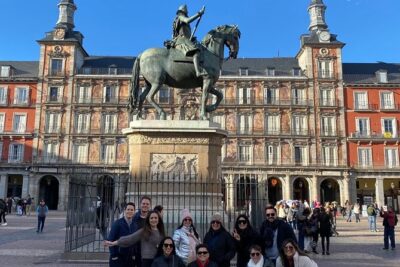
Madrid Essential: Historic Center, Plaza Mayor & Royal Palace
Read our review →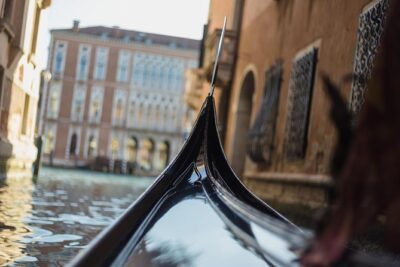
Venice’s Best: Basilica, Doge’s Palace, Gondola & History Gallery
Read our review →
Imperial Palace and Shogun Historical Walking Tour
Read our review →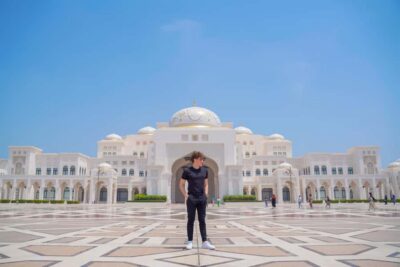
Abu Dhabi Grand Mosque, Palace, and Heritage Village
Read our review →
Skip-the-Line Schonbrunn Palace Guided Tour and Vienna Historical City Tour
Read our review →
Madrid in a Day Tour:Royal Palace, Historic Center & Prado Museum
Read our review →
Basilica, Doge’s Palace, History Gallery & Bell Tower Option
Read our review →Browse the lists this tour appears in