
REVIEW · TOKYO PALACE TOURS
Tokyo: Imperial Palace and Shogun Historical Walking Tour
Tokyo’s Imperial Palace East Gardens give you something rare in central Tokyo: open space, old stone walls, quiet ponds, and a direct link to the age of shoguns. This tour takes you across the former grounds of Edo Castle, including the castle keep foundation and Ninomaru Garden, while a guide explains what you are seeing.
I like the small group limit of 15, which makes it easier to ask questions and keep up with the guide. I also like the way the tour adds meaning to gardens that you could visit for free on your own. The main caution is guide consistency. Jim, Miguel, Tony, Blake, and several others receive strong praise, but one or two guests found the explanations too long or the historical detail too light.
What makes this Imperial Palace walk worthwhile
- You walk across Edo Castle’s former grounds, including huge stone walls, gates, and the old keep foundation.
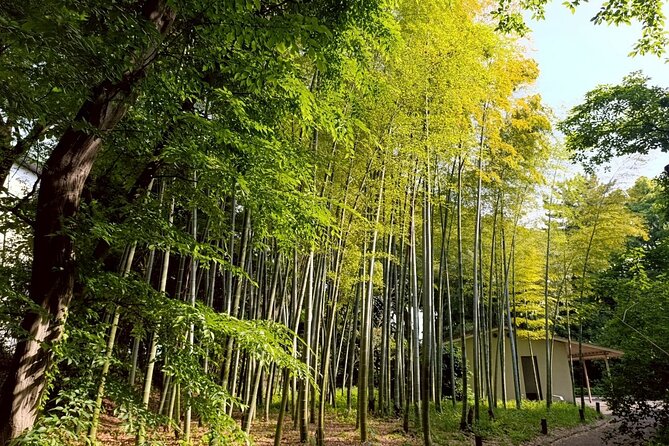
- Ninomaru Garden adds a peaceful change of pace, with ponds and seasonal flowers arranged in the refined Edo style.
- The tour stays small, with no more than 15 people, so questions are practical rather than shouted across a crowd.
- Guides connect several eras, from samurai rule and the shogunate to the Emperor and modern Japanese culture.
- The East Gardens are free to enter, so the $22 fee pays for interpretation, company, and navigation rather than admission alone.
- The route lasts about two hours, with roughly 90 minutes identified for the main garden and castle-ground visit.
Entering the East Gardens from Wadakura Fountain Park
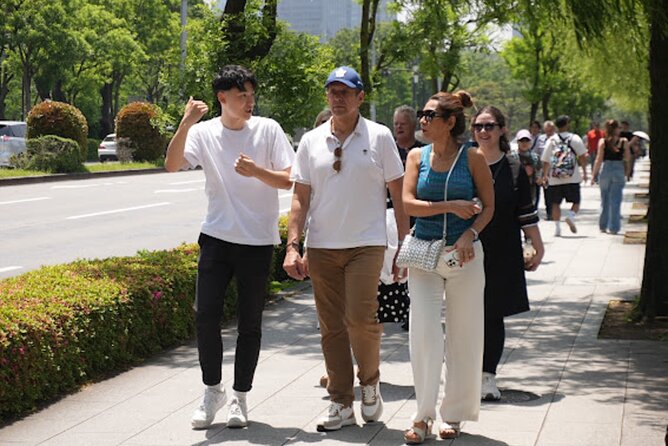
The meeting point is the Starbucks Coffee at Kokyo Gaien Wadakura Fountain Park, 3-1 Kōkyogaien in Chiyoda City. The location is near public transportation, but you should still allow time to find the exact Starbucks and gather before departure.
This is not a bus tour that leaves you staring at a wall from behind glass. You travel on foot through the palace grounds, where gates, paths, trees, stonework, and garden features come in close view. That slower pace matters here. The former castle site is best understood one piece at a time.
Your guide leads the group into the East Gardens and explains how the area functioned during the Edo period. The story covers the shogunate, feudal lords, the castle, the Emperor, and the imperial family. Several guides, including Jim, Tony, Miguel, and Blake, are praised for making those connections clear and keeping the mood relaxed.
The tone appears to be informal rather than ceremonial. You can ask questions as you go, and the group size should make conversation manageable. If you want a quiet solo stroll with no commentary, the free gardens may suit you better. If you want to understand why the walls, foundations, and formal planting matter, the guide earns the fee.
More history tours in Tokyo:
- Tokyo: Imperial Palace Japanese History Walking Tour
★ 4.9 · 987 reviews - Tokyo: Imperial Palace, the history of Japan (ENGLISH GUIDE)
★ 5.0 · 77 reviews - Imperial Palace Tour: Discover Samurai History with a Guide
★ 5.0 · 12 reviews
Edo Castle walls, gates, and the old keep foundation
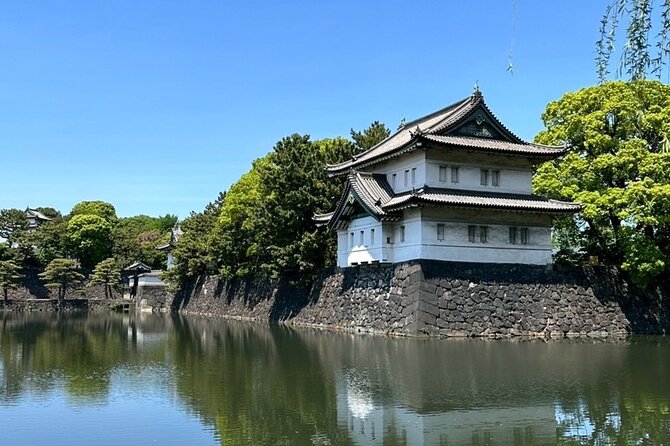
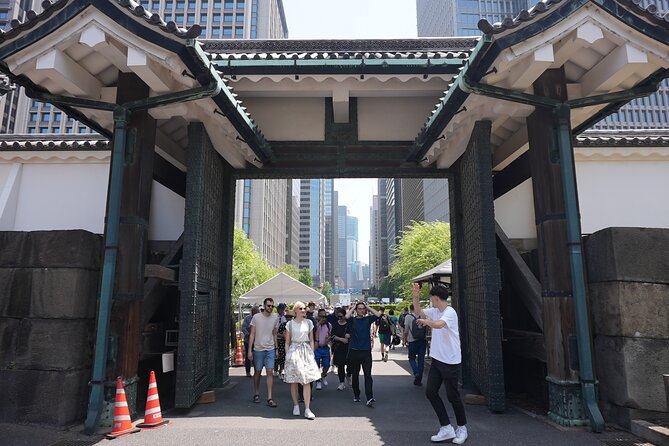
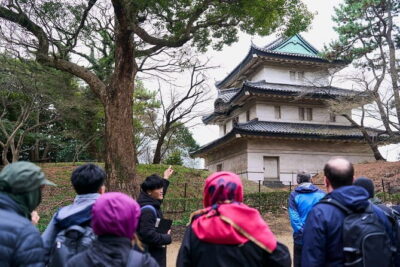
The strongest historical part of the walk is the former Edo Castle site. You pass through majestic stone gates and beside large defensive walls, then reach the foundation of the castle keep.
There is no surviving tower to enter, so set your expectations correctly. The power of this stop comes from scale and imagination. You stand on the base of a structure that once represented the authority of the shogun, surrounded by the remains of a huge fortified complex. A good guide helps you picture how the castle operated and why this spot mattered.
The best commentary adds more than dates. It explains the relationship between the shogunate and the imperial family, the role of feudal lords, and how Tokyo developed from Edo. Jim is praised for combining architecture, political history, and Japanese culture. Tony is also noted for explaining the significance of the palace grounds and the surrounding area.
This part may feel like a history lesson, and that is both its strength and its possible weakness. If you enjoy context, you will come away with a clearer sense of how samurai rule shaped Japan. If you prefer constant movement and quick facts, a guide who spends a long time at one stop may test your patience.
One useful point is that the tour does not reduce Japanese history to a simple story of samurai versus Emperor. The subjects include the Edo period, the shogunate, imperial life, the opening of Japan to the Western world, and modern Tokyo. The quality depends on how clearly your particular guide handles that broad subject.
Ninomaru Garden and the quieter side of the palace grounds
After the castle remains, the walk moves into Ninomaru Garden. This section offers a welcome shift from military power to cultivated beauty.
You see ponds, seasonal flowers, and formal garden design associated with the Edo period. The setting is calm, but it is not merely a pleasant green break. The guide can point out how the garden reflects an older Japanese idea of order, balance, and controlled natural beauty.
I like this part because it gives the tour two different faces. The castle walls show power and defense. Ninomaru shows taste, ceremony, and leisure. Together, they make the East Gardens more interesting than a standard city park.
The gardens can also be busy, so a guide helps you stay oriented and notice details you might pass without a second thought. The pace is described as easy, but it is still a walking tour. One guide made sure the group stayed together, while another kept the atmosphere friendly and open to questions.
The route includes some slopes. You do not need to treat this as a strenuous hike, but comfortable shoes are sensible because the visit takes place on foot and lasts around two hours. The activity ends back at the original meeting point, which makes it easier to plan lunch or another central Tokyo sight afterward.
How the guides shape the experience
The guide is the main reason to book this tour instead of visiting the East Gardens alone. The gardens themselves are free, but signs and remains cannot always explain the larger story in a way that sticks.
Several guides receive especially strong praise. Jim is described as patient, clear, and able to answer detailed questions. He also brings the perspective of someone who has lived in Japan for many years while coming from outside the country. That can be useful when you want both local context and an outsider’s comparison.
Miguel is praised for history, small facts, and links between older Japan and modern Tokyo. Tony is noted for explaining the Edo period, the shogunate, the Emperor, and the imperial family in a way that made the visit more meaningful. Blake is described as engaging and easy to follow.
The guide roster also includes Izzy, Lasse, Dylan, Mitchi, and Maitaki. The feedback is not uniformly perfect. One person found the historical explanation too thin, while another felt the guide repeated points and spent too long at each stop. Another booking problem involved poor communication about a changed meeting location, causing the group to leave before the participants arrived.
That last issue is worth taking seriously. Arrive early at the stated meeting point, keep your phone available, and confirm any last-minute instructions. The tour’s overall rating is very high, with a 5 out of 5 rating from 2,251 reviews and 99 percent recommending it, but no guided activity is completely independent of the person leading it.
More walking tours past the palaces in Tokyo:
- Tokyo Castle & Imperial PalaceーShogun Walking Tour
★ 4.7 · 1,068 reviews - Tokyo: Imperial Palace and Shogun Walking Tour
★ 4.9 · 935 reviews - Tokyo Castle & Imperial PalaceーShogun Walking Tour
★ 5.0 · 724 reviews - Imperial Palace East Garden and Edo Castle Walking Tour in Tokyo
★ 5.0 · 510 reviews
Is $22 a fair price?
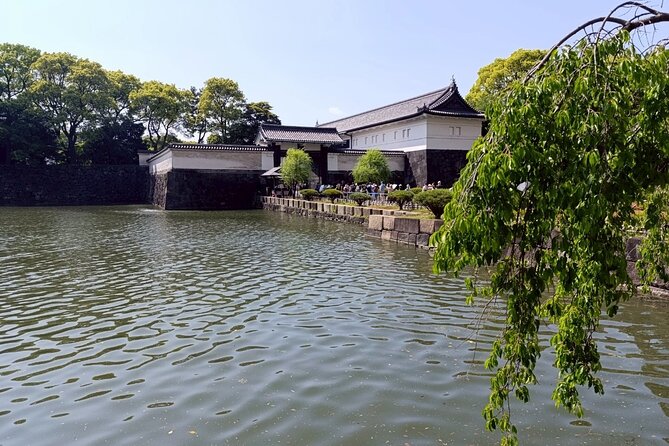
At $22 per person, this is a modestly priced guided walk in one of Tokyo’s most important historic areas. The East Gardens are free, so you are not paying for admission. You are paying for a human explanation, a planned route, and the chance to ask questions.
That can be good value if you are visiting Tokyo for the first time or if Japanese history is unfamiliar to you. A short explanation of the shogunate, Edo Castle, and the imperial family can make later visits to temples, museums, and historic districts easier to understand.
The price is less compelling if you have already studied the site, enjoy reading signs, or prefer wandering alone. You can enter the gardens without paying for this activity, and a two-hour tour will naturally limit the time you spend exploring at your own pace.
I would see the fee as a reasonable payment for orientation. You get a small group rather than a large crowd, a guide rather than an audio recording, and a focused look at the main remains. The value rises when your guide tells a clear story and welcomes questions. It falls when the commentary becomes repetitive or lacks detail.
Who should book this walk?
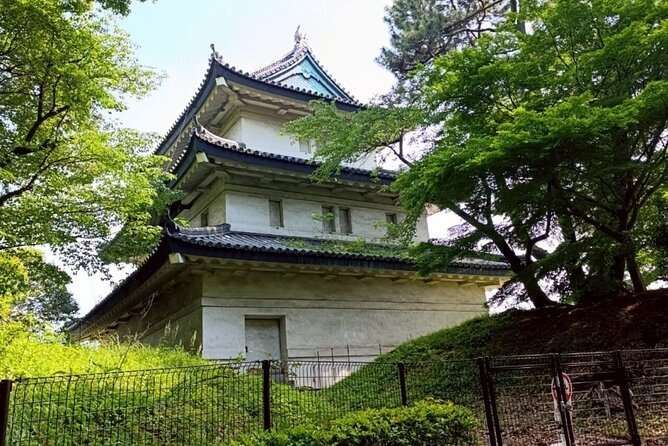
This tour suits you if you want an easy introduction to Tokyo’s political and royal past. It is also a good choice if you like gardens but want more than photographs, or if you are unsure how the shogunate and imperial system fit into Japanese history.
Families and mixed-age groups may appreciate the relaxed format, since most participants can take part and the pace is not presented as strenuous. The small group also makes it easier to remain together and ask for clarification.
History fans should be happy with the chance to stand on the old castle foundation and examine the surviving walls and gates. You should be prepared for a broad overview rather than an academic seminar. One person specifically advised arriving ready for a history class, so do not book this expecting a nonstop photo walk.
It is less suitable if you need a fully private tour, dislike extended explanations, or want to enter the Imperial Palace itself. The activity focuses on the East Gardens and former Edo Castle grounds. The information provided does not promise access to palace interiors.
Practical details that matter on the day
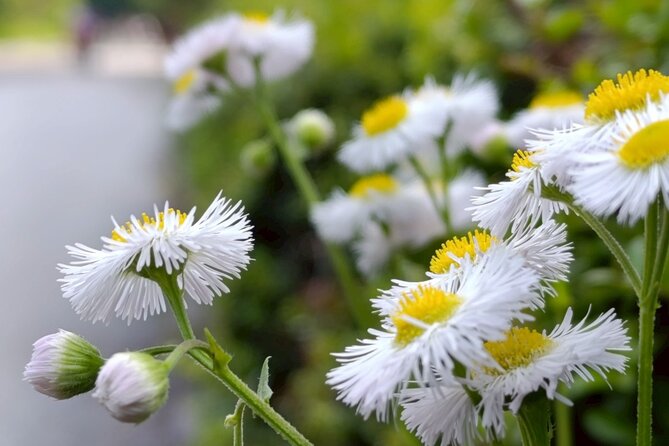
The advertised duration is about two hours, with approximately 90 minutes devoted to the East Gardens and Edo Castle ruins. The tour starts and finishes at Starbucks Coffee in Wadakura Fountain Park.
A mobile ticket is provided, and confirmation is received at booking. The activity is near public transportation, and the maximum group size is 15 people. Most people can participate, but the route does include walking and some slopes.
Plan around the weather because this is an outdoor visit. The garden setting is a major part of the appeal, but it also means your comfort depends on conditions. Wear shoes you can walk in, arrive before the meeting time, and keep enough time afterward for the return to the starting point.
Free cancellation is available when you cancel at least 24 hours before the scheduled start. Cancellations or changes made less than 24 hours before the start are not accepted for a refund, and the cut-off follows Tokyo local time.
Final call: a useful first look at Tokyo’s past
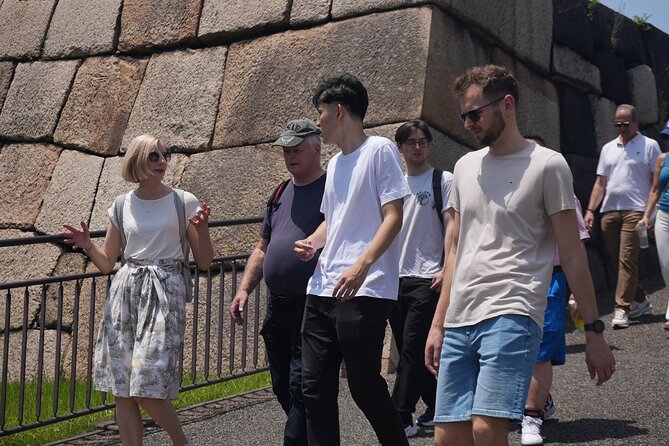
I would book this tour if you want the Imperial Palace East Gardens to make sense, not simply look pretty. The strongest guides turn the old walls, castle foundation, ponds, and flowers into a connected story about samurai power, Edo, the shogunate, and the imperial family.
The main reason to hesitate is the free admission and the uneven guide experience. You can visit on your own, and a long explanation may not suit every style. Still, $22 is fair for a small-group walk with guides such as Jim, Miguel, Tony, or Blake, especially at the start of a Tokyo visit when you want a clear foundation for the city’s history. Arrive early, expect real walking, and book it for the stories as much as for the gardens.
FAQ
How long does the Imperial Palace and Shogun Historical Walking Tour last?
The tour lasts approximately two hours. About 90 minutes is listed for the East Gardens and Edo Castle ruins.
What does the tour visit?
The walk visits the Imperial Palace East Gardens, former Edo Castle grounds, stone gates, castle walls, the old castle keep foundation, and Ninomaru Garden.
Where does the tour start?
It starts at Starbucks Coffee in Kokyo Gaien Wadakura Fountain Park, 3-1 Kōkyogaien, Chiyoda City, Tokyo 100-0002, Japan.
Where does the tour finish?
The activity ends back at the meeting point at Starbucks Coffee in Wadakura Fountain Park.
How many people can join the tour?
The tour has a maximum group size of 15 people.
Is admission to the East Gardens included?
The tour information lists admission as included. The gardens can also be visited for free when exploring independently, so the tour fee mainly covers the guide and organized walking experience.
Can I cancel for a full refund?
Yes. You can cancel at least 24 hours before the scheduled start for a full refund. Cancellations and changes made less than 24 hours before the start are not accepted for a refund.
Just added around Tokyo
- Tokyo walking tour around Imperial Palace and Tokyo Station★ 5.0 · 3 reviews
- Tokyo: Imperial Palace, the history of Japan (ENGLISH GUIDE)★ 5.0 · 77 reviews
- Tokyo: Pvt. Tour – Edo Castle & Imperial Palace East Gardens★ 4.8 · 63 reviews
- Tokyo: Imperial Palace East Gardens and Tokyo Station Tour★ 5.0 · 16 reviews
- Tokyo: Imperial Palace with Nostalgic Alley Kagurazaka tour★ 4.3 · 8 reviews
- Tokyo: Edo Castle and Imperial Palace Guided Walking Tour★ 5.0 · 6 reviews
- Tokyo: Edo Castle Ruins & Imperial Palace East Garden Tour★ 4.4 · 13 reviews
- Imperial Palace Tour: Discover Samurai History with a Guide★ 5.0 · 12 reviews
Tokyo Palace Tours, compared.
Tokyo Castle & Imperial PalaceーShogun Walking Tour
Read our review →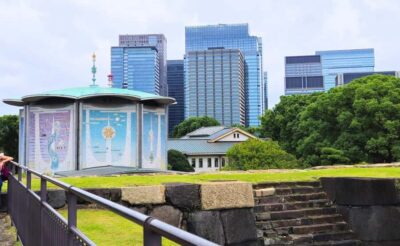

Tokyo Castle & Imperial PalaceーShogun Walking Tour
Read our review →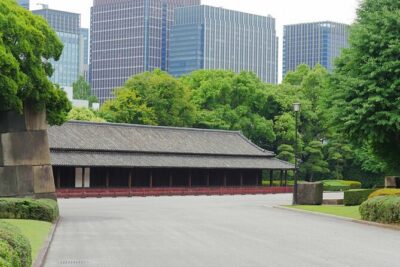
Imperial Palace East Garden and Edo Castle Walking Tour in Tokyo
Read our review →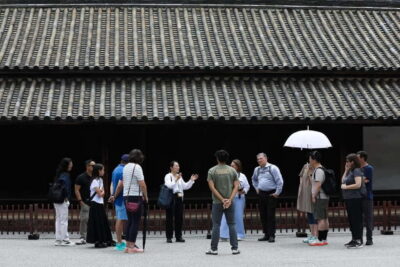
Imperial Palace, Sensō-ji Temple, & Tokyo Tower Tour
Read our review →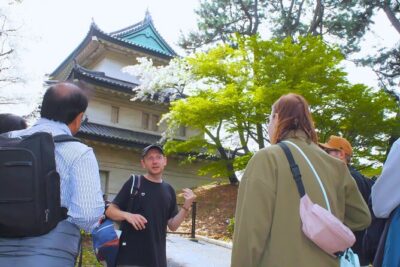
Tokyo Castle, Imperial Palace, Shogun & Garden Walking Tour
Read our review →Browse the lists this tour appears in