
REVIEW · ROYAL CASTLE TOURS
Tokyo: Edo Castle & East Garden of the Imperial Palace Tour
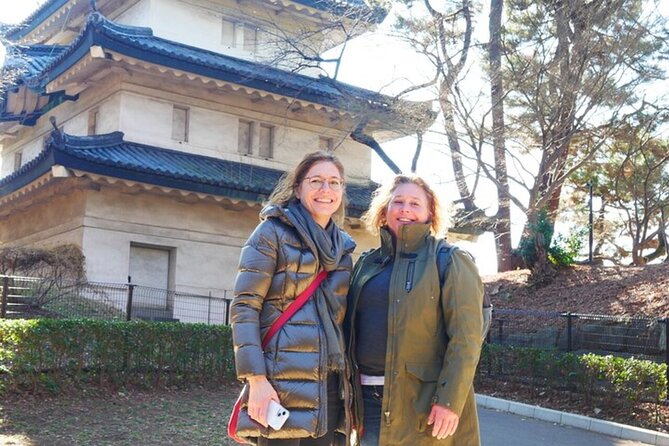
Edo Castle’s former grounds offer one of Tokyo’s clearest links to the age of shoguns. For two hours, you’ll walk through the Imperial Palace East Gardens, see old walls and castle remains, and hear how this site changed from military headquarters to imperial residence. I especially like the easy walking pace and the way guides such as Hitoshi, Naoko, and Masahito use pictures and stories to make vanished buildings easier to imagine.
I also like that the tour gives you more than a pretty garden stroll. You’ll learn about shoguns, daimyo, emperors, architecture, plants, and even the garden’s koi. The main drawback is important: you do not enter the Imperial Palace itself, and the East Gardens close on Mondays and Fridays.
Key points at a glance
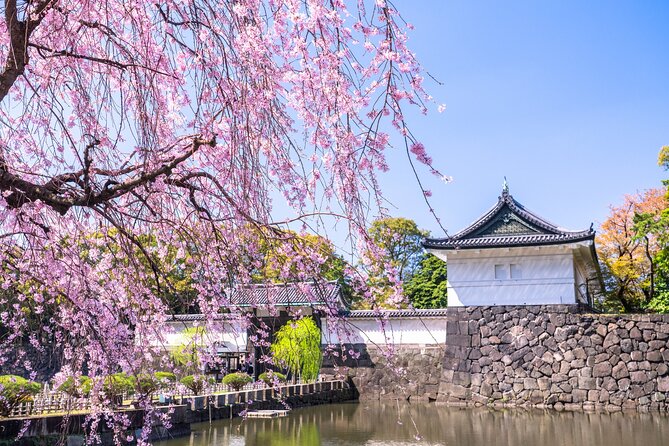
- Edo Castle beneath the garden: Walk across the former main grounds of the shogun’s castle, with surviving walls, foundations, and historic entry areas.
- A guide adds the missing pieces: Old buildings are mostly gone, so visual aids and clear storytelling make the site far easier to understand.
- Two hours at a steady pace: The tour suits visitors who want context without giving up half a day in Tokyo.
- The garden is free, but the guide is the product: Your $42 pays for the English-language explanation, organization, and help noticing details you might otherwise pass.
- Meet at Wadakura Fountain Park: Look for the guide holding a Gotcha sign in front of the fountain.
- Plan around closures and inspections: The East Gardens are closed Mondays and Fridays, and bags are inspected at entry.
Why Edo Castle’s East Gardens matter
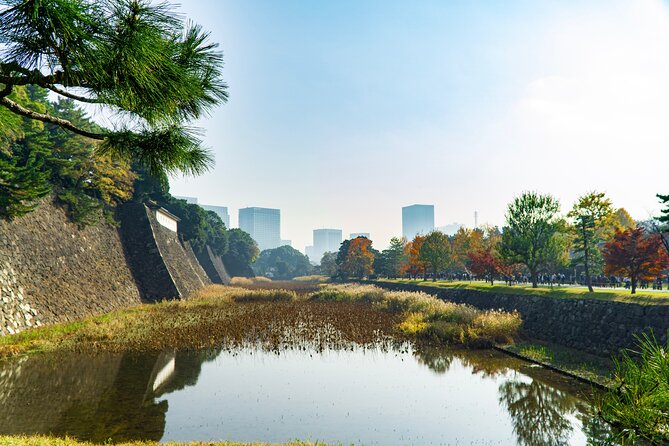
Tokyo can feel modern at every turn, but the East Gardens place you on ground once controlled by the Tokugawa shoguns. Edo Castle was the political center of Japan during the shogunate, and the present gardens occupy its former main compound.
That setting gives the tour its real value. You are not simply walking through a manicured park. You are crossing a site where military power, court ritual, architecture, and government once met. The remaining stone walls and foundations can look quiet today, but a guide helps you picture the scale and purpose of the castle that once filled this area.
I like this kind of visit because the evidence is incomplete. You will not find a fully preserved castle with rooms full of objects. Instead, you get walls, gates, foundations, open space, trees, ponds, and carefully maintained garden areas. The guide’s job is to connect those pieces.
Several guides have made that connection especially well. Hitoshi is repeatedly praised for his clear English, patience, and broad explanation of Japanese history. Naoko uses pictures and visual explanations, which are useful when the original buildings no longer survive. Masahito has been described as friendly, well prepared, and good at answering questions. Your guide will vary, but these examples show the style you can expect: personal storytelling rather than a fast list of dates.
More Royal Castle Tours in Japan
- Tokyo Castle & Imperial PalaceーShogun Walking Tour
★ 4.7 · 1,068 reviews - Tokyo Castle & Imperial PalaceーShogun Walking Tour
★ 5.0 · 724 reviews - Imperial Palace East Garden and Edo Castle Walking Tour in Tokyo
★ 5.0 · 510 reviews
Starting at Wadakura Fountain Park
The meeting point is in front of the fountain at Wadakura Fountain Park. Your guide will hold a sign saying Gotcha. That detail matters in central Tokyo, where a vague meeting point can turn a simple start into a frustrating search.
Give yourself enough time to reach the park and get oriented. The tour begins outside the garden, then proceeds toward the Imperial Palace grounds. You should arrive ready to walk and keep your belongings available for inspection.
The fountain park also makes a sensible starting place because it provides an open, recognizable point near the palace area. Once the group gathers, the guide begins the transition from present-day Tokyo to the old castle site. Some guides start with a broad outline of Japanese history before entering, helping you understand the difference between the emperor’s role and the shogun’s power.
Walking through the former castle grounds
The East Gardens were created on the main grounds of Edo Castle. That is the heart of the experience. You will see a garden, but you are also moving through the former center of shogun rule.
Expect a mixture of open paths, stonework, garden views, and traces of castle construction. The tour explains what stood here, how the castle worked, and how the site later became connected with the imperial family. Guides may use photographs or printed images to show missing structures. This is particularly helpful because the modern garden does not always reveal what happened there by itself.
The tour is not built around speed. Several accounts describe a slow or relaxed pace, with time for questions and short stops. That makes it suitable for older visitors and families. One guide took special care with a visitor using a wheelchair, and other guides helped people reach subway connections after the tour. That reflects a considerate approach, though you should still assess the route for your own mobility needs when booking.
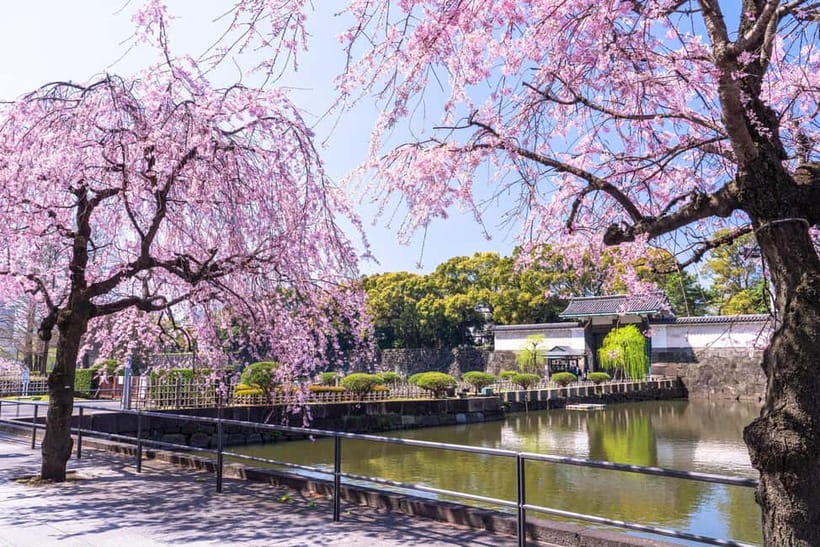
A slower pace also improves the visit for anyone who wants photographs. Guides have helped with pictures at attractive garden locations, and some have pointed out nearby cherry blossoms when conditions were right. These extras are not guaranteed, but the tour appears flexible enough to respond to the group.
What the gardens add to the history
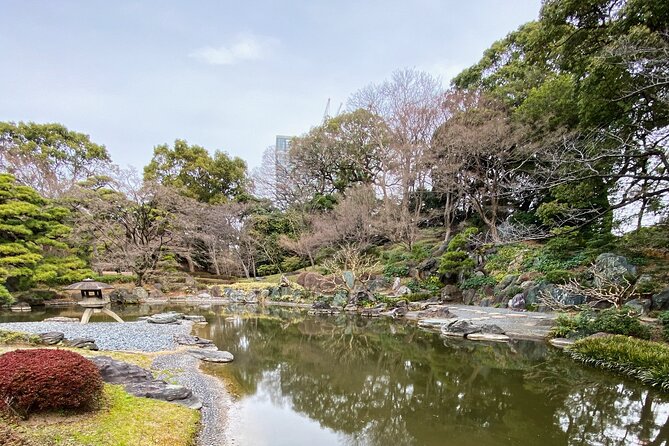
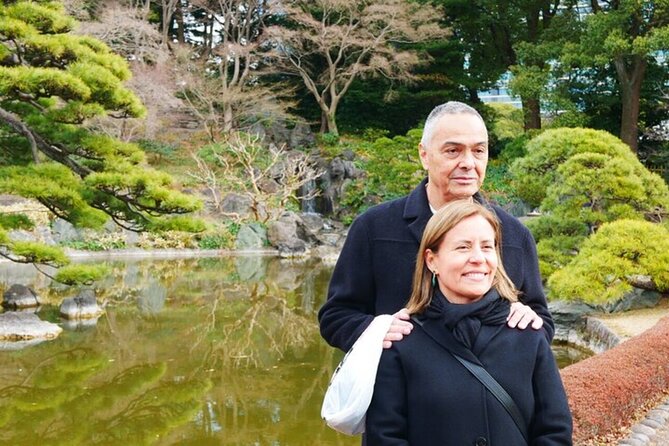
The gardens keep the tour from becoming a lesson in stone walls alone. Their ponds, trees, planting areas, and carefully arranged views show how nature was used within a place of power.
You will hear about the significance of particular plants and garden features, not just the names of former rulers. That mix is important. Japanese garden design can feel mysterious if you only see it as decoration. A guide gives you a way to read the setting and notice the choices behind it.
The pond area is also where the famous koi mention comes into play. The fish are a small detail, but they give the walk a welcome change of pace. Children may enjoy looking for them, while adults can appreciate how a peaceful pond sits within a former military and political center.
The garden itself is free to enter, so the $42 price needs to be judged honestly. You are not paying for an exclusive monument entry or a private room inside the palace. You are paying for two hours of English explanation, historical framing, visual material, directions, and a person who can answer questions. If you already know Edo-period history and prefer to read signs at your own pace, the cost may feel high. If you want the site to make sense, the guide can be worth it.
More royal castle tours in Tokyo:
- Tokyo Castle, Imperial Palace, Shogun & Garden Walking Tour
★ 5.0 · 211 reviews - Tokyo: Pvt. Tour – Edo Castle & Imperial Palace East Gardens
★ 4.8 · 63 reviews - Tokyo: Edo Castle Ruins & Imperial Palace East Garden Tour
★ 4.4 · 13 reviews - Tokyo: Edo Castle and Imperial Palace Guided Walking Tour
★ 5.0 · 6 reviews
Shoguns, daimyo, ninjas, and emperors
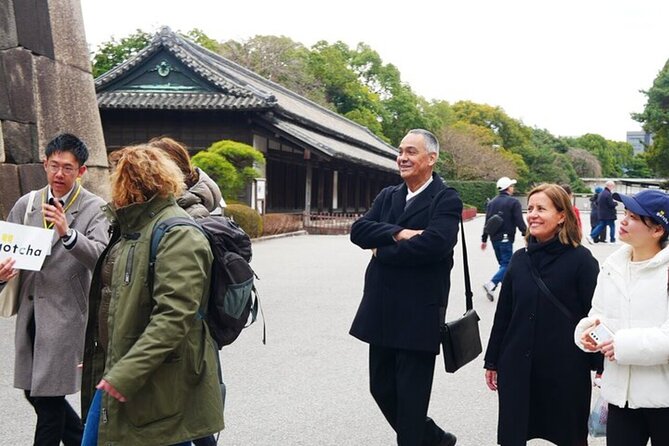
A good guide gives the walk a human shape. The best accounts of this tour describe explanations of shoguns, daimyo, ninjas, the imperial family, and the political changes that shaped Japan.
You are likely to get a general outline first, followed by details connected to the places in front of you. That structure works better than hearing isolated facts. You can understand why a wall was built, who passed through a gate, or why a particular part of the garden mattered.
The tour also connects the castle site with Japanese culture more broadly. Guides explain customs and symbols alongside political history. Shigeru, for example, is praised for providing a broad introduction before adding smaller cultural details and curiosities. Other guides have been happy to answer questions well beyond the basic route.
English ability matters here, and the supplied experiences consistently describe the guides as easy to understand. That does not mean every explanation will suit every listener. Some guides may focus more on dates and rulers, while others may lean toward stories, culture, or visual details. Still, the format gives you a better chance of understanding the site than a solo walk with only brief signs.
What you will not see
The title can create the wrong expectation, so keep this distinction clear: this is an East Gardens tour, not an interior visit to the Imperial Palace.
You will not enter the Inner Palace, and the tour does not provide access to private imperial areas. The visible palace buildings are not the focus of this route. Instead, you explore the public garden grounds built over Edo Castle’s former site.
That limitation is not a flaw if you book with the right expectations. The East Gardens offer the historical setting and a pleasant walk, while the Inner Palace remains closed to the public. Still, anyone hoping to tour grand palace rooms should choose a different activity.
Entry to the grounds includes a baggage inspection. Do not arrive with Japanese knives or other objects that could be treated as weapons. If you plan to shop for knives in Tsukiji or Asakusa before the tour, leave them in a coin locker or another secure location first. This is a practical rule that can save you from being turned away or delayed.
Timing, weather, and walking comfort
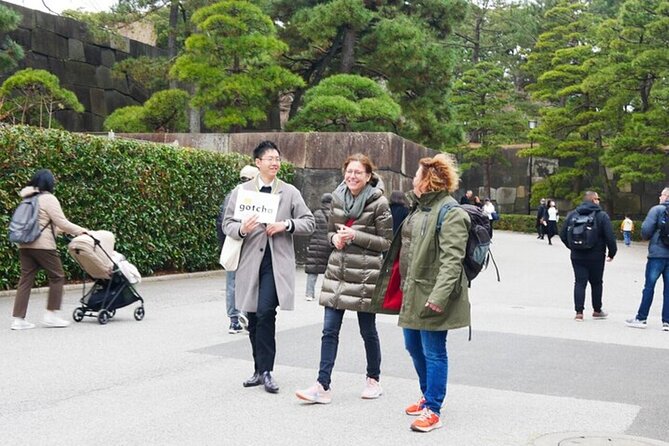
Two hours is a useful length for a Tokyo itinerary. The tour is long enough to explain the castle site and gardens, yet short enough to combine with another activity in the same day.
You should still expect outdoor walking. Rain can affect the mood and comfort, and one tour went ahead in heavy rain while the guide continued to provide a full explanation. Bring suitable clothing and shoes for the forecast. The gardens may be especially pleasant in clear weather, but a little rain does not automatically spoil the historical side of the visit.
Spring can add cherry blossoms near the garden area, though blossoms are seasonal and not guaranteed. In any season, the outdoor setting means you should plan for sun, rain, or changing temperatures rather than treating this as an indoor museum visit.
The pace is one of the tour’s strongest practical features. Guides have slowed down for older groups, stopped regularly, and allowed time for questions. Families may also find the two-hour format manageable. One guide made the experience accessible for a nine-year-old by explaining the material with enthusiasm and care.
Who will get the most from this tour
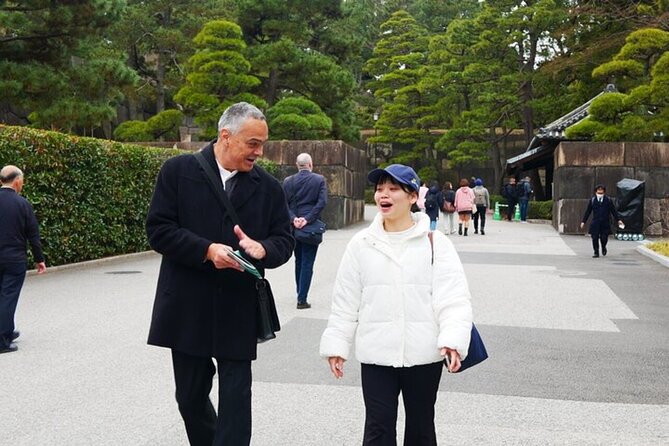
I would choose this tour if you are visiting Tokyo for the first time and want a clear introduction to the city’s political past. It works particularly well for people who see castle remains and gardens but want help understanding what they represent.
It is also a good match for:
- History-minded visitors who want Edo-period context without spending a full day at a museum.
- Families who benefit from stories, pictures, koi, and a manageable two-hour route.
- Older visitors who prefer a calm pace and regular stops.
- Visitors who enjoy gardens but want more than plant names and photo opportunities.
- People building a first-day Tokyo plan because the tour provides a useful cultural introduction.
I would think twice if you want a private tour, a preserved castle interior, or a long full-day excursion. One person fairly noted that $42 can be compared with a full-day trip to Nikko or Mount Fuji. That comparison is useful. This is a compact city experience, not a major day trip.
Practical value at $42
At $42 per person, the tour sits in the range where expectations matter. The garden itself is free, so the fee is entirely about the guided experience.
For me, the price makes sense when you value interpretation. The site contains layers of history, but many of its buildings are gone. A guide such as Naoko, Hitoshi, Mikio, or Masahito can supply the missing structure through explanations, images, stories, and answers to your questions.
The price is less attractive for independent visitors who are happy to walk quietly, read available information, and research Edo Castle beforehand. You can enter the public garden without buying this tour. The decision comes down to whether you want a local English-speaking guide to make the remains readable.
The flexible booking terms also reduce the risk: you can cancel up to 24 hours in advance for a full refund, and reserve now while paying later. Starting times vary, so check availability before fixing the rest of your day.
Should you book the East Gardens tour?
I would book it if you want a relaxed introduction to Edo Castle, shogun-era Japan, and the imperial setting without giving up an entire day. The strongest reason to go is the guide. Hitoshi, Naoko, Masahito, Shigeru, Mikio, and others have been praised for clear English, patience, visual explanations, good humor, and extra help with photos or onward directions.
Book only after accepting two limits: the Inner Palace is not open to you, and the garden closes Mondays and Fridays. If those points suit your plans, $42 buys a focused and useful walk through one of central Tokyo’s most important historic sites. If you want grand interiors or a major day trip, spend your money elsewhere.
FAQ
How long does the East Gardens tour last?
The guided walking tour lasts two hours and returns to Wadakura Fountain Park.
Where do I meet the guide?
Meet in front of the fountain at Wadakura Fountain Park. The guide will hold a sign saying Gotcha.
Does the tour enter the Imperial Palace?
No. The tour visits the East Gardens, which were built on the main grounds of Edo Castle. It does not enter the Inner Palace.
Which days are the East Gardens closed?
The East Gardens are closed on Mondays and Fridays.
Is the tour offered in English?
Yes. The activity includes a live English-speaking guide.
Can I bring Japanese knives into the palace grounds?
You should not bring Japanese knives or other objects that could be used as weapons. Bags are inspected when entering the grounds, so store such items in a coin locker or similar place before the meeting.
Just added around Tokyo
- Tokyo walking tour around Imperial Palace and Tokyo Station★ 5.0 · 3 reviews
- Tokyo: Imperial Palace, the history of Japan (ENGLISH GUIDE)★ 5.0 · 77 reviews
- Tokyo: Pvt. Tour – Edo Castle & Imperial Palace East Gardens★ 4.8 · 63 reviews
- Tokyo: Imperial Palace East Gardens and Tokyo Station Tour★ 5.0 · 16 reviews
- Tokyo: Imperial Palace with Nostalgic Alley Kagurazaka tour★ 4.3 · 8 reviews
- Tokyo: Edo Castle and Imperial Palace Guided Walking Tour★ 5.0 · 6 reviews
- Tokyo: Edo Castle Ruins & Imperial Palace East Garden Tour★ 4.4 · 13 reviews
- Imperial Palace Tour: Discover Samurai History with a Guide★ 5.0 · 12 reviews
Royal Castle Tours, compared.

Stonehenge, Windsor Castle, and Bath from London
Read our review →
Dracula’s Castle, Peles Castle, & Brasov Old Town
Read our review →
Neuschwanstein & Linderhof Castle Full-Day Trip
Read our review →
Dracula Castle, Peles Castle & Brasov Old Town
Read our review →
Prague Castle 2.5-Hour Tour Including Admission Ticket
Read our review →
Stonehenge, Windsor Castle and Bath with Pub Lunch in Lacock
Read our review →
Neuschwanstein & Linderhof Castle-Fairytale Day Tour from Munich
Read our review →
Browse the lists this tour appears in