

REVIEW · TOKYO PALACE TOURS
Imperial Palace Tour: Discover Samurai History with a Guide
Tokyo’s Imperial Palace East Gardens give you a rare look at the stone foundations and defensive towers of Edo Castle, the former seat of the Tokugawa shoguns. The best part is the way a guide connects quiet garden paths with the power struggles that shaped modern Tokyo. Hina, Naoki Sugar, Hiroshi, and other guides have led this walk in English, Spanish, and French.
I like the small group, limited to eight people, because you can ask questions without shouting across a crowd. I also like the low $24 price, which makes a guided introduction to the palace grounds easy to fit into a Tokyo day. The main caution is the walking: the tour lasts about 90 minutes by the stated duration, while the stop timings add up to roughly 100 minutes, and the activity is not recommended for people with low fitness levels or pregnant women.
Key points at a glance
- See the Tenshudai base: Examine the remaining stone foundation of Edo Castle’s former main tower.
- Walk beneath the Tatsumi Yagura: Learn how this watchtower fitted into the castle’s defenses.
- Keep the group personal: No more than eight participants means more room for questions and conversation.
- Choose your tour language: Guides lead the walk in English, Spanish, or French.
- Meet at a clear landmark: Find the guide in front of Starbucks at Wadakura Fountain Park, holding a YURAGI sign.
- Book with flexibility: You can cancel up to 24 hours ahead for a full refund and reserve now while paying later.
Why Edo Castle ruins make this tour worthwhile
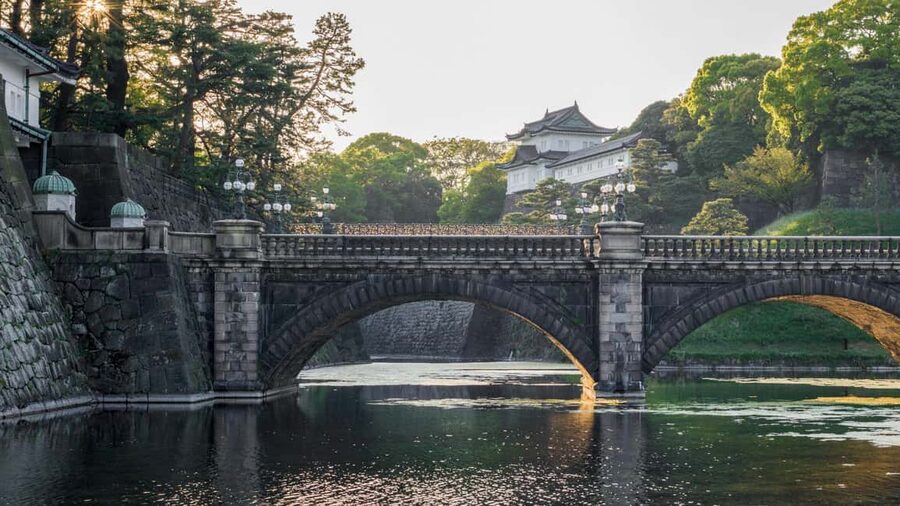
Tokyo’s Imperial Palace can seem like a polished, guarded center of government from the outside. The East Gardens tell a different story. They occupy part of the former Edo Castle, where the Tokugawa shogunate controlled Japan for more than two centuries.
You will not be touring the emperor’s private residence. Instead, you walk through a public garden filled with stone walls, gates, foundations, and defensive structures from the castle complex. That distinction matters. The appeal here is not grand palace interiors. It is the chance to read Tokyo’s past in its remaining stones.
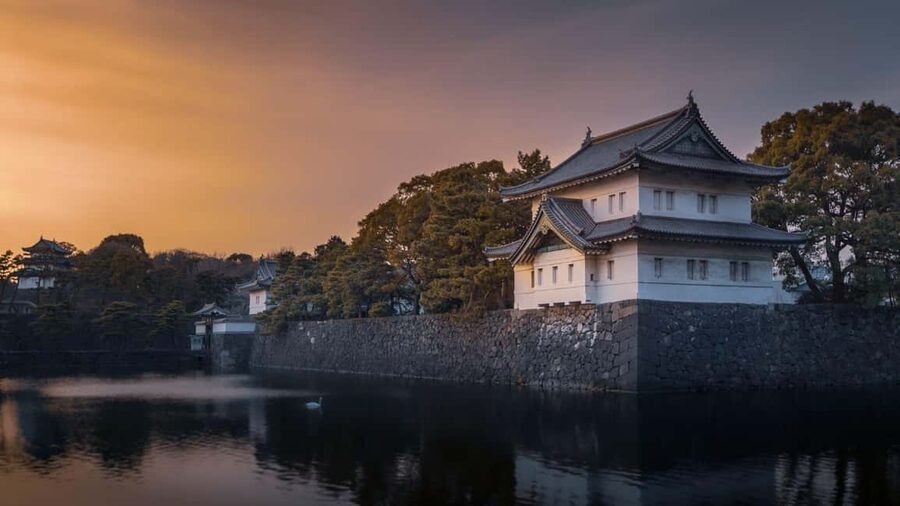
A guide gives those remains a clear purpose. The Tenshudai base is not just a broad block of masonry. It marks the base of Edo Castle’s main tower, and it helps you picture the scale and authority of the stronghold that once dominated this area. The Tatsumi Yagura watchtower adds another piece to the puzzle, showing how towers and gates helped protect the castle.
I like this approach because it links physical details to political history. You hear about samurai, shoguns, emperors, and the shift from military rule to imperial Tokyo while standing in the places where those changes played out. Without guidance, the gardens are pleasant but some of the stones can look like anonymous ruins.
More history tours in Tokyo:
- Tokyo: Imperial Palace and Shogun Historical Walking Tour
★ 5.0 · 2,251 reviews - Tokyo: Imperial Palace Japanese History Walking Tour
★ 4.9 · 987 reviews - Tokyo: Imperial Palace, the history of Japan (ENGLISH GUIDE)
★ 5.0 · 77 reviews
Meeting at Starbucks in Wadakura Fountain Park
The meeting point is Starbucks Coffee Imperial Palace Garden Wadakura Fountain Park, written locally as スターバックス コーヒー 皇居外苑 和田倉噴水公園店. The guide waits in front of the café with a sign for the inbound tour service YURAGI.
That is a useful arrangement in a large city. You have a visible landmark, a café, and a clearly identified sign rather than an obscure street corner. If you cannot find the guide, the activity provides WhatsApp or phone contact for direct help.
I would arrive with enough time to locate the café and settle in. The walk is outdoors, so have water and comfortable shoes ready before you meet. A camera is also worth bringing, particularly for the stone walls, garden views, gates, and tower.
The activity is near public transportation, and the meeting point is wheelchair and stroller accessible. Service animals are allowed. Still, accessibility at the starting point does not mean that the entire walk will feel effortless for every person, so consider your own comfort with an outdoor walking route.
The first 30 minutes around the Imperial Palace
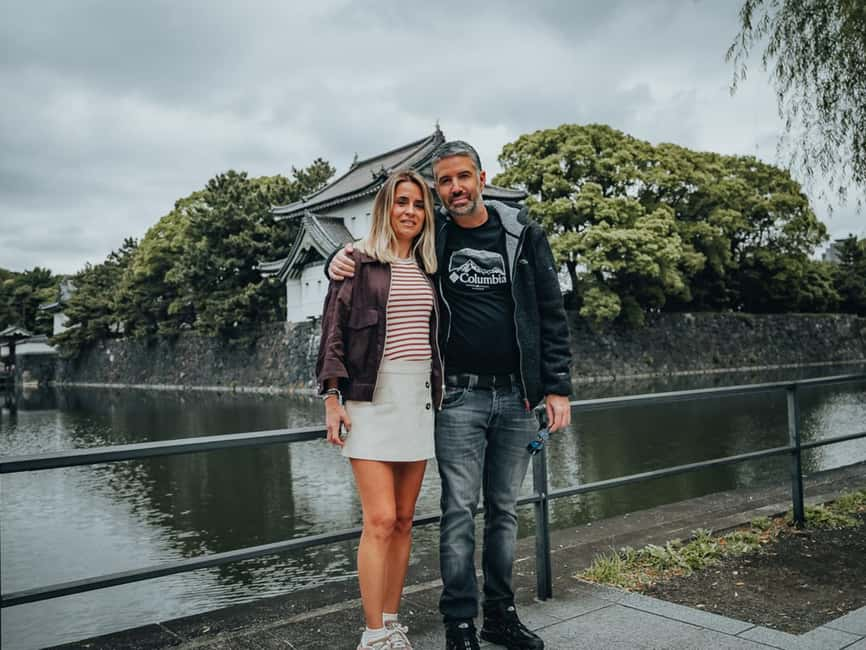
The opening portion is listed as a 30-minute visit to Tokyo Imperial Palace. This gives your guide time to set the scene before the walk moves deeper into the East Gardens.
Expect the conversation to focus on the role of the palace, the imperial family, and the earlier castle that occupied this ground. The guide’s job is especially useful here because Tokyo’s political story can be confusing. The site connects imperial authority, samurai government, the Tokugawa shogunate, and the modern capital in one compact area.
The palace grounds are not simply a scenic pause before the main event. They help you understand the change from Edo, the old name for Tokyo, to the imperial capital. A good explanation can turn a formal public space into a lesson in how Japan’s ruling systems changed over time.
This section is also a chance to ask what you want from the rest of the tour. If you are most interested in castle design, ask about the walls and towers. If samurai government interests you more, ask how the shogunate operated. The group size makes that sort of exchange realistic.
Seventy minutes among the East Gardens
The main part of the walk takes place in the Imperial Palace East Gardens, with about 70 minutes assigned to the visit. This is where the tour earns its price.
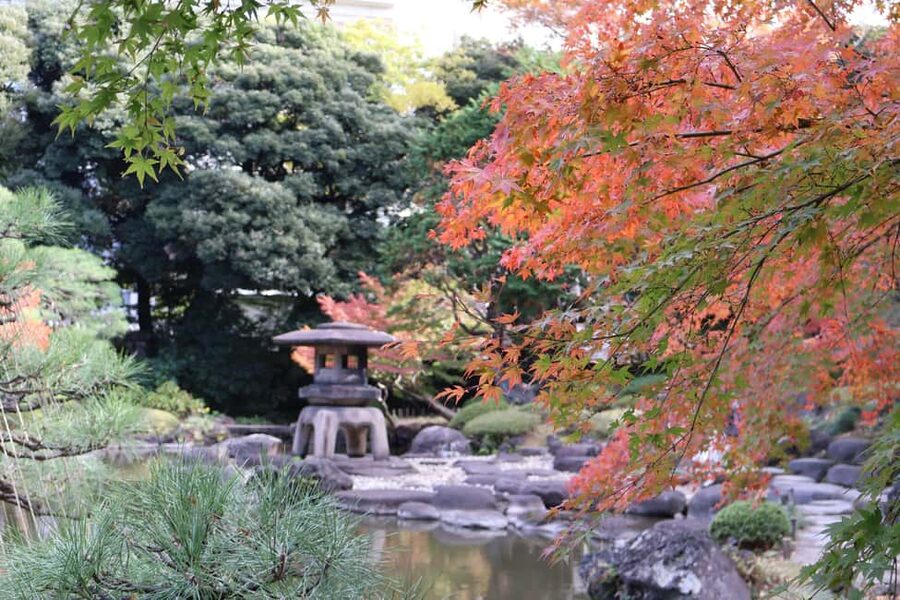
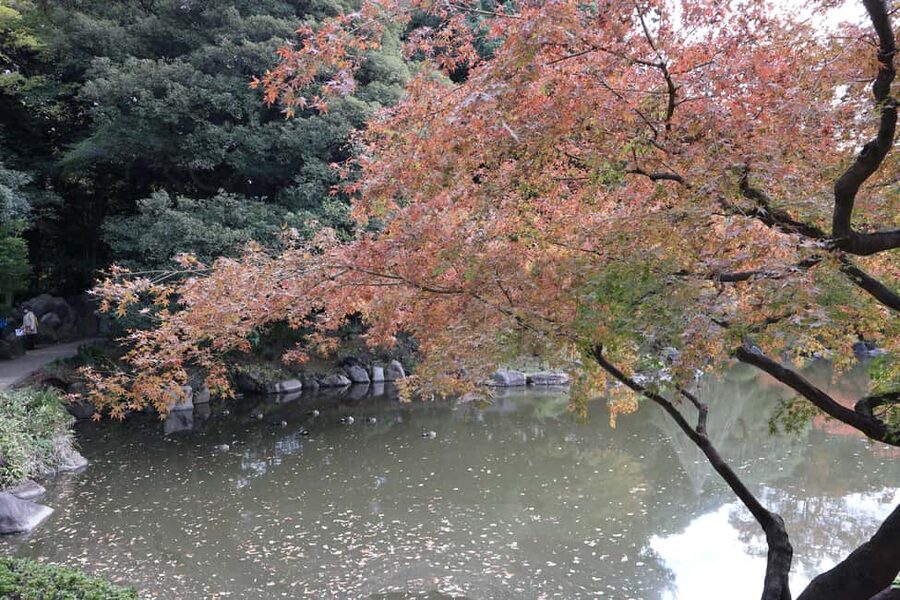
The gardens provide a calm setting, but the guide keeps drawing your attention back to the former Edo Castle. You walk past maintained paths, ancient gates, stone ruins, and castle remains. The contrast is the point: carefully tended gardens now occupy ground once built for control, ceremony, and defense.
The Tenshudai base is one of the key stops. The remaining foundation lets you understand that the castle was more than a residence. It was a fortified center of power. Your guide can explain what the tower meant within the castle complex and why the base remains important even though the original structure is gone.
The Tatsumi Yagura watchtower is another strong stop. Its shape and position help show how castle architecture served practical military purposes. You get more from the tower when you know to look at it as part of a defensive system, not just as a photogenic old building.
The East Gardens also give the tour breathing room. You are not pushed from one indoor room to another. You have time to walk, listen, take photographs, and notice how the site has been preserved. That pace suits anyone who prefers a thoughtful introduction rather than a rapid list of dates.
One point to keep in mind is that the gardens are still an outdoor walking setting. You should expect paths, standing, and steady movement. The activity is marked wheelchair and stroller accessible, but the stated guidance against booking for people with low fitness levels suggests that you should judge the route by your own stamina.
More guided palace visits in Tokyo:
- Tokyo: Edo Castle and Imperial Palace Guided Walking Tour
★ 5.0 · 6 reviews - Seville: Cathedral, Giralda & Alcazar Entry With Guided Tour
★ 4.6 · 8,560 reviews - Madrid: Royal Palace Expert Guided Tour with Skip-the-Line
★ 4.7 · 8,407 reviews - Granada: Alhambra & Generalife Fast-Track Guided Tour
★ 4.7 · 8,313 reviews
Samurai, shoguns, and emperors without a lecture hall
The subject matter is broad, but the setting keeps it grounded. You learn about samurai warriors and the Tokugawa shogunate while looking at the structures that supported their rule. You also hear about emperors and the later political role of the palace.
That mix is useful for first-time visitors to Japan. It avoids treating samurai as costume drama and instead places them within a system of military and political power. The castle was a working seat of authority, and the East Gardens let you see the remains of that authority in physical form.
The guide’s commentary is the most important variable on this tour. The supplied guide names include Hina, Naoki Sugar, Delfo, Hiroshi, and Taku. Hina is described as pleasant, informed, and accommodating. Naoki Sugar has led the tour in Spanish, and Delfo is also praised for warmth and courtesy. Hiroshi is described as prepared and pleasant, while Taku is noted for answering questions and sharing interesting facts.
Those details suggest that the tour works best when you treat it as a conversation. Bring questions. Ask the guide to explain a wall, tower, or political transition instead of simply listening from start to finish. The small group gives you a better chance to do that.
Language choice is another practical strength. English, Spanish, and French are available, though you should confirm your preferred language when checking times. A tour about Japanese political history is much easier to follow when the explanations are comfortable for you.
Why the group size matters
The maximum group size is eight people. That is small enough to change the feel of the walk.
At a crowded site, a guide may have to repeat every point or keep moving to stay on schedule. In a group of eight, you can usually hear more easily and ask a question without turning the tour into a public performance. One participant described receiving a great deal of attention when the guide was accompanied by a trainee, which gives you a sense of the personal approach this format can allow.
Small groups also help with the East Gardens’ quieter mood. The experience is not designed as a grand production. It is a guided walk, with room to pause at ruins and discuss what you are seeing.
There is a tradeoff. A small tour can feel more dependent on the particular guide on duty. The strong responses connected to Hina, Naoki Sugar, Delfo, Hiroshi, and Taku suggest a high standard, but no two guides explain a place in exactly the same way. If you want a fixed script or a major theatrical presentation, this is not that kind of activity.
Is $24 a fair price?
At $24 per person, this tour offers good value if you want context rather than only a walk through attractive grounds. The East Gardens can be appreciated on your own, but a professional local guide adds the explanation that turns the Tenshudai base and Tatsumi Yagura into meaningful stops.
You are paying for a 90-minute guided experience, with the practical schedule describing 30 minutes around the Imperial Palace and 70 minutes in the East Gardens. Since those figures do not line up perfectly, check the exact starting time and duration when booking. The important point is that this is a short introduction, not a full-day palace program.
The price is especially reasonable for solo visitors or couples who want personal access to a guide without paying for a private tour. Families may also find the small group useful, though the walking requirement and the stated restrictions for pregnant women and people with low fitness deserve attention.
The reserve-now, pay-later option adds flexibility. You can hold a place without paying immediately, and cancellation up to 24 hours before the activity brings a full refund. That is helpful in Tokyo, where weather, jet lag, and changing plans can affect an outdoor schedule.
Who should book this Imperial Palace walk?
I would choose this tour if you are visiting Tokyo for the first time and want a clear introduction to the city’s political past. It is also a good fit if you enjoy architecture, castle ruins, or Japanese history but do not want to spend half a day in a museum.
The tour suits you particularly well if:
- You want a short guided activity that fits around other Tokyo plans.
- You prefer a group of eight or fewer to a large sightseeing crowd.
- You like asking questions and learning through conversation.
- You need English, Spanish, or French commentary.
- You want to see Edo Castle remains rather than only photograph the palace from outside.
- You are comfortable walking outdoors for about 90 minutes or slightly longer.
I would think twice if you have limited stamina, are pregnant, or want access to ornate palace interiors. The listed experience focuses on the East Gardens and historic castle remains, not a broad tour of every Imperial Palace building.
Practical tips for a smoother visit
Wear shoes you can walk in comfortably. This sounds basic, but it matters more than dressing for photographs when the tour includes garden paths and extended time on foot.
Carry water and a camera. The activity specifically recommends both, and water is sensible for an outdoor walk even when the weather feels mild. A camera helps you record the contrast between the formal palace setting, carefully maintained gardens, rugged stonework, and old defensive tower.
Arrive at the Starbucks meeting point early enough to identify the guide’s YURAGI sign. The guide should be in front of the café, but a few extra minutes can prevent a rushed start.
Use the tour language that lets you follow historical explanations with ease. English, Spanish, and French are offered, and the named guides include people who have led the walk in Spanish as well as English.
Keep your schedule slightly flexible. The published duration is 90 minutes, but the stop times total about 100 minutes. That small mismatch is not a major concern, yet you should avoid booking a tight connection immediately afterward.
FAQ
How long does the Imperial Palace tour last?
The activity is described as lasting 90 minutes. The detailed stop times allow 30 minutes at Tokyo Imperial Palace and 70 minutes in the East Gardens, so you should check the confirmed schedule and allow a little extra time.
Where do I meet the guide?
Meet in front of Starbucks Coffee Imperial Palace Garden Wadakura Fountain Park. The guide holds a YURAGI sign for the inbound tour service.
What languages are available?
The live guide service is available in English, Spanish, and French.
How many people can join the tour?
The tour is limited to eight participants, creating a small-group format with more room for questions.
Is the tour wheelchair and stroller accessible?
The activity is listed as wheelchair and stroller accessible. Service animals are also allowed, and the meeting point is near public transportation.
What should I bring?
Bring comfortable shoes, water, and a camera. The activity is not recommended for pregnant women or people with a low level of fitness.
Should you book it?
Book this walk if you want the story behind the stones at Tokyo’s Imperial Palace. For $24, you get a small group, a professional local guide, and a focused route through the East Gardens and former Edo Castle grounds.
The strongest reason to go is the combination of personal guidance and specific surviving structures, especially the Tenshudai base and Tatsumi Yagura. Skip it if you need a very gentle outing, indoor palace access, or a longer and more exhaustive history program. For most visitors with comfortable walking shoes and an interest in samurai-era Tokyo, this is a well-priced way to give the Imperial Palace grounds some meaning.
Just added around Tokyo
- Tokyo walking tour around Imperial Palace and Tokyo Station★ 5.0 · 3 reviews
- Tokyo: Imperial Palace, the history of Japan (ENGLISH GUIDE)★ 5.0 · 77 reviews
- Tokyo: Pvt. Tour – Edo Castle & Imperial Palace East Gardens★ 4.8 · 63 reviews
- Tokyo: Imperial Palace East Gardens and Tokyo Station Tour★ 5.0 · 16 reviews
- Tokyo: Imperial Palace with Nostalgic Alley Kagurazaka tour★ 4.3 · 8 reviews
- Tokyo: Edo Castle and Imperial Palace Guided Walking Tour★ 5.0 · 6 reviews
- Tokyo: Edo Castle Ruins & Imperial Palace East Garden Tour★ 4.4 · 13 reviews
- Full Tokyo: Meiji Shrine, Imperial Palace, Asakusa & Skytree★ 4.7 · 16 reviews
Tokyo Palace Tours, compared.
Imperial Palace and Shogun Historical Walking Tour
Read our review →
Tokyo Castle & Imperial PalaceーShogun Walking Tour
Read our review →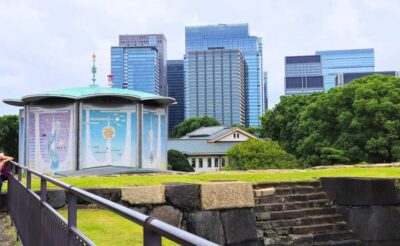

Tokyo Castle & Imperial PalaceーShogun Walking Tour
Read our review →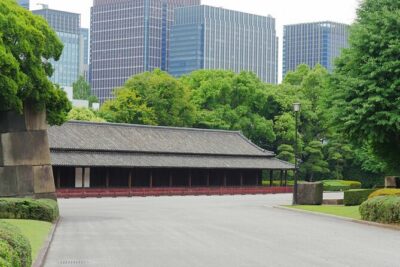
Imperial Palace East Garden and Edo Castle Walking Tour in Tokyo
Read our review →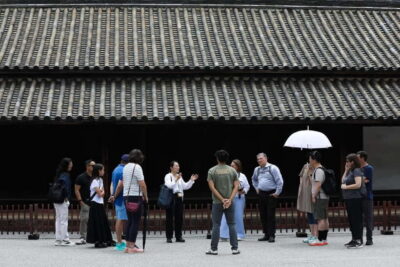
Imperial Palace, Sensō-ji Temple, & Tokyo Tower Tour
Read our review →Browse the lists this tour appears in