
REVIEW · ROYAL CASTLE TOURS
Tokyo Castle, Imperial Palace, Shogun & Garden Walking Tour
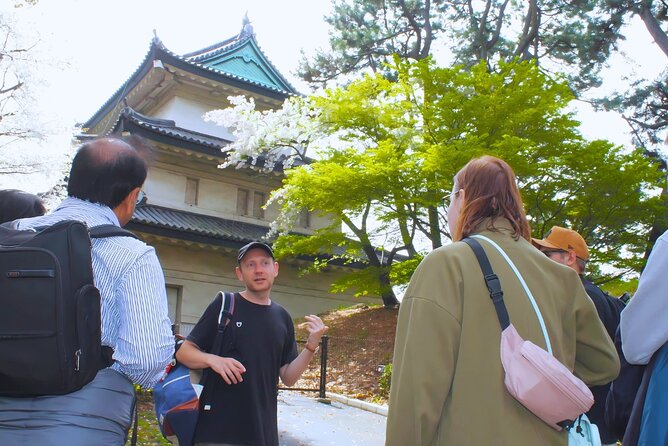
The most interesting part of this tour is that you walk through the former grounds of Edo Castle, the seat of the shoguns, rather than simply looking at a modern palace from outside. Stone walls, garden paths, old guardhouse remains, and castle foundations tell the story, but you need context to see what is no longer there.
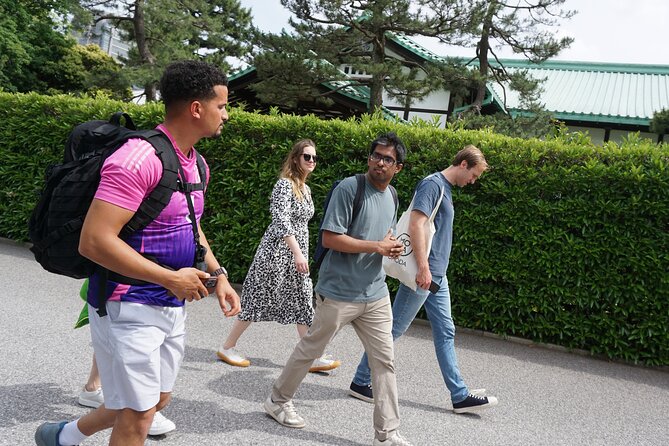
I like the small-group format, which keeps the walk personal and makes it easier to ask questions. I also like the guides’ practical touch. Mika has used maps and images to explain the site, while Natsumi, Lakki, and Nicolas have been praised for bringing the Edo period, palace gardens, and samurai history to life.
The main thing to understand is that you do not enter the Emperor’s palace. The tour visits the East Gardens and former Edo Castle grounds, and much of the original castle was destroyed. If you expect grand palace rooms, this will feel limited. If you enjoy history, gardens, and the clues left by an old fortress, it offers good value for $31.84.
Key points to know before booking
- You explore former Edo Castle, not the modern Inner Palace: The walk focuses on Ōtemon Gate, castle foundations, guardhouse remains, and the East Gardens.
- A guide gives meaning to what is missing: Maps, images, and explanations help you picture a castle that was largely destroyed rather than restored.
- The gardens offer a calm break from Tokyo: Ninomaru Garden, koi ponds, greenery, and open paths make this an easy-paced morning walk.
- Guides are a major part of the experience: Mika, Natsumi, Lakki, and Nicolas are among the named guides praised for clear explanations and friendly conversation.
- The tour is short but not entirely effortless: You walk for about two hours, often outdoors, so summer heat, winter cold, rain, and comfortable shoes matter.
- The meeting point is easy to use: You begin at Starbucks Coffee in Wadakura Fountain Park and finish back there.
What this Tokyo castle tour really covers

The title may suggest a visit to a grand castle building. Tokyo’s Imperial Palace works differently. The main palace remains an active imperial residence and is not open for ordinary public entry. This experience takes you through the East Gardens, the old grounds of Edo Castle, and the surviving pieces of its defensive and ceremonial layout.
That distinction matters. You will not walk through decorated palace chambers or see an intact keep. Instead, you follow paths across a historic site where stone foundations, gates, walls, gardens, and small surviving structures do the work.
I think the tour makes the most sense for someone who wants a clear introduction to Tokyo’s political history. The guide connects the shoguns, the emperors, Edo Castle, and modern Tokyo. Without that explanation, the site can look like attractive parkland with scattered stones. With it, the garden becomes a map of power.
The tour costs $31.84 per person and lasts about two hours. Admission to the gardens is free, so you are paying mainly for the guide, organization, and small-group experience. That is fair if you want historical explanation and help finding the best viewpoints. It is less attractive if you are happy to stroll through the grounds alone and read signs at your own pace.
More Royal Castle Tours in Japan
- Tokyo Castle & Imperial PalaceーShogun Walking Tour
★ 4.7 · 1,068 reviews - Tokyo Castle & Imperial PalaceーShogun Walking Tour
★ 5.0 · 724 reviews - Imperial Palace East Garden and Edo Castle Walking Tour in Tokyo
★ 5.0 · 510 reviews
Meeting at Wadakura Fountain Park
You meet at Starbucks Coffee in Wadakura Fountain Park, at 3-1 Kōkyōgaien in Chiyoda City. This gives you a clear landmark near the Imperial Palace and public transportation, rather than asking you to search for a guide beside a large anonymous gate.
The group then walks toward Ōtemon Gate, the main entrance to the East Gardens. The meeting point and ending point are the same, which keeps the logistics simple. You do not need to work out a new station or neighborhood at the end of a short morning activity.
Arrive with enough time to locate the Starbucks and identify your guide. The supplied information gives two different group limits, one listing says 15 people and the additional details say a maximum of 10. Either way, this is intended to be a small group rather than a large coach excursion. If the exact group size matters to you, confirm it when booking.
Entering through Ōtemon Gate
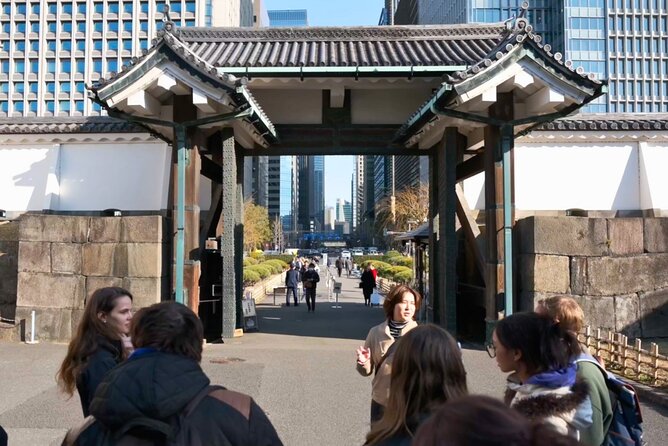
Ōtemon Gate is a strong start because it gives you an immediate sense of the site’s scale and defenses. You pass from the modern city into the former castle grounds, with the guide setting out what you are about to see.
This is where a good guide matters. The castle is not presented as a complete building, so you need help reading the layout. A guide can point out how gates, stonework, guard positions, and open spaces fit together. The tour includes the guardhouse ruins, which add a human detail to what might otherwise feel like a distant story about rulers and military power.
The explanations focus on the Edo period, the shoguns, and the way authority shifted between the military government and the imperial household. The best part is the connection to modern Tokyo. You are not only hearing an old castle story. You are learning why this central site became so important to the city and to Japan’s leadership.
Several guides have used visual aids. Mika, for example, has shown maps and images to help people picture the former castle. That is useful for families and for anyone who finds Japanese historical titles, dates, and political structures hard to keep straight.
Edo Castle foundations and the problem of what is missing
The castle ruins are the heart of the tour, but they can also be the source of disappointment. Fires and destruction left the palace buildings gone, so what remains is largely the stone base, defensive work, gardens, and smaller structures.
I would not book this activity expecting Tokyo’s version of Himeji Castle. You will not see a tall wooden keep rising above the trees. You will see the physical footprint and foundations of a place that once dominated the city. The absence is part of the story, but it requires imagination.
A guide helps bridge that gap. You can learn how the castle was arranged, where power was concentrated, and how the shogunate shaped Japan. One guide may use an image or map; another may explain the military design of the walls. The exact presentation depends on who leads your group, but the purpose is the same: to make the ruins legible.
This also explains why the tour receives such different value judgments. Someone looking for impressive architecture may find two hours too much for a mostly open site. Someone interested in the Edo period may find the same foundations fascinating because the guide supplies the missing story.
More royal castle tours in Tokyo:
- Tokyo: Edo Castle & East Garden of the Imperial Palace Tour
★ 4.7 · 112 reviews - Tokyo: Pvt. Tour – Edo Castle & Imperial Palace East Gardens
★ 4.8 · 63 reviews - Tokyo: Edo Castle Ruins & Imperial Palace East Garden Tour
★ 4.4 · 13 reviews - Tokyo: Edo Castle and Imperial Palace Guided Walking Tour
★ 5.0 · 6 reviews
Ninomaru Garden and the quieter side of central Tokyo
The East Gardens are not only about walls and military history. Ninomaru Garden gives the walk a gentler rhythm, with carefully maintained plantings, water, paths, and koi. The setting offers a welcome pause after the more heavily historical explanations.
The gardens change with the season. Cherry blossoms can make the walk especially appealing in spring, while the greenery and koi provide interest at other times of year. One guide may point out a photo location, explain the garden’s role, or take a group member’s picture.
I like this part because it keeps the tour from becoming a two-hour lecture about shoguns. You move through a peaceful garden, stop for photographs, and then return to the larger story of the palace grounds. The pace is generally described as relaxed, with time for questions and pictures.
Do not confuse the quiet atmosphere with a completely effortless walk. The grounds are large, and you spend the experience outside. In summer, heat can make the walk tiring. In winter, you need warm layers. Rain does not automatically ruin the tour, but it changes the experience, and the operator says poor weather can lead to a new date or a full refund.
The guides: Mika, Natsumi, Lakki, and Nicolas
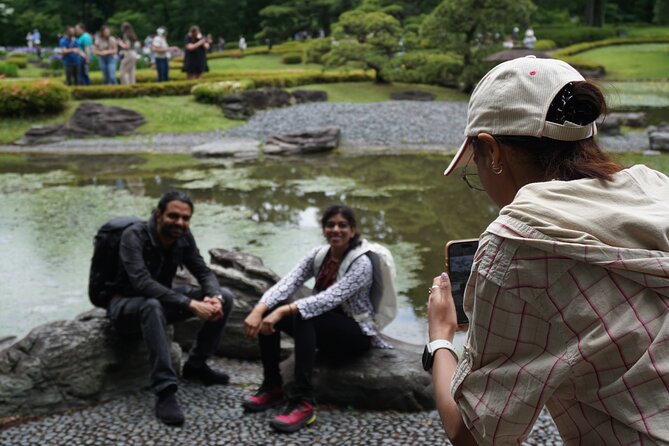
The clearest strength of this experience is the guide. The named guides include Mika, Natsumi, Lakki, and Nicolas, also referred to as Nicola in one account. Their styles may differ, but the praised qualities are consistent: friendly conversation, strong command of Japanese history, clear English, patience with questions, and an ability to keep the walk moving.
Mika has been especially effective with families. She has kept children and teenagers interested by linking the site to Japanese history in a lively way. That matters because a castle foundation can lose younger participants quickly if the explanation becomes a list of dates.
Natsumi has focused on the Edo era, the shoguns, emperors, and the way Tokyo became the center of national leadership. She has also shared suggestions about local restaurants and shrines, which can be useful if you take the tour early in your stay.
Lakki is associated with engaging explanations of shogun history and has led tours in rainy weather without letting the conditions take over. Nicolas has been praised for explaining the eras, palace gardens, and grounds while also helping people notice small details.
There is one important qualification. One account describes a guide whose English was hard to understand and whose historical explanations felt thin. That appears to be an exception among the supplied comments, but it is worth acknowledging. Your experience depends heavily on the guide assigned that day.
Is two hours enough?
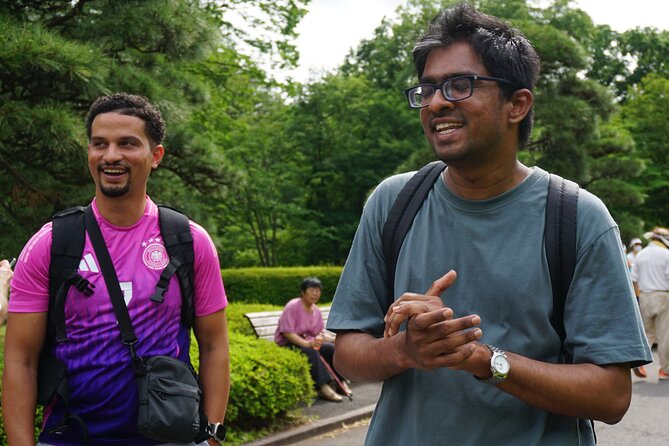
Two hours is enough for a focused introduction, not a complete study of the Imperial Palace complex. You can enter through Ōtemon Gate, see the guardhouse and Edo Castle remains, walk through Ninomaru Garden, hear the main historical story, and return to the meeting point.
The compact length is useful if you have only a few days in Tokyo. You can fit the tour into a morning or afternoon and still reach another part of the city. It also suits people who want an easy first look before deciding how much independent time to spend around the palace.
The tradeoff is depth. One two-hour account felt the price was high because the tour did not provide enough detail. I can understand that reaction, especially if your main goal is the palace itself. The activity is strongest when the guide is actively interpreting the site, answering questions, and using visual material. It is weaker if you want a long, highly academic history lesson.
Who will get the most from this walk?
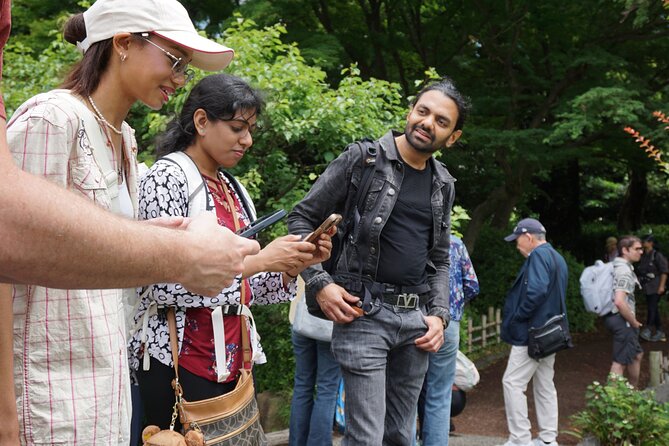
I would recommend it most strongly to first-time visitors who want help understanding Japan’s transition from shogun rule to imperial government and modern Tokyo. It also suits families, since the walk is short, outdoors, and easier to follow than a dense museum visit.
History-minded visitors on a second Tokyo trip may appreciate it even more than first-time visitors. Once you have seen the city’s modern districts, the former castle grounds provide useful context for how central Tokyo developed.
The tour is also a good choice if you worry about getting lost in a large site. The guide handles the route, identifies the photo spots, and explains what you are seeing. That removes the small but real stress of navigating the palace grounds alone.
I would be cautious if your priority is entering a palace interior. You cannot do that here. I would also think twice if you dislike outdoor walking, have little interest in Japanese history, or expect a dramatic intact castle building.
There is no dress code, and tattoos are welcome. Most people can participate, but you should prepare for a two-hour walk in changing weather. Wear shoes you can comfortably use on garden paths, carry water in warm conditions, and bring rain protection when the forecast is uncertain.
Booking, cancellation, and practical value
The mobile ticket is convenient, and confirmation is provided at booking. Free cancellation is available until 24 hours before the start time. Inside that window, changes and refunds are not accepted. If poor weather causes the operator to cancel, you are offered another date or a full refund.
At $31.84, the price is reasonable when you think of it as a guided history walk rather than admission to a palace. You are buying the route, the explanation, the chance to ask questions, and the help of a local guide in a site that can otherwise feel scattered.
The value drops if you only want scenery. The gardens are attractive, but you can see them without paying for a guide. The value rises if you want to understand why the stone base matters, how the shogunate relates to the emperor, and what Edo Castle meant to Tokyo.
Should you book the Imperial Palace East Gardens tour?
Book it if you want a friendly, small-group introduction to Edo Castle and the Imperial Palace grounds, especially if you enjoy history but do not want to research the site first. Guides such as Mika, Natsumi, Lakki, and Nicolas have the kind of personal approach that can turn foundations and garden paths into a readable story.
Skip it if you are expecting access to the Inner Palace or a fully restored castle. You will see the East Gardens, Ōtemon Gate, guardhouse remains, Ninomaru Garden, and castle foundations, not the Emperor’s private residence or grand interior rooms.
For $31.84, I see this as a solid orientation tour with one clear condition: book it for the guide and the historical context, not for spectacular palace architecture. That distinction will decide whether two hours feels worthwhile.
FAQ
Does the tour enter the Imperial Palace itself?
No. The Inner Palace is not open to the public. This tour visits the East Gardens and the former Edo Castle grounds.
What sites are included?
The walk includes Ōtemon Gate, guardhouse ruins, Edo Castle remains, and Ninomaru Garden within the East Gardens.
How long does the tour last?
The tour lasts approximately two hours.
Where does the tour begin and end?
It begins at Starbucks Coffee in Wadakura Fountain Park, 3-1 Kōkyōgaien, Chiyoda City, Tokyo. It ends back at the same meeting point.
How much does the tour cost?
The listed price is $31.84 per person.
What happens if the weather is poor?
The experience requires good weather. If the operator cancels because of poor weather, you can choose a different date or receive a full refund.
Can I cancel for a full refund?
Yes. You can cancel at least 24 hours before the start time for a full refund. Cancellations or changes made less than 24 hours before the start time are not refunded.
More Walking Tours Past the Palaces in Tokyo
- Tokyo: Imperial Palace and Shogun Historical Walking Tour
★ 5.0 · 2,251 reviews - Tokyo: Imperial Palace Japanese History Walking Tour
★ 4.9 · 987 reviews - Tokyo: Imperial Palace and Shogun Walking Tour
★ 4.9 · 935 reviews - Tokyo: Imperial Palace East Gardens Walking Tour
★ 4.8 · 353 reviews
Just added around Tokyo
- Tokyo walking tour around Imperial Palace and Tokyo Station★ 5.0 · 3 reviews
- Tokyo: Imperial Palace, the history of Japan (ENGLISH GUIDE)★ 5.0 · 77 reviews
- Tokyo: Pvt. Tour – Edo Castle & Imperial Palace East Gardens★ 4.8 · 63 reviews
- Tokyo: Imperial Palace East Gardens and Tokyo Station Tour★ 5.0 · 16 reviews
- Tokyo: Imperial Palace with Nostalgic Alley Kagurazaka tour★ 4.3 · 8 reviews
- Tokyo: Edo Castle and Imperial Palace Guided Walking Tour★ 5.0 · 6 reviews
- Tokyo: Edo Castle Ruins & Imperial Palace East Garden Tour★ 4.4 · 13 reviews
- Imperial Palace Tour: Discover Samurai History with a Guide★ 5.0 · 12 reviews
Royal Castle Tours, compared.
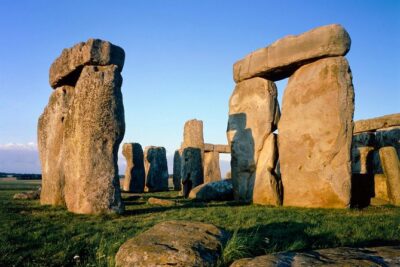
Stonehenge, Windsor Castle, and Bath from London
Read our review →
Dracula’s Castle, Peles Castle, & Brasov Old Town
Read our review →
Neuschwanstein & Linderhof Castle Full-Day Trip
Read our review →
Dracula Castle, Peles Castle & Brasov Old Town
Read our review →
Prague Castle 2.5-Hour Tour Including Admission Ticket
Read our review →
Stonehenge, Windsor Castle and Bath with Pub Lunch in Lacock
Read our review →
Neuschwanstein & Linderhof Castle-Fairytale Day Tour from Munich
Read our review →
Browse the lists this tour appears in