
REVIEW · ROYAL CASTLE TOURS
Tokyo: Pvt. Tour – Edo Castle & Imperial Palace East Gardens
Edo Castle once covered a huge part of central Tokyo, and its surviving stone walls, moats, and massive keep foundations make that scale easy to grasp. This two-hour private walk pairs those remains with the peaceful East Gardens, where your guide can explain what you are seeing instead of leaving you to guess at a bare stone base or formal pond.
I like two things here: the private format, which lets you set a comfortable pace, and the English commentary that gives the gardens a clear connection to Japan’s feudal and imperial past. Guides including Yoshi-san, Yuji, Naoko, and Masahito have been praised for their clear explanations and thoughtful help.
The main limitation is simple: this tour does not enter the Imperial Palace itself. You are touring the East Gardens on the former castle grounds, and seasonal flowers can be early or past their best, so the experience depends partly on the date of your visit.
Key points at a glance
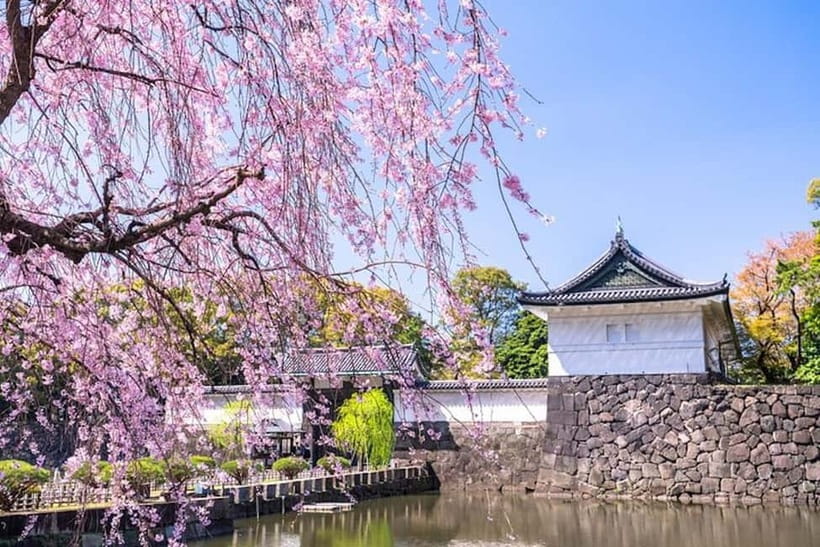
- Edo Castle remains: Walk beside old moats, enormous stone walls, and the former castle keep site.
- Private English guide: Your group has its own guide, with time for questions and a pace that can suit your family.
- Ninomaru Garden: See a traditional Japanese garden with seasonal flowers, koi, and carefully arranged scenery.
- Strong historical focus: Learn how the grounds connect the shogun’s seat with Japan’s imperial era.
- Central meeting point: Meet at Wadakura Fountain Park, a short walk from Otemachi Station and Tokyo Station.
- Important limit: The Imperial Palace interior is not part of the tour, and baggage inspection takes place at entry.
What this two-hour walk actually covers
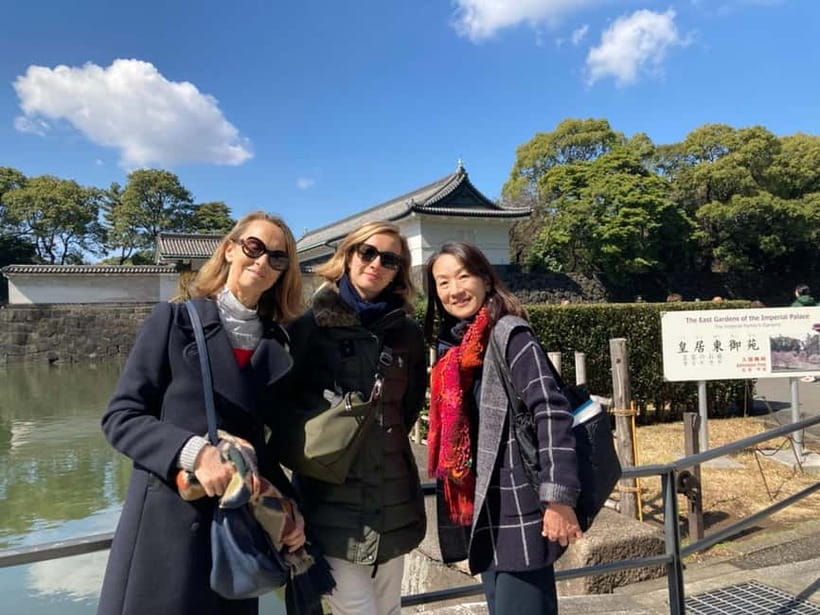
This is a compact walking tour, not a grand palace visit. You meet your English-speaking guide in front of Starbucks at Wadakura Fountain Park, then walk into the Imperial Palace East Gardens for a guided visit lasting about two hours.
The meeting point is practical for a first day in Tokyo. It is about three minutes from Otemachi Station exit D2 and roughly ten minutes from Tokyo Station’s Marunouchi Central Exit. Look for the guide holding a sign marked gotcha. That detail matters in a busy city where several entrances, office buildings, and green spaces can look similar.
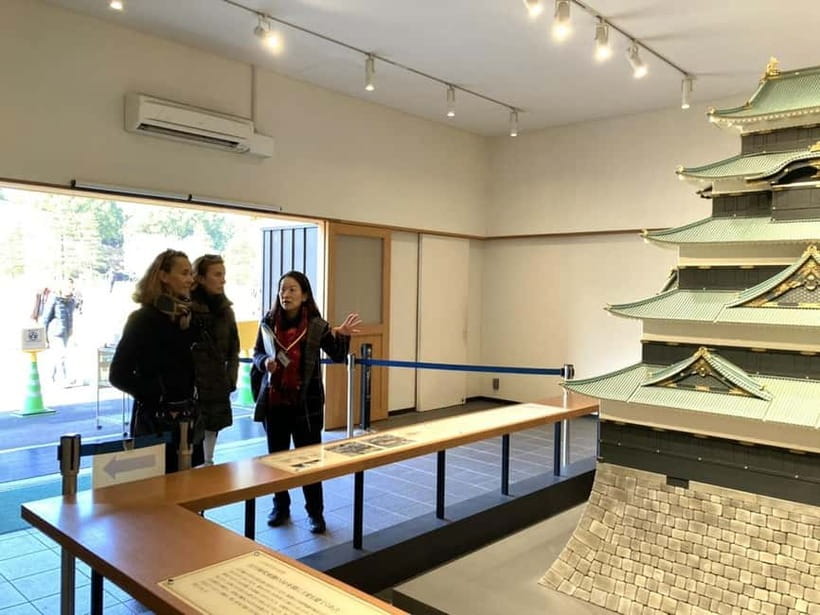
The tour is private, so you are not attached to a large group moving at someone else’s speed. You can ask about architecture, gardens, Japanese customs, or the difference between the shogun’s government and the modern imperial institution. Several guides have also helped with onward directions after the walk, which is useful if Tokyo’s railway map still feels like a plate of noodles.
More Royal Castle Tours in Japan
- Tokyo Castle & Imperial PalaceーShogun Walking Tour
★ 4.7 · 1,068 reviews - Tokyo Castle & Imperial PalaceーShogun Walking Tour
★ 5.0 · 724 reviews - Imperial Palace East Garden and Edo Castle Walking Tour in Tokyo
★ 5.0 · 510 reviews
Starting at the gate and entering the palace grounds
The historic Main Gate gives you an immediate sense of the site’s mixed character. You see a traditional guardhouse alongside modern security arrangements, a fitting introduction to a place that has served different rulers and purposes over many centuries.
Before entering, expect a baggage inspection. This is especially important if you have been shopping in Tsukiji, Asakusa, or another part of Tokyo. Japanese kitchen knives and other objects that could be treated as weapons should be left in a coin locker or similar storage before the meeting. That is not an optional tip to ignore at the last minute.
The entrance process is part of the practical rhythm of the tour. Allow time to meet your guide, pass through security, and get oriented. Since the supplied timing is two hours, arriving promptly gives you more time for the garden and castle remains.
Edo Castle’s stone walls, moats, and keep site
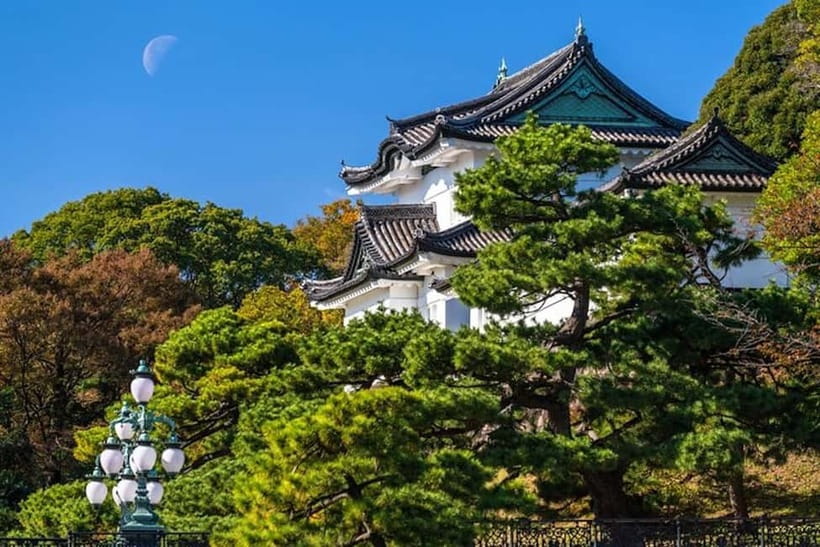
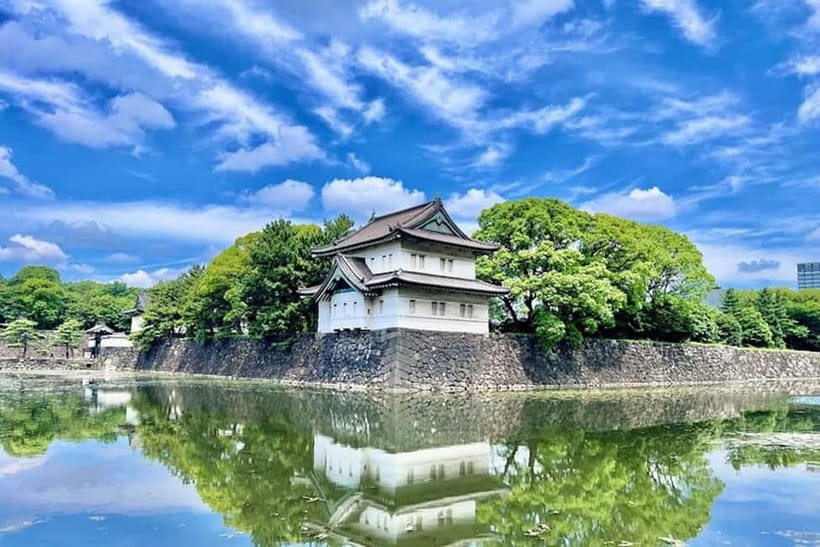
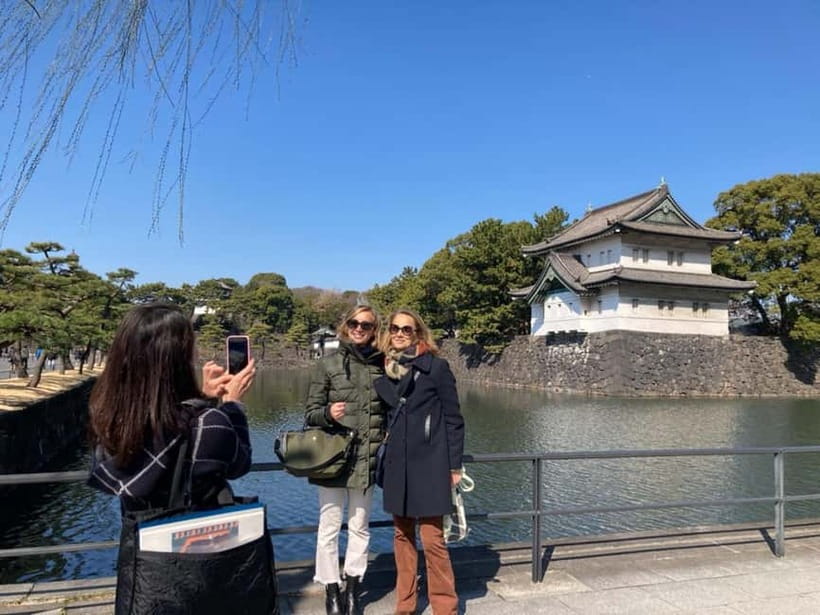
The most compelling part of the walk is the former Edo Castle area. The castle itself is gone, but the site still communicates power through its scale. Huge stone walls, broad moats, gates, and the base of the former keep show how heavily protected the shogun’s headquarters once was.
A guide adds value here because castle ruins can be hard to read on your own. Without explanation, you may see a wall and move on. With context, you can start to picture the planning behind the site: defensive entrances, controlled movement, raised foundations, and a fortified center of government.
The term shogun can sound familiar from films and quick history lessons, but the East Gardens give it a physical setting. This was not just a residence. Edo Castle was the center of political power during the Edo period, and its size reflected the authority of the military government.
The surviving stones are not decorative leftovers. Their size, placement, and layers help you understand the engineering and labor involved in building a castle complex on this scale. Your guide can connect the remains to the people who lived and worked here, including the rulers, officials, guards, and household staff who made the compound function.
This section is best for visitors who enjoy history that you can see under your feet. If you are expecting intact rooms, painted screens, or a preserved medieval castle interior, adjust your expectations. The drama comes from the footprint and the remains, not from furnished chambers.
Ninomaru Garden and the pleasure of slowing down
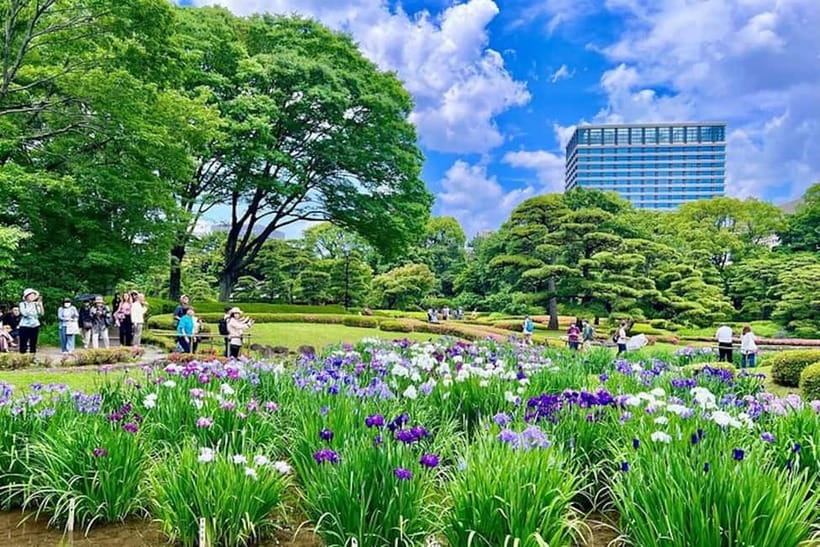
After the castle remains, the Ninomaru Garden provides a change of mood. The garden is arranged in the traditional Japanese style, with water, plants, paths, and views designed to be considered gradually rather than consumed in one sweep.
Seasonal timing affects what you see. Cherry blossoms may appear in spring, irises in summer, and autumn leaves later in the year. In early April 2025, one visitor found that the blossoms and flowers were not fully out yet. That is a useful warning: a spring booking does not guarantee peak blossom conditions.
The garden can still be worthwhile outside the ideal flower window. Its value comes from the combination of design, quiet, water, and the connection to the castle site. A guide can point out features you might otherwise pass without noticing, including the garden’s plantings and koi. Naoko was especially praised for explaining the buildings, past and present inhabitants, koi varieties, and garden details in a way that kept the walk moving.
I like this part because it gives your Tokyo visit some breathing room. The city is full of trains, signs, traffic, shops, and tall buildings. Here, the pace changes. You are still in central Tokyo, but the garden creates a calmer setting for listening and looking.
Do not treat the garden as a quick photo stop. Your guide may pause to explain how Japanese gardens use seasonal change and controlled views. The private format helps, since you can linger at a spot or ask why a particular feature matters without holding up a bus group.
More royal castle tours in Tokyo:
- Tokyo Castle, Imperial Palace, Shogun & Garden Walking Tour
★ 5.0 · 211 reviews - Tokyo: Edo Castle & East Garden of the Imperial Palace Tour
★ 4.7 · 112 reviews - Tokyo: Edo Castle Ruins & Imperial Palace East Garden Tour
★ 4.4 · 13 reviews - Tokyo: Edo Castle and Imperial Palace Guided Walking Tour
★ 5.0 · 6 reviews
Why the guide makes a difference

The garden is open enough to visit without a guide, but the guide changes what you take away. You get a historical sequence rather than a collection of attractive scenes: castle power, shogun-era government, imperial use, and the role of the grounds today.
The strongest feedback about the experience centers on the guides’ clear English, friendly manner, timing, and flexibility. Yoshi-san was praised for strong English and for explaining the palace buildings and garden. Yuji was noted for walking at a comfortable family pace and sharing details that would be easy to miss. Masahito adjusted the route to the group’s speed and even sought help from another guide when a question needed a precise answer.
Other named guides include Hiroshito, Mari, Ishida, Maru, Chichiro, and David. The important point for you is not to book around one particular person, since guide assignments may vary. Instead, expect a live English-speaking guide who can respond to your questions and shape the pace for a private group.
That flexibility is useful for families and mixed-interest groups. One person can ask about the Edo period while another focuses on gardens or photography. The guide can keep the walk coherent without forcing everyone into a rigid schedule.
What the tour does not include
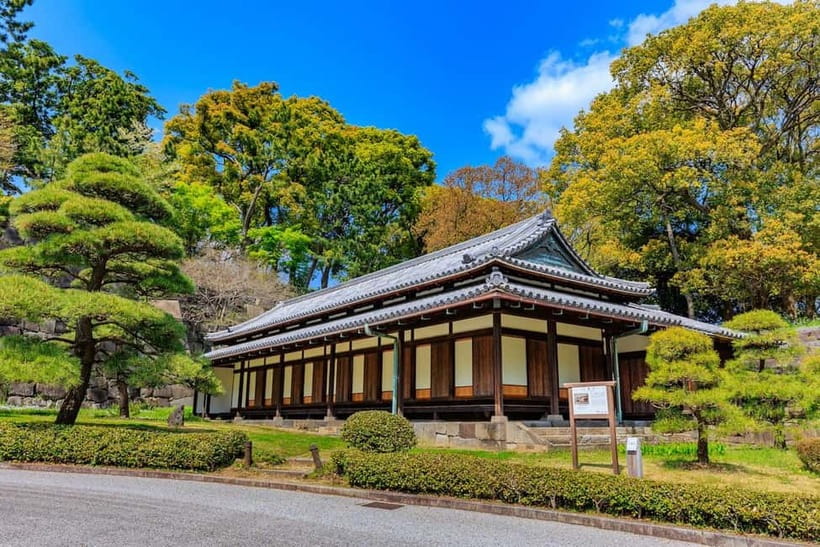
The largest source of possible disappointment is the phrase Imperial Palace. This tour does not take you inside the palace where the Emperor resides, and it does not provide an interior palace visit.
You are visiting the East Gardens on the former Edo Castle grounds. You will see historical remains, garden spaces, gates, walls, moats, and related outdoor landmarks. That is a meaningful experience, but it is different from touring royal rooms or entering the inner palace.
The distinction is worth making before you pay. If you want an outdoor history walk with garden scenery and castle ruins, the tour fits well. If your main goal is to see the Emperor’s residence from inside, choose something else, because this activity cannot provide that.
The garden may also be less impressive during a hot, rainy, or between-season period. The setting remains attractive, but flower displays change. In April, blossoms may be late or nearly finished. Autumn color and summer irises also depend on timing.
Is $63 a fair price for two hours?
At $63 per person, this is not the cheapest way to enter the East Gardens. The grounds themselves are the main attraction, and an independent visitor can walk through without paying for a private guide.
The price makes more sense if you care about interpretation. You are paying for a private English-speaking guide, a planned route, answers to questions, and a pace shaped around your group. For a couple, family, or small group that wants context without joining strangers, the added cost can be worthwhile.
I would be less convinced if you are happy reading signs, checking a guidebook, and exploring at random. The castle ruins and garden are accessible enough for an independent visit, especially for someone already comfortable with Japanese history.
The strongest value comes when this is your first visit to Tokyo or your first close look at Japan’s feudal past. The guide helps connect the physical remains to the political story, which is the part many independent visitors miss.
The free cancellation policy allows you to cancel up to 24 hours ahead for a full refund, and you can reserve now while paying later. Those terms help if your Tokyo plans are still shifting, but they do not change the basic question of value: are you paying for entry, or are you paying for understanding? Here, the second answer is the better one.
Who will enjoy this experience most?
I would recommend this tour to families, couples, and first-time Tokyo visitors who want a short cultural walk without spending half a day on transport. The central location makes it easy to fit before lunch, after breakfast, or alongside a Marunouchi and Tokyo Station visit.
It also suits people who prefer asking questions to reading plaques. The private setup is a strong match for families with children, older relatives, or anyone who needs a slower and more flexible walking pace.
History fans will appreciate the castle foundations and military architecture. Garden lovers will enjoy Ninomaru Garden, particularly during blossom, iris, or autumn-leaf periods.
I would be cautious if you have limited mobility, since the activity is a walking tour and no accessibility details are provided. I would also caution anyone who expects palace interiors, a full-day castle visit, or guaranteed peak flowers. Those are not what this experience promises.
Wear comfortable shoes and bring water in warm weather. You will be outdoors, and the two-hour timing is long enough for the walking to matter, even though it is not an exhausting full-day outing.
Getting to Wadakura Fountain Park
The meeting point is in a convenient part of central Tokyo. From Otemachi Station, use exit D2 and allow about three minutes on foot. From Tokyo Station, the Marunouchi Central Exit is about a ten-minute walk away.
Meet in front of Starbucks at Wadakura Fountain Park and look for the gotcha sign. This specific instruction is useful because the area has several open spaces and major buildings, and a vague meet-up point would be frustrating.
Arrive with your bags ready for inspection. If you have bought a Japanese knife or another item that could be treated as a weapon, store it before meeting the guide. A coin locker is the sensible solution.
Should you book the East Gardens tour?
Book it if you want the former Edo Castle grounds to make sense, prefer a private guide, and value an easy two-hour introduction to Japan’s shogun and imperial past. The combination of castle walls, moats, garden design, and personal explanation gives you more than a quick stroll through attractive greenery.
Skip it if you mainly want to enter the Imperial Palace, see furnished rooms, or explore alone at no extra cost. Also check the season if flowers are central to your plans.
For most first-time visitors who want a calm cultural break in central Tokyo, I think the private format earns its keep. Just book it for the outdoor East Gardens and Edo Castle remains, not for an interior palace visit.
FAQ
How long is the private East Gardens tour?
The guided walking tour lasts two hours.
Where do I meet the guide?
Meet in front of Starbucks at Wadakura Fountain Park. Look for a guide holding a sign that says gotcha.
How far is the meeting point from Otemachi Station?
The meeting point is about a three-minute walk from Tokyo Metro Otemachi Station exit D2.
How far is it from Tokyo Station?
It is about a ten-minute walk from Tokyo Station’s Marunouchi Central Exit.
Is the tour conducted in English?
Yes. The tour includes a live English-speaking guide.
Is this a private tour?
Yes. The booking is for a private group, so you can enjoy the walk without joining a larger shared group.
Can I enter the Imperial Palace itself?
No. The tour does not go inside the Imperial Palace or the inner palace where the Emperor resides.
Will my bags be inspected?
Yes. Visitors are subject to a baggage inspection when entering the Imperial Palace grounds.
What should I do with a Japanese knife bought before the tour?
Leave it in a coin locker or similar storage before the meeting if you have purchased a knife or another item that could be used as a weapon.
Just added around Tokyo
- Tokyo walking tour around Imperial Palace and Tokyo Station★ 5.0 · 3 reviews
- Tokyo: Imperial Palace, the history of Japan (ENGLISH GUIDE)★ 5.0 · 77 reviews
- Tokyo: Imperial Palace East Gardens and Tokyo Station Tour★ 5.0 · 16 reviews
- Tokyo: Imperial Palace with Nostalgic Alley Kagurazaka tour★ 4.3 · 8 reviews
- Tokyo: Edo Castle and Imperial Palace Guided Walking Tour★ 5.0 · 6 reviews
- Tokyo: Edo Castle Ruins & Imperial Palace East Garden Tour★ 4.4 · 13 reviews
- Imperial Palace Tour: Discover Samurai History with a Guide★ 5.0 · 12 reviews
- Full Tokyo: Meiji Shrine, Imperial Palace, Asakusa & Skytree★ 4.7 · 16 reviews
Royal Castle Tours, compared.

Stonehenge, Windsor Castle, and Bath from London
Read our review →
Dracula’s Castle, Peles Castle, & Brasov Old Town
Read our review →
Neuschwanstein & Linderhof Castle Full-Day Trip
Read our review →
Dracula Castle, Peles Castle & Brasov Old Town
Read our review →
Prague Castle 2.5-Hour Tour Including Admission Ticket
Read our review →
Stonehenge, Windsor Castle and Bath with Pub Lunch in Lacock
Read our review →
Neuschwanstein & Linderhof Castle-Fairytale Day Tour from Munich
Read our review →
Browse the lists this tour appears in