
REVIEW · ROYAL CASTLE TOURS
Tokyo: Edo Castle Ruins & Imperial Palace East Garden Tour
Edo Castle was once the seat of Japan’s shoguns, and this walking tour brings that lost fortress back into view through its gates, moats, guardhouses, stone foundations, and gardens. You won’t enter the Imperial Palace buildings, but you will walk through the former castle grounds and see where political power was held for centuries.
I like the small-group format, which gives you room to ask questions, and I like the clear route from Wadakura Fountain to Otemon Gate and the East Gardens. The main drawback is simple: if your guide speaks only briefly, the tour can feel like a pleasant park walk rather than a serious history lesson. Guide quality matters here.
Key points to know
- Edo Castle’s surviving gates and guardhouses reveal how samurai controlled access to the shogun’s stronghold.
- The Tenshu-dai marks the former castle keep and offers broad views across the surrounding area.
- Ninomaru Garden brings a quiet change of pace, with carefully arranged scenery and koi in the pond.
- The Wadakura Fountain commemorates a royal wedding and provides a useful meeting point near the tour route.
- The Imperial Palace itself is not entered, since the Imperial Family still uses the inner grounds.
- The $37 price is fair when the guide is active, but less appealing if you mainly want to stroll the gardens on your own.
Starting at Wadakura Fountain
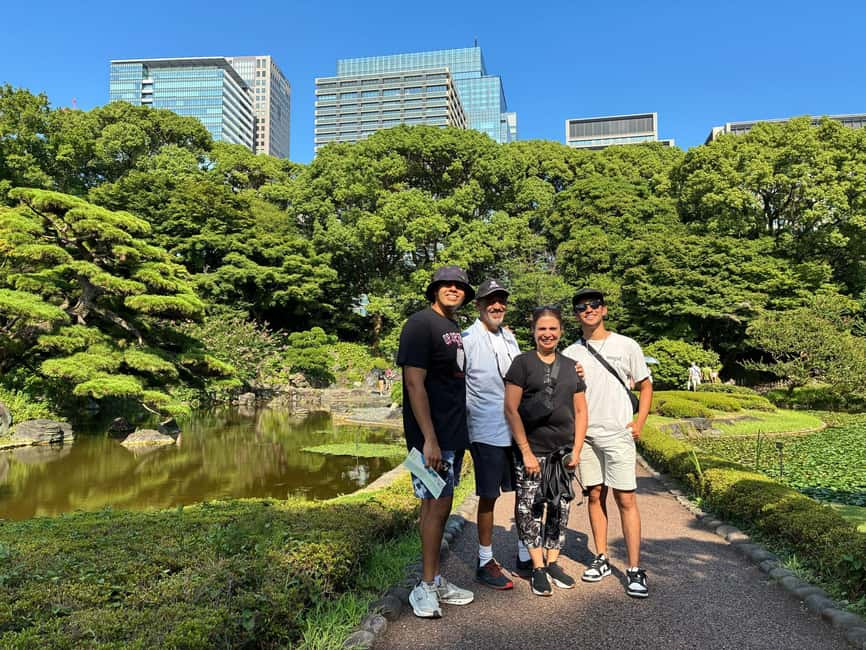
The meeting point is outside the Wadakura Free Rest Area, in front of the entrance. Look for a guide holding a yellow sign. This is a sensible place to begin because it is indoors if you need a short break before walking, and the nearby fountain gives the tour an immediate connection to Japan’s modern imperial era.
Your guide explains that the Wadakura Fountain was built to commemorate a royal wedding. That small detail helps set the tone for the tour: the grounds are not only the remains of a military castle, but also part of a living imperial district.
The fountain itself is not the main attraction, so do not expect a long stop. The guided explanation lasts about 10 minutes, followed by a short look at the Wadakura Moat. These opening minutes help you understand how water, gates, and walls worked together to protect the castle.
English is the tour language. Guides named Isao and Mari have received particularly warm praise for being friendly, patient, and willing to answer questions. That is useful here, since the site has few complete buildings and the story comes mainly through your guide’s explanations.
More Royal Castle Tours in Japan
- Tokyo Castle & Imperial PalaceーShogun Walking Tour
★ 4.7 · 1,068 reviews - Tokyo Castle & Imperial PalaceーShogun Walking Tour
★ 5.0 · 724 reviews - Imperial Palace East Garden and Edo Castle Walking Tour in Tokyo
★ 5.0 · 510 reviews
Otemon Gate and the first line of defense
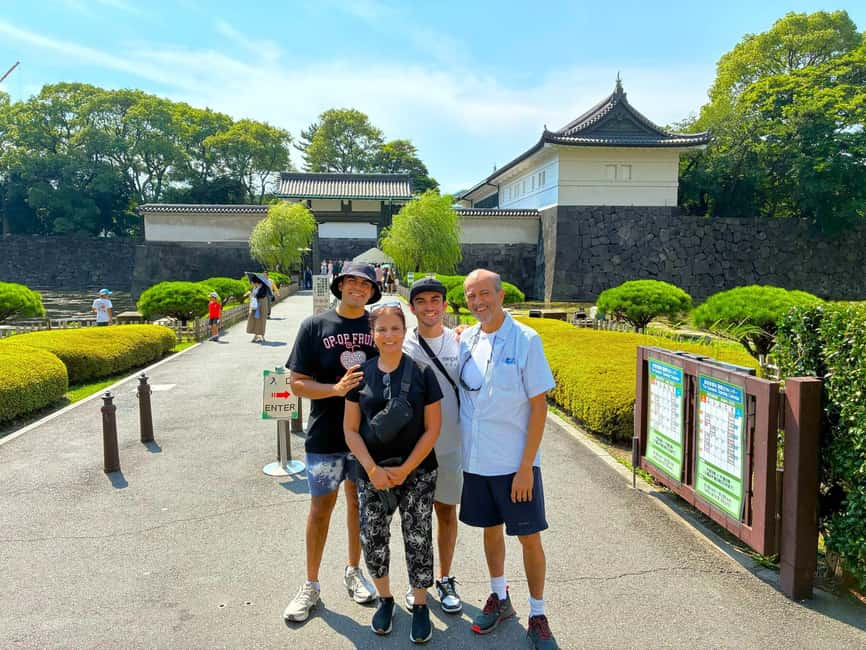
Otemon Gate is one of the strongest visual moments of the walk. This was the main entrance to Edo Castle, and its scale helps you picture the castle as a guarded seat of power rather than simply a green public park.
The tour spends about 10 minutes at the gate. You will learn how visitors passed through controlled entrances and why the approach was designed to slow or challenge anyone trying to reach the inner sections.
From Otemon Gate, the route moves to the Ote San-no-mon Gate Ruins. Here, the remains are less dramatic than a complete gate, but they reward careful attention. Your guide can connect the stones and layout to the castle’s system of defense, making the ruins easier to read.
I find this part most useful for people who want context rather than photo stops. Without an explanation, a gate ruin can look like a few old stones. With a guide, you begin to see a layered security system, with each entrance marking a different level of access.
Samurai guardhouses at Doshin Bansho and Hyakunin Bansho
The Doshin Bansho and Hyakunin Bansho guardhouses give the tour a human scale. Instead of focusing only on rulers and grand ceremonies, the route shows where guards worked and how the castle operated day by day.
The Hyakunin Bansho, or Hundred-Man Guardhouse, is especially helpful for understanding the size of the castle’s security operation. The name points to a large guard unit, and the stop brings samurai heritage down from an abstract idea to the practical business of checking people at the gate.
The tour allows about 10 minutes at each guardhouse. That is enough time for a clear explanation, but not enough for a long lecture. If you want detailed discussion of military ranks, castle architecture, or samurai life, ask questions as you walk. Guides such as Isao have been praised for answering questions patiently, while other tours have suffered when the guide said very little.
This is the point where the value of the tour becomes clear. You are paying not just to enter the East Gardens, but to have someone explain why these particular buildings and ruins mattered.
Edo Castle ruins and the former Honmaru
The central portion of the walk reaches the Edo Castle ruins and the site of Honmaru, the main area of the former castle. Honmaru was the heart of the compound, where the main hall and key political spaces once stood.
Today, the most important remains are foundations, open ground, and traces of the former layout. Do not expect a reconstructed palace interior. The appeal comes from comparing the quiet setting you see now with the power concentrated here during the shogunate.
The guide spends about 15 minutes around the main Edo Castle ruins and another 10 minutes at the Honmaru site. That pacing gives you time to look around without turning the visit into a rushed checklist.
I recommend using this stop to ask what happened to the original buildings and how the castle changed over time. The provided tour details promise an introduction to shoguns and emperors, but the depth of that explanation depends on the guide. One of the weaknesses identified by a less satisfied participant was a lack of historical commentary, so speak up if you want more than the basic outline.
More royal castle tours in Tokyo:
- Tokyo Castle, Imperial Palace, Shogun & Garden Walking Tour
★ 5.0 · 211 reviews - Tokyo: Edo Castle & East Garden of the Imperial Palace Tour
★ 4.7 · 112 reviews - Tokyo: Pvt. Tour – Edo Castle & Imperial Palace East Gardens
★ 4.8 · 63 reviews - Tokyo: Edo Castle and Imperial Palace Guided Walking Tour
★ 5.0 · 6 reviews
The keep model and Tenshu-dai views
The former castle keep is one of Edo Castle’s biggest missing pieces. The tour addresses that gap with a restoration model of the Edo Castle keep, known as the Tenshu. The model helps you picture the scale and design of a structure that is no longer standing.
This is a good stop for visual learners. Ruins show what remains, while the model suggests what the full castle once looked like. It is not a replacement for the original keep, and you should not treat it as a reconstructed building you can enter.
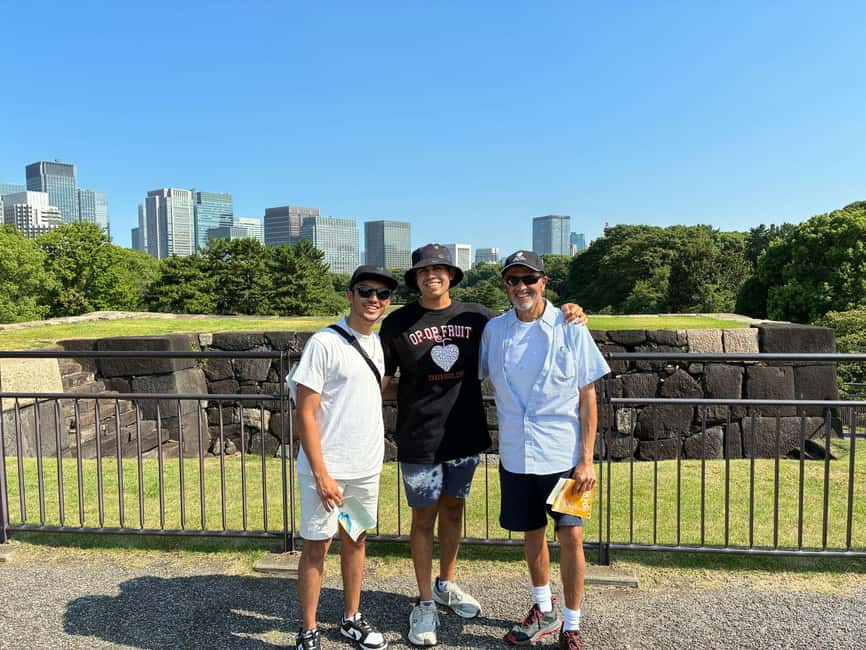
The route then reaches the Tenshu-dai, the stone base where the keep once stood. From here, you can enjoy panoramic views of the surrounding area. The view is less about one famous postcard angle and more about seeing how the former castle occupied the center of modern Tokyo.
I like this combination of model and viewpoint. First you get a sense of the lost structure, then you stand on the place where it once rose above the castle. It makes the absence of the keep easier to understand.
A quieter side of the grounds
After the main ruins, the tour continues through several calmer areas, including 都道府県の木 and Suwa-no-Chaya. The first refers to a collection connected with the trees of Japan’s prefectures. It offers a change from stone walls and military history, with plant life representing different parts of the country.
Suwa-no-Chaya, or Suwa Tea House, adds another traditional architectural note. The information provided does not promise entry into the tea house, so treat it as an exterior stop and a chance to see another style of imperial garden structure.
These stops are not likely to be the main reason you book the tour. They work best as a breather between the castle remains and Ninomaru Garden. If you prefer a brisk history walk, you may find these sections less essential. If you enjoy gardens, trees, and small details, they help round out the visit.
Ninomaru Garden and the koi pond
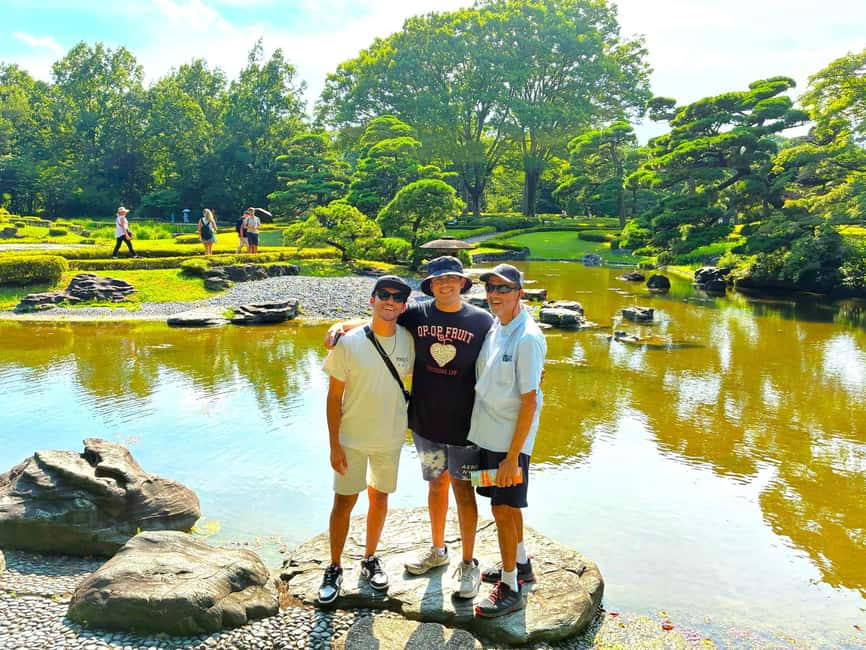
The Imperial Palace East Gardens end the route on a peaceful note. Ninomaru Garden is the most relaxing part of the walk, with carefully arranged garden scenery and a pond where you can see koi fish.
The guide allows about 15 minutes here, which gives you time to slow down and take photographs. The garden is also a useful contrast to Otemon Gate and the guardhouses. Earlier, the tour focused on control, rank, and defense. Here, the mood is measured and decorative.
You may want to save a few questions for this stop. A guide who is willing to explain the garden’s design can make it feel connected to the wider story of imperial and shogunal life, rather than a separate photo break.
Flash photography is not allowed, and smoking is prohibited. Bring a camera, but use it without flash. Comfortable shoes are important because the tour lasts two hours and moves through a series of outdoor sites.
What the tour does not include
The name Imperial Palace can create the wrong expectation. This experience does not take you into the inner palace grounds or the palace buildings. The Imperial Family still resides there, and those areas are not open to the public through this tour.
Instead, you visit the East Gardens and the former Edo Castle grounds. That distinction matters when you compare this walk with a palace interior tour. You will learn about the shoguns and emperors, but you will not see private royal rooms, ceremonial halls, or the inside of the modern palace.
For me, the garden and ruins are enough to make the tour worthwhile if you want historical context. If your main goal is to see the Imperial Palace interior, this is not the right activity.
Is $37 a fair price?
At $37 per person, the tour sits in a reasonable range for a two-hour guided walk in central Tokyo. Admission to Edo Castle and the Imperial Palace East Gardens is included, along with a live English-speaking guide and a commemorative photo opportunity.
The price makes the most sense when your guide explains the site fully. The castle ruins are spread across a large area, and the meaning of a guardhouse, moat, or stone platform is not always obvious without help.
The value drops if you already know Edo-period history or prefer to read signs and walk independently. One critical assessment found that the route could be done alone, and that is a fair point. The gardens are open, and the physical route is not built around special access available only to a tour.
I would book it if you want a structured introduction and the chance to ask questions. I would skip it if you are happy with a self-guided park walk and mainly want photographs.
Time, walking, and group fit
The tour lasts two hours and returns to the Wadakura Free Rest Area. It is offered as a private or small-group experience, which is preferable to a large crowd when you are trying to hear historical explanations outdoors.
You need comfortable shoes and water. The route includes moats, gates, ruins, gardens, and open grounds, so it is a walking activity rather than a seated museum visit.
The tour is not suitable for children under six, people with mobility impairments, or wheelchair users. That restriction should guide your booking decision, since the route is not designed around wheelchair access.
Free cancellation is available up to 24 hours before the start time, and you can reserve now and pay later. Hotel pickup and drop-off are not included, so you must reach the Wadakura meeting point yourself.
Who should book this Edo Castle walk?
I recommend this tour for first-time visitors who want a clear introduction to the history of Edo Castle without spending half a day in a museum. It also suits anyone who likes gardens but wants more than a quiet stroll.
History fans should book only if they are comfortable asking questions. The best version of this tour depends on an active guide. Mari and Isao are examples of the warm, patient guiding style you want, but you should not assume every guide will give the same level of detail.
Families with young children may find the historical stops too slow, and children under six cannot join. People looking for a palace interior should choose another activity. Visitors who simply want a calm walk through Ninomaru Garden can probably manage without paying for a guide.
Should you book it?
Book this tour if you want the former castle grounds to make sense. Otemon Gate, the guardhouses, Honmaru, the Tenshu-dai, and Ninomaru Garden form a well-shaped two-hour route, and a good guide ties them together.
The key question is how much explanation you value. At $37, the tour is a sound buy when your guide is as engaged as Isao or Mari, especially if you ask questions. If you expect a detailed palace visit or a guaranteed lecture on every period of Japanese history, adjust those expectations before booking.
FAQ
Where does the tour meet?
Meet outside the Wadakura Free Rest Area, in front of the entrance. The guide will be holding a yellow sign.
How long does the tour last?
The tour lasts two hours and returns to the Wadakura Free Rest Area.
What language is the tour offered in?
The live guided tour is offered in English.
Does the tour enter the Imperial Palace buildings?
No. The tour does not enter the palace buildings or the inner grounds of the Imperial Palace.
What can I see during the tour?
You can see Wadakura Fountain, Wadakura Moat, Otemon Gate, the Ote San-no-mon Gate Ruins, Doshin Bansho, Hyakunin Bansho, Edo Castle ruins, the Honmaru site, a keep restoration model, the Tenshu-dai, Suwa-no-Chaya, the East Gardens, and Ninomaru Garden.
Is admission included?
Yes. Admission to Edo Castle and the Imperial Palace East Gardens is included.
What should I bring?
Bring comfortable shoes, water, and a camera. Flash photography is not allowed.
Can I cancel the booking?
You can cancel up to 24 hours in advance for a full refund. Reserve now and pay later is also available.
Just added around Tokyo
- Tokyo walking tour around Imperial Palace and Tokyo Station★ 5.0 · 3 reviews
- Tokyo: Imperial Palace, the history of Japan (ENGLISH GUIDE)★ 5.0 · 77 reviews
- Tokyo: Pvt. Tour – Edo Castle & Imperial Palace East Gardens★ 4.8 · 63 reviews
- Tokyo: Imperial Palace East Gardens and Tokyo Station Tour★ 5.0 · 16 reviews
- Tokyo: Imperial Palace with Nostalgic Alley Kagurazaka tour★ 4.3 · 8 reviews
- Tokyo: Edo Castle and Imperial Palace Guided Walking Tour★ 5.0 · 6 reviews
- Imperial Palace Tour: Discover Samurai History with a Guide★ 5.0 · 12 reviews
- Full Tokyo: Meiji Shrine, Imperial Palace, Asakusa & Skytree★ 4.7 · 16 reviews
Royal Castle Tours, compared.
Stonehenge, Windsor Castle, and Bath from London
Read our review →
Dracula’s Castle, Peles Castle, & Brasov Old Town
Read our review →
Neuschwanstein & Linderhof Castle Full-Day Trip
Read our review →
Dracula Castle, Peles Castle & Brasov Old Town
Read our review →
Prague Castle 2.5-Hour Tour Including Admission Ticket
Read our review →
Stonehenge, Windsor Castle and Bath with Pub Lunch in Lacock
Read our review →
Neuschwanstein & Linderhof Castle-Fairytale Day Tour from Munich
Read our review →
Browse the lists this tour appears in