
REVIEW · TOKYO PALACE TOURS
Tokyo: Imperial Palace East Gardens and Tokyo Station Tour
The best part of this walk is the sharp change of scene: you begin among Edo Castle ruins and quiet gardens, then finish beside Tokyo’s grand red-brick railway station. It gives you a useful frame for understanding how a samurai capital became a modern city. I especially like the stop at Ninomaru Garden and the clear focus on small historic details, such as the guardhouses, watchtower, and castle scale model.
I also like that the tour connects the palace grounds with Marunouchi instead of treating them as separate sights. Guide Yuki has earned praise for making the past easy to picture, with humor and lively explanations. The main consideration is the 150-minute walking route, which may feel long in hot weather or under strong sun. You should also leave your backpack behind, since backpacks are not allowed.
Key details before you book
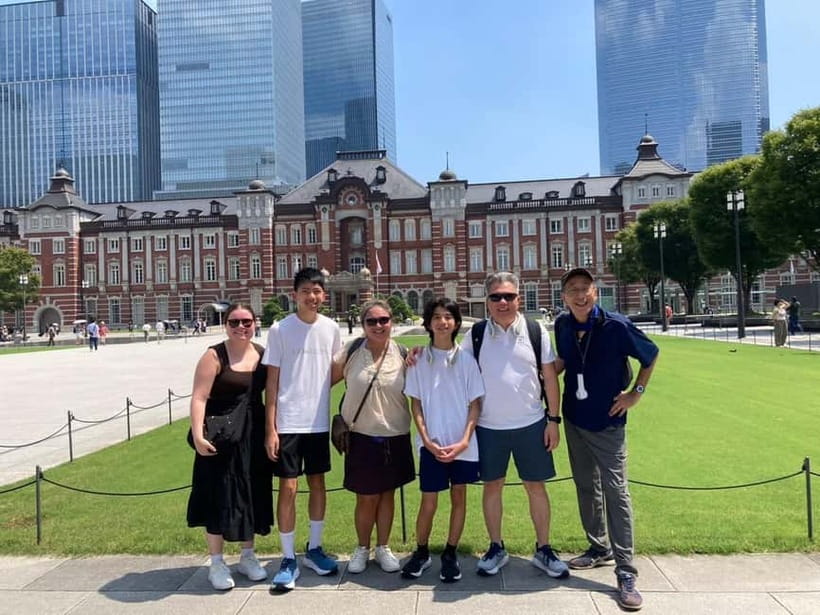
- See Tokyo’s past in layers: Moats, stone walls, guardhouses, garden paths, office towers, and Tokyo Station all appear on one route.
- Start at a calm meeting point: The walk begins at the Starbucks in Wadakura Fountain Park, near the Imperial Palace area.
- Spend about 30 minutes in the East Gardens: The visit covers Ninomaru Garden, the Honmaru area, Edo Castle ruins, and other historic points.
- Hear the story behind the stones: The guide explains the shogunate, samurai-era buildings, the Fujimi-yagura watchtower, and the former castle keep.
- Finish at Tokyo Station: The tour ends at the restored red-brick exterior, a useful spot for continuing around Marunouchi.
- Plan for an outdoor walk: Wear good shoes, carry water, use sunscreen, and dress for the weather.
From Wadakura Fountain Park to the palace grounds
Your starting point is the Starbucks Coffee shop at Wadakura Fountain Park, beside the Imperial Palace area. This is a practical place to meet because you can arrive early, get a drink, and settle in before the walk begins.
The route then leads toward the Imperial Palace East Gardens. The setting changes quickly. Office buildings and broad city roads give way to moats, stone walls, lawns, and carefully arranged planting. I like this opening because it avoids a long lecture before you see anything. The physical setting does much of the work.
The East Gardens are part of the former Edo Castle grounds. You will not be touring a complete castle, since the main buildings are gone, but the remaining walls, gates, moats, and open spaces help you read the old plan of the site. A good guide makes these bare foundations meaningful, and this is where Yuki’s approach seems especially useful. Her explanations have been described as easy to follow, humorous, and vivid enough to help you picture Tokyo several centuries ago.
You should expect an outdoor walk rather than a formal indoor museum visit. There are no admission fees for the East Gardens, which keeps the price focused on the guide and the walking experience.
A few more palace visits around Tokyo worth a look
- Tokyo: Imperial Palace and Shogun Historical Walking Tour
★ 5.0 · 2,251 reviews - Tokyo: Imperial Palace Japanese History Walking Tour
★ 4.9 · 987 reviews - Tokyo: Imperial Palace and Shogun Walking Tour
★ 4.9 · 935 reviews
Ninomaru Garden and the art of a Japanese garden
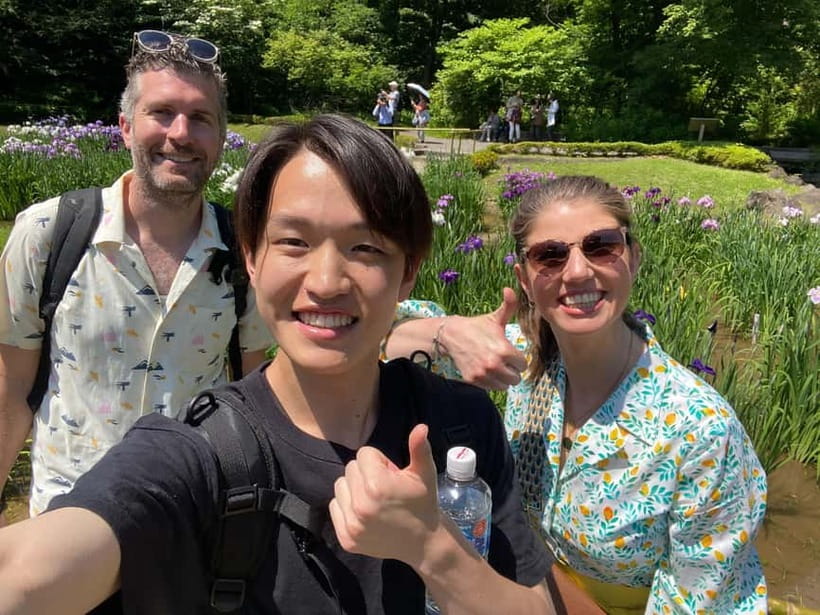
Ninomaru Garden is one of the more pleasant stops because it gives the history a softer setting. Instead of looking only at military walls and castle defenses, you see a garden shaped for beauty, calm, and careful composition.
Your guide explains garden design as part of the larger story of the castle compound. That matters because Japanese gardens can look simple at first glance. Stones, water, trees, paths, and open views are placed with purpose, and the guide’s commentary helps you notice more than you would on a quick solo stroll.
I would give yourself time to look around rather than treating this as a photo stop. Bring a camera if you like, but flash photography is not allowed. The garden is also a good place to pause and catch your breath before the route continues through the larger East Gardens.
The season and weather will affect the experience. The tour provides no indoor escape as you move through these outdoor areas, so sunscreen, a hat, water, and suitable clothing are sensible choices. In warm months, the sun can make a moderate walk feel harder than the distance suggests.
Ote-mon Gate, the guardhouses, and castle defenses
The tour includes key points such as Ote-mon Gate and the Hyakunin Bansho Guardhouse. These places show that Edo Castle was not simply a residence. It was a controlled political and military center, with entrances watched and movement carefully managed.
The Hyakunin Bansho Guardhouse is particularly useful for imagining how the castle operated. Its name and purpose connect the site to the large number of guards assigned to protect the inner grounds. You will hear about the systems behind the walls, not just the people who lived there.
Ote-mon Gate also helps you understand scale. Large entrances, moats, and stonework made the castle difficult to approach casually. Much of the original structure has disappeared, but the surviving layout gives your guide something solid to point to.
This is where a guided visit offers more than a casual walk. On your own, you might admire the stones and take pictures. With commentary, you can connect each gate and guardhouse to the rules of the shogunate and the daily business of protecting the center of power.
Edo Castle ruins and the Honmaru area
The route continues through the Honmaru area, the central section of the old castle compound. You will see ruins and open spaces rather than a complete palace interior. That may disappoint anyone expecting a grand castle building, but it also leaves room for the guide to reconstruct the site with words.
The tour includes information about the former main keep and an Edo Castle main keep scale model. This is one of the most useful details for first-time visitors. The remaining foundations can be hard to interpret from ground level, while a model gives you a clearer sense of the building that once dominated the compound.
You will also hear about the Fujimi-yagura watchtower. The tower is tied to the defensive design of the castle, but it also shows how practical structures could have a strong visual presence. The guide uses these details to explain the Edo period and the shogunate in a way that connects political history with the ground beneath your feet.
Several people who joined the walk with Yuki appreciated her ability to make the old castle feel imaginable. That is the main value here. You are not just collecting names of gates and buildings. You are learning how the site worked and why it mattered.
Same city, a very different set of state rooms:
- Tokyo Castle & Imperial PalaceーShogun Walking Tour
★ 4.7 · 1,068 reviews - Tokyo Castle & Imperial PalaceーShogun Walking Tour
★ 5.0 · 724 reviews - Imperial Palace East Garden and Edo Castle Walking Tour in Tokyo
★ 5.0 · 510 reviews - Tokyo: Imperial Palace East Gardens Walking Tour
★ 4.8 · 353 reviews
Nijubashi views and Kokyo Gaien National Garden
The walk also takes in Kokyo Gaien National Garden and views connected with Nijubashi. This section opens up the setting after the tighter spaces of gates and castle ruins.
Nijubashi is one of the well-known palace views, and it gives you a chance to see the imperial area from outside its central grounds. The bridge, open space, moat, and palace surroundings create a more formal scene than the East Gardens. Your guide adds the imperial context, helping you distinguish the older Edo Castle story from the later imperial history of Japan.
I like this part because it gives you a visual pause. The tour is not all walls, ruins, and dates. You get broad views and a sense of how the palace grounds sit within central Tokyo.
Still, keep your expectations realistic. The tour does not promise entry to every palace area, and the focus is on the East Gardens, surrounding historic sites, and exterior views. If you want a palace interior visit, this walk will not replace that.
Ten minutes on foot to modern Marunouchi
After the palace grounds, the route moves on foot toward Marunouchi. The scheduled transfer is about ten minutes, though your full pace may depend on stops, crowds, and the group.
This short walk is one of the smartest parts of the route. Marunouchi is not presented as a separate shopping district with no connection to the past. Instead, you move from the old seat of the shogunate into a modern business area built around finance, offices, art, and major architecture.
Your guide points out the contrast between the palace area and Marunouchi. You may find modern buildings, public art, broad streets, and polished facades beside traces of older Tokyo. That contrast helps explain the city’s transformation without needing a long bus ride or a second meeting point.
The area can feel more urban and less peaceful than the gardens. If your main interest is traditional Japan, this part may hold less appeal than the castle grounds. I think it earns its place because it shows how Tokyo functions today and how close the old and new districts remain.
Tokyo Station’s red-brick finish
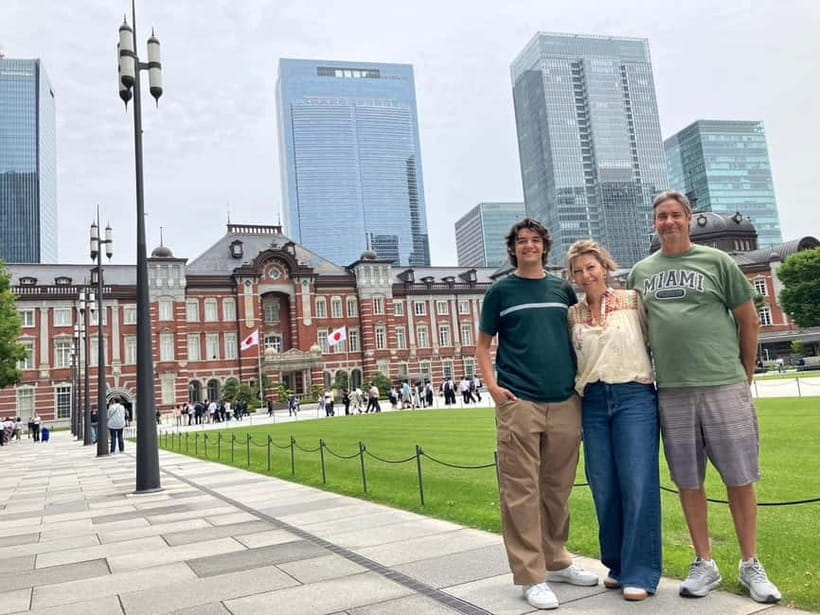
The final stop is Tokyo Station, where the tour ends. The restored red-brick exterior gives the walk a strong visual finish. After gardens, gates, stonework, and palace views, the station represents a different era and a different idea of national power.
The station is more than a place to catch a train. Its exterior helps tell the story of Japan’s modernization and Tokyo’s growth into a major rail and business center. You will explore the exterior with the guide, then finish at Tokyo Station itself.
Ending here is practical. You can continue around Marunouchi, find food, connect with rail services, or simply use the station as a clear landmark for the next part of your day. The tour does not finish back at the starting point, so plan your onward route from Tokyo Station rather than the Imperial Palace.
The station stop also gives the walk a satisfying sense of movement. You begin at a quiet park near the palace and end at one of the city’s most recognizable public buildings. That simple before-and-after structure makes the tour easier to remember.
Guide style and language choices
The advertised guide languages are English, Japanese, Spanish, Chinese, and French. The live guide format means you can ask questions as you go, rather than relying on signs or a recorded explanation.
Yuki is the guide specifically praised in the supplied information. Her strong points are clear storytelling, humor, organization, kindness, and an ability to explain the Edo period in a way that feels concrete. Her approach seems especially helpful if you know little about the shogunate or Japanese castle design.
I would choose the tour mainly for the guide-led interpretation, not because the route is difficult to find. You can walk around the Imperial Palace area without a guide, but you may miss the reasons behind the guardhouses, the castle layout, and the garden design.
The quality of any walking tour depends on the guide assigned that day, so you should check the available language and start time when booking. The listed experience has a perfect 5 rating from 16 reviews, with repeated praise for Yuki’s explanations and hospitality. That is a strong signal, though a small review total is still a small sample.
Is $38 a fair price?
At $38 per person, this tour is reasonably priced if you want history explained as you walk. The East Gardens themselves do not require an admission fee, so you are paying mainly for the guide, route planning, interpretation, and the convenience of linking three different areas.
The value is strongest for first-time visitors, history fans, and anyone who wants context without committing to a full-day tour. In 150 minutes, you cover the palace grounds, former castle sites, Marunouchi, and Tokyo Station. That is a useful amount of sightseeing for a half-day slot.
The value is weaker if you prefer to wander alone, take long photographs, or move at your own pace. A guided schedule means you will keep moving and follow the group’s timing. You also should not expect extensive interior visits or a full tour of the imperial palace complex.
Free cancellation up to 24 hours before the tour and the reserve-now-pay-later option add useful flexibility. The experience is wheelchair accessible, but you should still consider the outdoor walking route and ask for any details you need before booking.
What to bring and what to expect
Wear comfortable shoes. The route includes a moderate amount of walking over a large historic area, followed by streets in Marunouchi.
Bring water, sunscreen, a hat, a camera, and clothing suited to the forecast. Flash photography is not allowed, smoking is not allowed, and backpacks are not permitted, so pack lightly and check your bag arrangements before arriving.
The walk takes 150 minutes, and starting times vary. Check availability for the date you want. Since the tour starts near Wadakura Fountain Park and ends at Tokyo Station, allow enough time to reach the meeting point and plan your next stop from the station.
Who should book this walk?
I would recommend it to you if you want a clear introduction to Edo Castle, imperial history, and central Tokyo in one outing. It suits people who enjoy seeing a place while hearing the story behind it.
It is also a good choice if you have limited time. The route links major sights without requiring separate planning for the palace area and Marunouchi.
You may want to skip it if you dislike guided pacing, need frequent indoor breaks, or want to spend most of your time inside historic buildings. The walk is outdoors, and the former castle is seen through ruins, gardens, views, and interpretation rather than intact interiors.
Should you book the Imperial Palace and Tokyo Station tour?
Book this tour if you want the Imperial Palace area to make sense, not just look pretty. The combination of Ote-mon Gate, Ninomaru Garden, guardhouses, castle ruins, Nijubashi views, Marunouchi, and Tokyo Station gives you a compact lesson in Tokyo’s long change from shogun capital to modern metropolis.
I would be especially comfortable booking it for a first visit or for anyone who likes history explained with humor. Yuki’s praised storytelling is a real reason to choose this experience. Just bring good shoes, leave the backpack behind, and pick a day when you will be comfortable outside for more than two hours.
FAQ
How long does the tour last?
The tour lasts 150 minutes.
Where does the tour begin?
It begins at Starbucks Coffee Imperial Palace Gaien Wadakura Fountain Park.
Where does the tour finish?
The tour finishes at Tokyo Station.
Is admission to the Imperial Palace East Gardens included?
Yes. Entry to the Imperial Palace East Gardens is included, and no admission fee is required.
Which places are visited?
The route includes Ninomaru Garden, the Imperial Palace East Gardens, Ote-mon Gate, the Hyakunin Bansho Guardhouse, the Honmaru area, Kokyo Gaien National Garden, Marunouchi, and Tokyo Station.
Which languages are available?
Live guides are available in English, Japanese, Spanish, Chinese, and French.
Is the tour wheelchair accessible?
Yes, the activity is listed as wheelchair accessible.
What should I bring?
Bring comfortable shoes, a hat, a camera, sunscreen, water, and weather-appropriate clothing. Backpacks, smoking, and flash photography are not allowed.
Just added around Tokyo
- Tokyo walking tour around Imperial Palace and Tokyo Station★ 5.0 · 3 reviews
- Tokyo: Imperial Palace, the history of Japan (ENGLISH GUIDE)★ 5.0 · 77 reviews
- Tokyo: Pvt. Tour – Edo Castle & Imperial Palace East Gardens★ 4.8 · 63 reviews
- Tokyo: Imperial Palace with Nostalgic Alley Kagurazaka tour★ 4.3 · 8 reviews
- Tokyo: Edo Castle and Imperial Palace Guided Walking Tour★ 5.0 · 6 reviews
- Tokyo: Edo Castle Ruins & Imperial Palace East Garden Tour★ 4.4 · 13 reviews
- Imperial Palace Tour: Discover Samurai History with a Guide★ 5.0 · 12 reviews
- Full Tokyo: Meiji Shrine, Imperial Palace, Asakusa & Skytree★ 4.7 · 16 reviews
Tokyo Palace Tours, compared.
Imperial Palace and Shogun Historical Walking Tour
Read our review →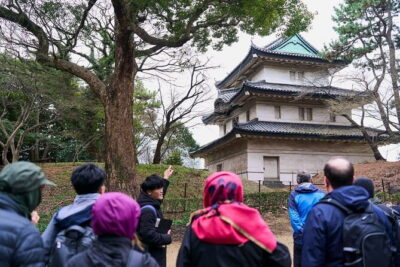
Tokyo Castle & Imperial PalaceーShogun Walking Tour
Read our review →

Tokyo Castle & Imperial PalaceーShogun Walking Tour
Read our review →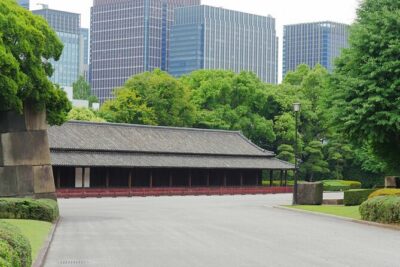
Imperial Palace East Garden and Edo Castle Walking Tour in Tokyo
Read our review →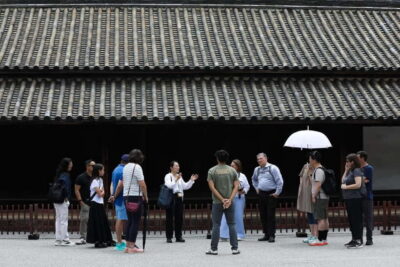
Imperial Palace, Sensō-ji Temple, & Tokyo Tower Tour
Read our review →Browse the lists this tour appears in