
REVIEW · TOKYO PALACE TOURS
Tokyo: Imperial Palace with Nostalgic Alley Kagurazaka tour
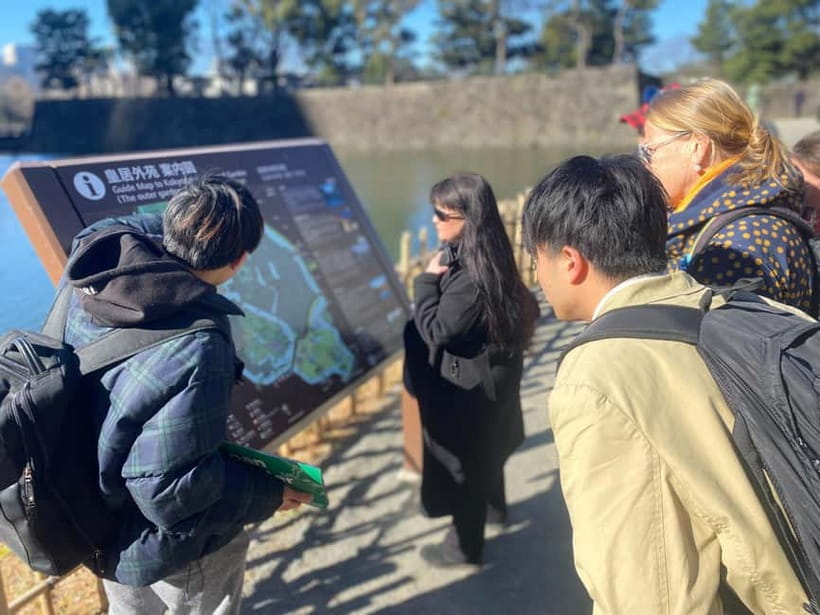
Tokyo’s past comes into focus on this walk from the glass-and-steel center of Tokyo Station to the stone walls and gardens of the former Edo Castle. You’ll see major palace sights, then follow quieter streets toward Kagurazaka, an old entertainment district with shrines, small shops, and traditional lanes.
I like the efficient route and the small group size. You get the Imperial Palace, Edo Castle remains, Tokyo Daijingu, a café break, and several atmospheric alleys in three and a half hours. I also like the local storytelling, especially the link between today’s city and the Tokugawa shoguns.
The main drawback is that this is a walking tour with no visit inside the palace itself. The inner palace is closed to the public, and the route may finish about 15 minutes late because of traffic or changes along the way.
Key points to know before booking
- The walk begins at Tokyo Station and ends in Kagurazaka, so you see two very different sides of central Tokyo without returning to your starting point.
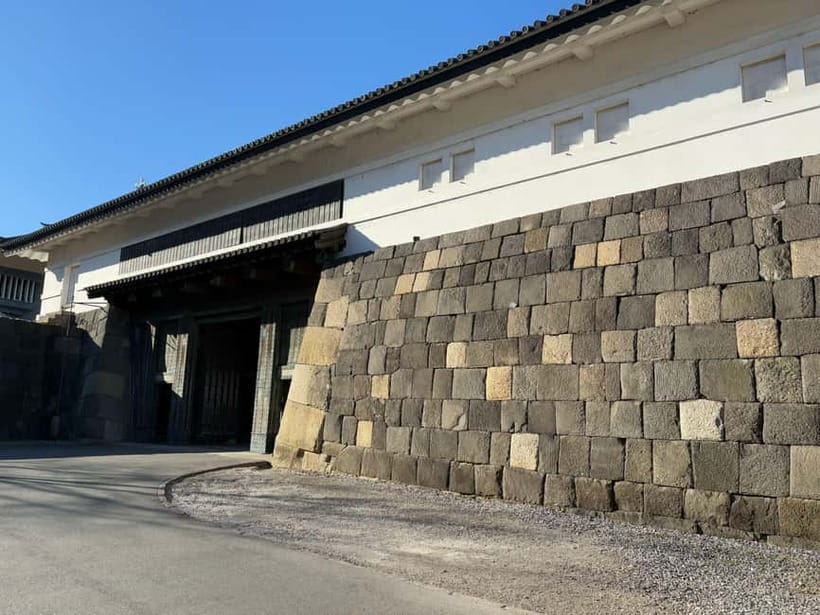
- The Imperial Palace visit focuses on the public grounds, including Ote-Mon Gate, Ninomaru Garden, and Edo Castle ruins.
- A 25-minute café stop breaks up the walking, with coffee or tea included.
- Tokyo Daijingu adds a local religious and romantic angle, as the shrine is associated with love and good relationships.
- Kagurazaka’s narrow lanes feel far removed from Asakusa and Shibuya, with old geisha-district connections and local restaurants.
- The group is limited to eight people, and English-speaking guides such as Hiro and Shuntaro have been praised for lively explanations and personal attention.
From Tokyo Station to the old Edo Castle grounds
Meet outside the Shin-Marunouchi Building, in front of the café called STAND T. Look for the BEAMS sign on the second floor. Marunouchi Central Exit is the closest Tokyo Station exit, and the meeting point is about a two-minute walk away.
This is a useful starting place because Tokyo Station gives you a quick sense of modern Japan before the route turns toward the country’s former political center. The first stop is a roughly 10-minute guided look at the station area. It is mainly a photo and orientation stop, not a long architectural tour.
From there, you walk toward the Imperial Palace. The change is gradual. Office towers and wide streets give way to old defensive walls, open grounds, gardens, and remnants of the enormous Edo Castle complex.
Your guide provides the historical thread that makes the stones and gates easier to understand. During the Tokugawa Shogunate, Edo Castle was the seat of political power. The castle grounds were not simply a royal residence. They were the center of government and influence during the period when Edo developed into the city that later became Tokyo.
That context is the reason to choose this tour rather than simply taking photos at the palace walls. Without a guide, you can admire the scale and stonework but miss how the site shaped Japan.
A few more palace visits around Tokyo worth a look
- Tokyo: Imperial Palace and Shogun Historical Walking Tour
★ 5.0 · 2,251 reviews - Tokyo: Imperial Palace Japanese History Walking Tour
★ 4.9 · 987 reviews - Tokyo: Imperial Palace and Shogun Walking Tour
★ 4.9 · 935 reviews
Ote-Mon Gate and Ninomaru Garden
Ote-Mon Gate is one of the most useful stops for understanding the castle’s defenses. It gives you a close look at the scale and craftsmanship of the old entrance system, with massive stone construction and a layout designed for control and protection.
The guide explains how the area once worked as part of Edo Castle. You do not need a specialist interest in military history to appreciate the stop. The gate makes the castle feel like a functioning seat of power rather than a collection of ruins.
Ninomaru Garden brings a different mood. Instead of defensive walls and formal entrances, you get a carefully arranged Japanese garden. It is a good place for photographs and for a slower explanation of the grounds.
The tour does not rush through the palace area, giving about an hour to the Imperial Palace portion overall. That is enough time to take photographs, hear the main historical points, and walk at a manageable pace, though it is not a full-day garden visit.
Keep one expectation clear: you will not enter the inner palace. That area is not open to the public. This experience is about the accessible grounds, gates, gardens, and remains around the former castle.
Edo Castle ruins and the scale of the shogun’s city
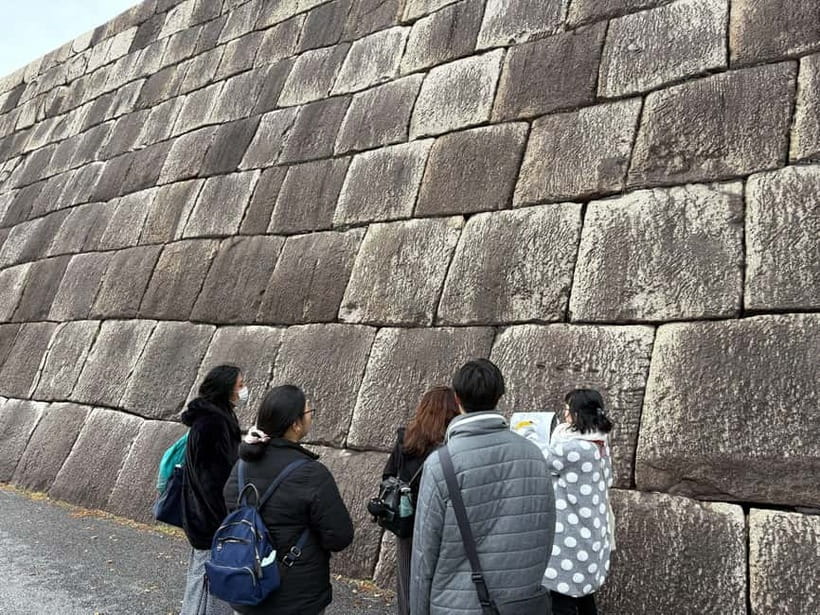
The Edo Castle ruins are perhaps the most meaningful part of the palace section. They help you picture how much larger the original complex was compared with what remains today.
The tour’s appeal is not just the number of stops. It is the chance to connect them. As you walk from the walls to the gardens and ruins, the guide explains that much of the route lies within what was once the broad castle estate.
That makes the walk feel like a short lesson in how Japan’s modern capital grew from a shogun’s stronghold. You can sense the scale without needing a reconstructed palace building.
A brief photo stop at Nippon Budokan follows. The venue is known as a major event space, but here it functions mainly as a visual marker along the route. The stop lasts about five minutes, so do not expect a long visit inside.
The palace section suits first-time visitors who want historical orientation without spending an entire day at a museum. It also works well if you have already seen Tokyo’s famous shopping districts and want a quieter side of the center.
Coffee, tea, and a useful pause at Aomi Coffee Kudanshita
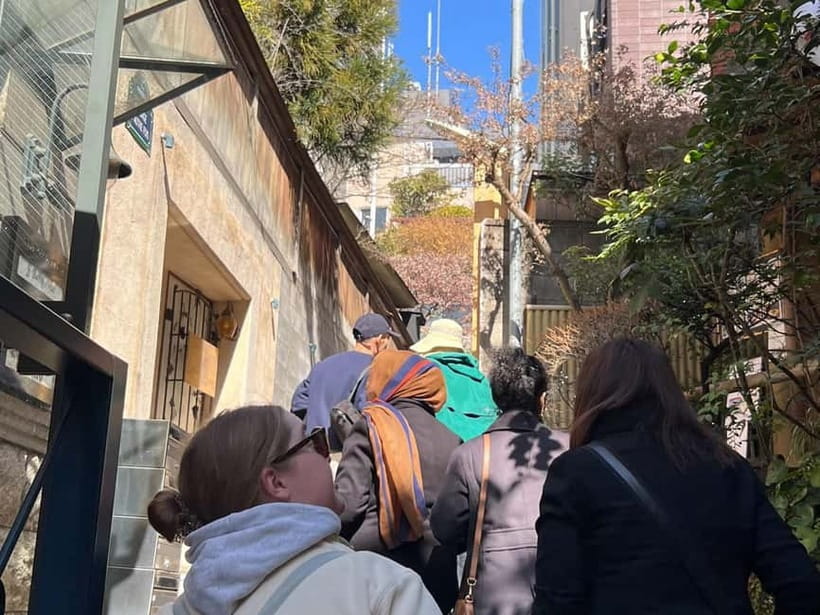
After the palace grounds, the tour stops at Aomi Coffee Kudanshita for about 25 minutes. Coffee or tea is included, and the break matters because the tour is a continuous walk through several districts.
You can use this pause to rest your feet, ask follow-up questions, and reset before the shrine and alley sections. It also gives the experience a more relaxed rhythm than a nonstop sightseeing march.
The included snack is picked up at a local shop, but the exact stop can change depending on the shop’s operating day. That flexibility is practical, though you should not book this expecting one fixed food item or a named specialty every time.
The food portion is best understood as a small taste of local daily life, not a full meal. Eat beforehand if you need lunch or breakfast, especially since the tour lasts 210 minutes and includes a fair amount of walking.
Same city, a very different set of state rooms:
- Tokyo Castle & Imperial PalaceーShogun Walking Tour
★ 4.7 · 1,068 reviews - Tokyo Castle & Imperial PalaceーShogun Walking Tour
★ 5.0 · 724 reviews - Imperial Palace East Garden and Edo Castle Walking Tour in Tokyo
★ 5.0 · 510 reviews - Tokyo: Imperial Palace East Gardens Walking Tour
★ 4.8 · 353 reviews
Tokyo Daijingu and the meaning of a local shrine visit

Tokyo Daijingu is one of the route’s more personal stops. The shrine is associated with love and good relationships, giving the visit a different focus from the political history of the palace.
Your guide spends about 20 minutes here. That is long enough to explain the shrine’s role and give you time to look around without turning the visit into a formal religious lesson.
This stop also shows why a local guide can add value. A shrine is easy to pass quickly, especially in a city packed with famous sights. The explanation helps you understand why people visit and how the site fits into everyday life.
The tour description presents the shrine as a place connected with the god of love and favorable relationships. If that theme interests you, this is a particularly useful addition. If you prefer only major historical monuments, it may feel less essential than the palace stops.
From Ushigome Gate remains to Kagurazaka
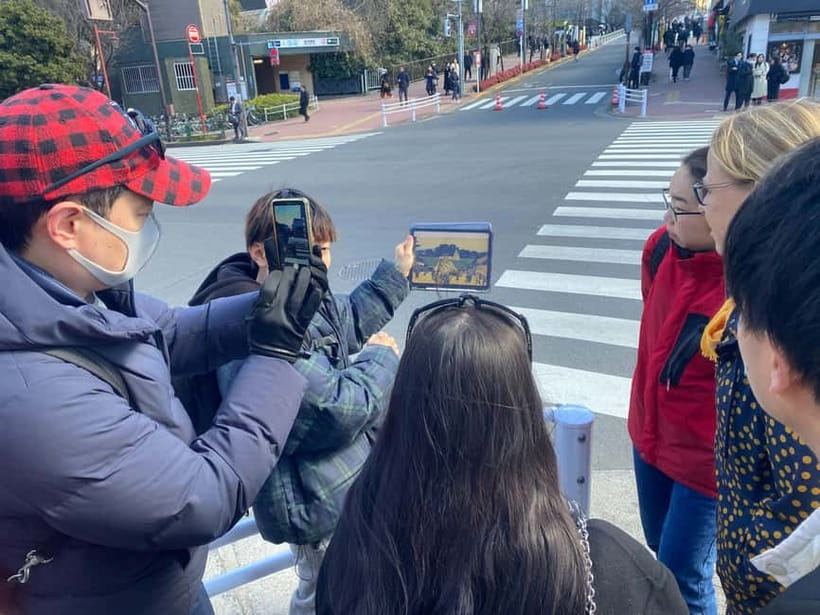
After Tokyo Daijingu, the route moves through the remains of Ushigome Gate. Like the palace walls, these remains point to the former size and reach of Edo Castle.
You are not seeing a complete castle district. You are reading the city through fragments: a gate here, a wall there, a street pattern that carries traces of an older age. The guide’s explanations are important because the physical remains alone may not be obvious to someone seeing them for the first time.
This is also where the route begins to feel less like a standard Tokyo sightseeing circuit. You move away from the city’s biggest postcard sights and into streets with a more local scale.
That change is central to the tour. The first half answers the question of how Tokyo became a center of power. The second half shows how older neighborhoods continue to hold onto distinct traditions and businesses.
Kagurazaka’s old entertainment lanes
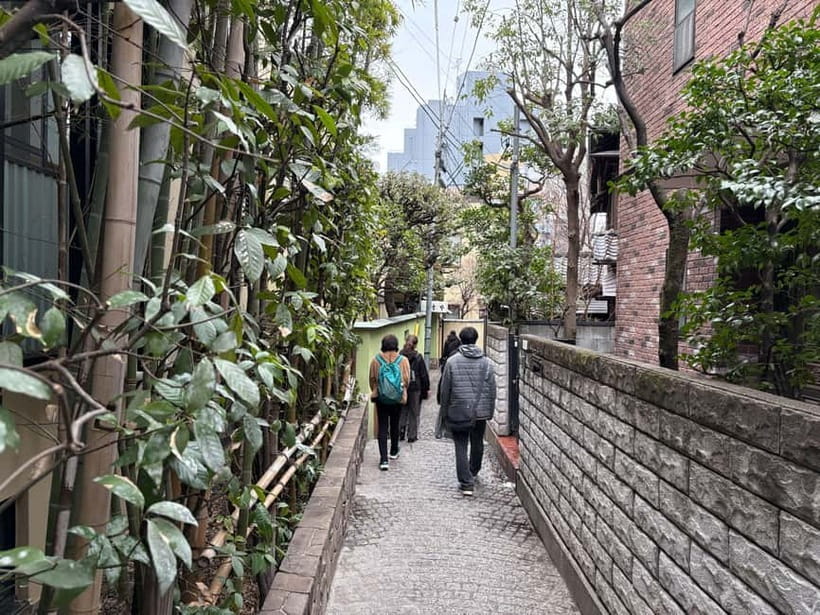
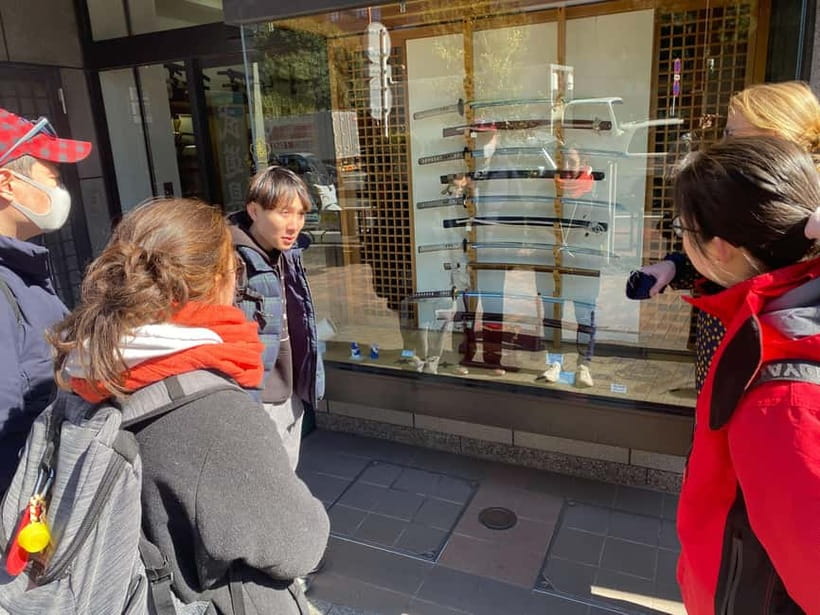
Kagurazaka is the tour’s most unusual finish. About 200 years ago, the area was known as a red-light district with tea houses where Maiko and Geisha performed. Today, the old entertainment history survives in the shape and atmosphere of the lanes, along with local restaurants and small businesses.
You visit Geisya Komichi Alley, Hyogo Yokocho Alley, and Kakurenbo Yokocho. These are short photo and explanation stops, but together they create a strong sense of place.
The narrow passages are a sharp contrast to Tokyo Station’s broad avenues and the Imperial Palace’s open grounds. You may find traditional-looking buildings, tucked-away restaurants, and streets that feel more residential and local than the city’s major visitor zones.
The tour presents Kagurazaka as an alternative to Asakusa or Shibuya. That comparison is useful. Asakusa is famous for its temple and traditional shopping street, while Shibuya is known for its modern energy and giant crossing. Kagurazaka offers something quieter: older lanes, food businesses, and a link to the world of geisha entertainment.
Do not expect a preserved historical district in the manner of an open-air museum. Kagurazaka is a living neighborhood, and that means modern businesses share space with older architectural traces. For me, that is part of its appeal. You see history continuing alongside ordinary city life rather than being separated behind a display case.
The snack stop fits naturally here. The exact shop may vary, but the intention is to let you sample something small while learning about the local area. It is a modest food experience, not a restaurant crawl.
What the guide adds to the walk
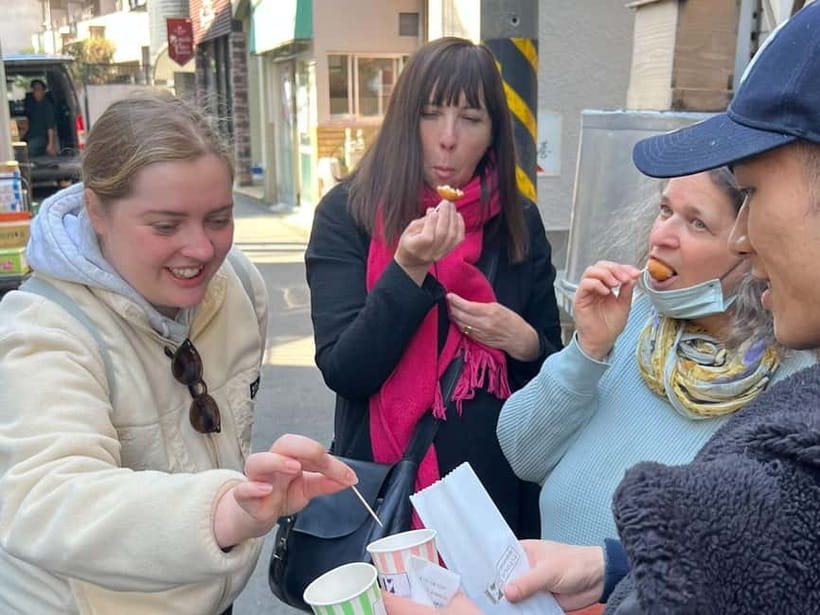
The English-speaking guide is a major part of the experience. The route covers political history, gardens, shrine customs, neighborhood culture, and food, so the value depends on clear explanations and the ability to answer questions.
Hiro is specifically praised for local knowledge and for giving useful suggestions about exploring more of Tokyo. Shuntaro is described as entertaining and well informed, with the ability to add extra detail beyond the basic sights. These names come from recent bookings, so you should not assume one particular guide will lead every departure.
The strongest guide quality here is flexibility. One booking describes a guide who responded carefully to questions and adapted to personal interests and ideas. That matters in a group of no more than eight people, where conversation can be more direct than on a large coach tour.
The overall rating is 4.3 out of 5 from eight ratings. That is a positive result, though the sample is small. I would place more weight on the repeated praise for the guides than on the number alone.
Is $51 a fair price for 210 minutes?
At $51 per person, the tour is priced above a simple self-guided walk but below a private experience. The group limit of eight is important here. You are paying for a guide who connects several areas, plus coffee or tea, a snack, and a route that would take more planning to organize on your own.
The value is strongest if you are visiting Tokyo for the first time or have limited time in the center. In three and a half hours, you cover Tokyo Station, the Imperial Palace grounds, former Edo Castle sites, Nippon Budokan, Tokyo Daijingu, and Kagurazaka.
The value is weaker if you want a long, quiet visit at each location. The tour covers a lot of ground, so some stops are brief photo opportunities rather than extended visits.
I would also factor in the one-way design. You finish at FamilyMart Kagurazaka Sanchome, not back at Tokyo Station. That is helpful if you plan to continue eating or exploring in Kagurazaka, but you should account for the return journey if your next booking is near the palace or station.
Walking, timing, and who should book
Wear comfortable shoes and clothes. The route is long enough that poor footwear will spoil the experience, and there is no promise of a return vehicle.
The tour is not suitable for pregnant women, according to the activity information. Smoking, drones, alcohol, drugs, weapons, and sharp objects are not allowed.
I would recommend this for:
- First-time Tokyo visitors who want history and neighborhood life in one outing
- Solo visitors who prefer a small group and an English-speaking guide
- Couples interested in Tokyo Daijingu and Kagurazaka’s relationship with love and traditional entertainment
- Visitors who want an alternative to the standard Asakusa and Shibuya route
- People with only half a day for central Tokyo
I would hesitate if you dislike walking, want to enter the palace, or prefer a tour centered on food. The snack and café stop are pleasant additions, but they do not make this a food tour.
You can cancel up to 24 hours before the start for a full refund, and you can reserve without paying immediately. The finish may run about 15 minutes late because of traffic or route changes, so leave a little space after the tour.
Should you book this Imperial Palace and Kagurazaka walk?
Book it if you want Tokyo’s history explained as you move through the city rather than presented as a list of monuments. The strongest feature is the contrast: modern Tokyo Station, the former shogun’s castle grounds, a shrine tied to relationships, and Kagurazaka’s old entertainment lanes.
The tour is especially good for a first or second day in Tokyo, when a local guide can help you understand the city’s geography and suggest what to see next. At $51, the small group, included refreshments, and one-way route make reasonable value for a well-paced half-day.
Skip it if entering the palace is your priority, since that is not part of the visit. Also skip it if you want a slow palace garden stroll or a substantial food tasting. For everyone else, this is a practical way to connect major sights with a quieter, more personal corner of Tokyo.
FAQ
Does the tour enter the Imperial Palace?
No. The inner palace is not open to the public. The tour visits accessible areas around the Imperial Palace and former Edo Castle, including Ote-Mon Gate, Ninomaru Garden, and castle ruins.
Where does the tour meet?
The meeting point is outside the Shin-Marunouchi Building, in front of STAND T café. Marunouchi Central Exit of Tokyo Station is the closest exit, and the meeting point is about a two-minute walk away. Look for the BEAMS sign on the second floor.
Where does the tour finish?
The tour ends at FamilyMart Kagurazaka Sanchome in the Kagurazaka area.
How long does the experience last?
The scheduled duration is 210 minutes, or three and a half hours. The finish can be delayed by about 15 minutes because of traffic or route changes.
Are refreshments included?
Yes. Coffee or tea is provided during the break at Aomi Coffee Kudanshita, and a snack is included. The local shop used for the snack can change depending on operating days.
Is the group large?
No. The group is limited to eight participants, and the live tour is conducted in English.
Just added around Tokyo
- Tokyo walking tour around Imperial Palace and Tokyo Station★ 5.0 · 3 reviews
- Tokyo: Imperial Palace, the history of Japan (ENGLISH GUIDE)★ 5.0 · 77 reviews
- Tokyo: Pvt. Tour – Edo Castle & Imperial Palace East Gardens★ 4.8 · 63 reviews
- Tokyo: Imperial Palace East Gardens and Tokyo Station Tour★ 5.0 · 16 reviews
- Tokyo: Edo Castle and Imperial Palace Guided Walking Tour★ 5.0 · 6 reviews
- Tokyo: Edo Castle Ruins & Imperial Palace East Garden Tour★ 4.4 · 13 reviews
- Imperial Palace Tour: Discover Samurai History with a Guide★ 5.0 · 12 reviews
- Full Tokyo: Meiji Shrine, Imperial Palace, Asakusa & Skytree★ 4.7 · 16 reviews
Tokyo Palace Tours, compared.
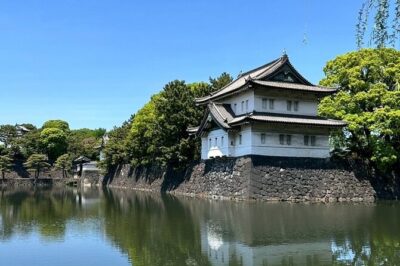
Imperial Palace and Shogun Historical Walking Tour
Read our review →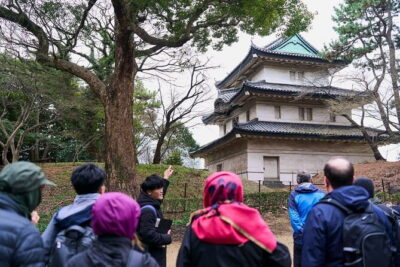
Tokyo Castle & Imperial PalaceーShogun Walking Tour
Read our review →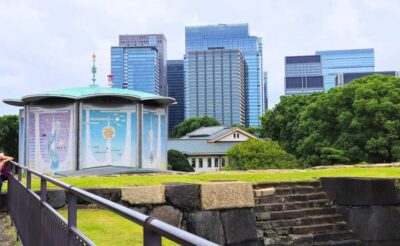

Tokyo Castle & Imperial PalaceーShogun Walking Tour
Read our review →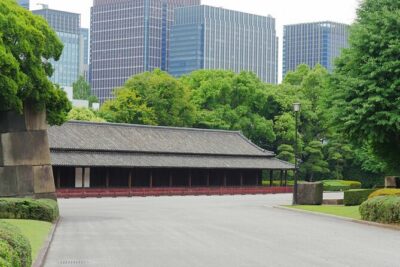
Imperial Palace East Garden and Edo Castle Walking Tour in Tokyo
Read our review →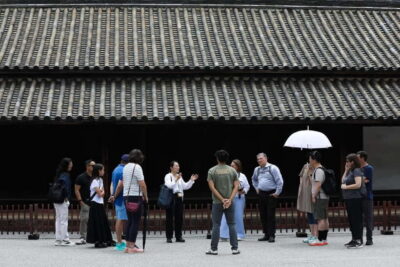
Imperial Palace, Sensō-ji Temple, & Tokyo Tower Tour
Read our review →Browse the lists this tour appears in